Changing between Fahrenheit and Celsius
You can select whether the temperature display shows Celsius or Fahrenheit:
1. To change the temperature reading from Celsius to Fahrenheit you must press and hold the light on/off
control until the appliance beeps and the °F indicator will be lit.
2. You cannot change the display if you are in the process of adjusting the temperature of the wine cabinet.
Loading the wine cooler
Important: Your appliance is ideally suited to store 0.75 litre Bordeaux style wine bottles. While the cabinet can
store larger bottles, you must make sure that they do not prevent the door from shutting properly.
• Always check that you can close the door without it touching on a wine bottle, before shutting it.
• When loading several bottles of wine at once, it will take longer for the appliance to cool the individual bottles.
• As many bottles may differ in size and dimensions, the actual number of bottles you are able to store may
vary. The maximum storage number is based on standard 0.75 litre Bordeaux style wine bottles.
• You can place 46 standard size bottles in your appliance (8 bottles on all shelfs except the bottom which holds
6)
Storing your wines
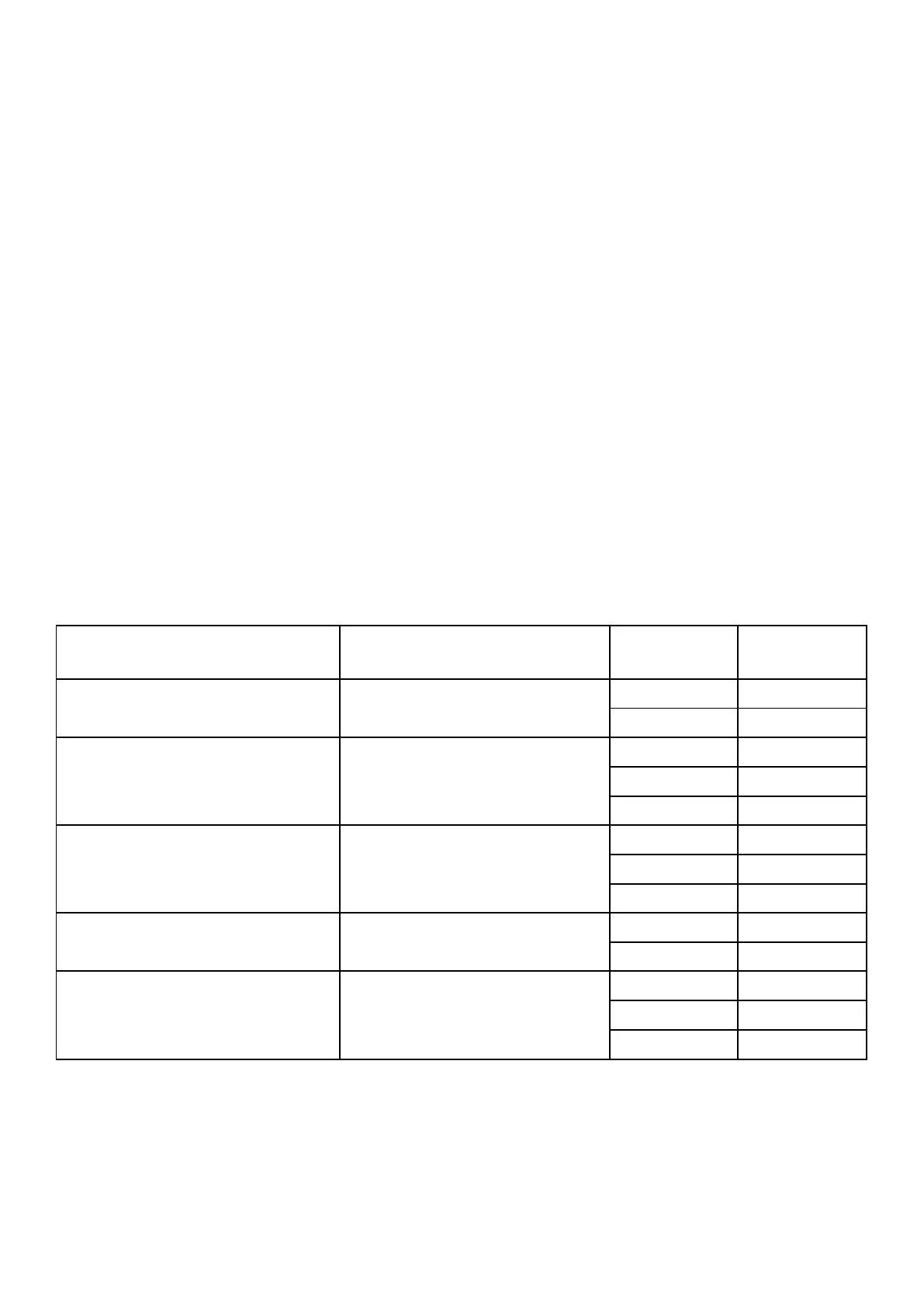
The chart below indicates the ideal storage temperatures for different types of wine :
Bordeaux, Shiraz Barolo, Gran
Cru Burgundy
Medium bodied, fruity, elegant reds
Rioja Reserva, Pinot Noir, Chianti
Classico, Chinon, Port
Light bodied reds or full bodied, oaky
whites
White Burgundy, Lambrusco,
Chablis
Whites, rośes and sweet wines
Chardonnay, Savignon Blanc,
Reisling
Sparkling wines & champagnes
Vintage Champagnes, Champagne,
• Temperature stability is the most important factor when it comes to storing wine.
• Exposure to light, vibrations or fluctuations in temperature and humidity can all cause wine to spoil. When
properly stored, wines not only maintain their quality but many will actually improve in aroma, flavour and
complexity as they mature.
• Wines kept at a higher temperature will age faster. Wine that is exposed to temperatures that are greater
than 21°C (70°F) will suffer from poorer flavour and aroma.



 To Next Page