EasyManua.ls Logo

Central Pneumatic 91773 - User Manual

Central Pneumatic 91773
16 pages
Print Icon
To Next Page IconTo Next Page
Loading...
Visit our website at: http://www.harborfreight.com
Email our technical support at: tech@harborfreight.com
Read this material before using this product.
Failure to do so can result in serious injury.
SAVE THIS MANUAL.
Copyright
©
2004 by Harbor Freight Tools
®
. All rights reserved.
No portion of this manual or any artwork contained herein may be reproduced in
any shape or form without the express written consent of Harbor Freight Tools.
Diagrams within this manual may not be drawn proportionally. Due to continuing
improvements, actual product may differ slightly from the product described herein.
Tools required for assembly and service may not be included.
When unpacking, make sure that the product is intact
and undamaged. If any parts are missing or broken,
please call 1-800-444-3353 as soon as possible.
Save This Manual Keep this manual for the safety warnings and precautions, assembly, operating,
inspection, maintenance and cleaning procedures. Write the product’s serial number in the back of the manual
near the assembly diagram (or month and year of purchase if product has no number). Keep this manual and
the receipt in a safe and dry place for future reference.
Owners Manual & Safety Instructions
ITEM 91773
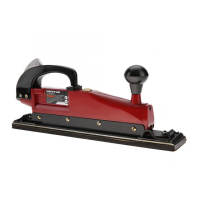
straight line air sander
REV 11l

Other manuals for Central Pneumatic 91773

Questions and Answers

  • O
    odavisJul 31, 2025
    What to do if Central Pneumatic 91773 Sander has severe air leakage?
    • B
      Bruce BaileyJul 31, 2025
      If your Central Pneumatic Sander has severe air leakage, inspect the housing components for cross-threading, incorrect alignment, and uneven gaps; if found, disassemble and replace damaged parts. Ensure the housing is tightened properly; misalignment of internal parts may be the reason if it won't tighten. Also, check for a damaged valve or housing and replace any damaged components. Finally, inspect the valve assembly for dirt, wear, or damage; clean or replace it as necessary.
  • D
    David GrantAug 5, 2025
    What to do if my Central Pneumatic Sander has severe air leakage?
    • A
      Angela NewmanAug 5, 2025
      If your Central Pneumatic Sander has severe air leakage (note that slight air leakage is normal, especially on older tools), check for incorrect alignment and uneven gaps in the housing components, which could indicate cross-threading. If cross-threaded, disassemble and replace the damaged parts before use. Also, try tightening the housing assembly. If it still leaks, the internal parts may be misaligned. If tightening doesn't solve the issue, you may need to replace damaged components or clean/replace the valve assembly.
  • J
    James HoltAug 10, 2025
    How to fix decreased output on my Central Pneumatic 91773 Sander?
    • D
      danielsandersAug 10, 2025
      If you're experiencing decreased output from your Central Pneumatic Sander, start by checking for loose connections and ensuring that the air supply provides enough air flow (CFM) at the required pressure (PSI), without exceeding the maximum air pressure. Then, clean around the trigger to ensure free movement and lubricate the tool using air tool oil and grease according to the directions. Also, clean the air inlet screen of any buildup, and make sure the housing is properly assembled and tight. If these steps don't resolve the issue, have a qualified technician clean and lubricate the mechanism, and consider installing an in-line filter in the air supply.
  • A
    Andrea PetersAug 14, 2025
    What to do if my Central Pneumatic 91773 has decreased sanding performance?
    • T
      Thomas JimenezAug 14, 2025
      If you notice a decreased sanding performance with your Central Pneumatic Sander, the sandpaper may be dull or caked. Replace the sandpaper to restore optimal sanding performance.
  • M
    Mary GrimesAug 19, 2025
    Why Central Pneumatic 91773 has decreased output?
    • J
      johnsonlawrenceAug 19, 2025
      Several factors can cause decreased output in your Central Pneumatic Sander. It could be due to insufficient air pressure or airflow—check for loose connections and ensure your air supply meets the tool's CFM and PSI requirements, without exceeding the maximum air pressure. An obstructed trigger, incorrect or insufficient lubrication, a blocked air inlet screen, a loose housing, or a contaminated mechanism could also be the cause. Clean the trigger, lubricate the tool with air tool oil, clean the air inlet screen, tighten the housing, or have a technician clean and lubricate the mechanism, respectively. Consider installing an in-line filter.
  • J
    Jennifer OchoaAug 25, 2025
    Why Central Pneumatic Sander housing heats during use?
    • L
      Lindsey SteeleAug 26, 2025
      If the housing of your Central Pneumatic Sander heats up during use, it may be due to incorrect or insufficient lubrication. Make sure to lubricate it properly with air tool oil according to the directions. Alternatively, worn parts inside the tool could be the cause. In this case, have a qualified technician inspect the internal mechanism and replace any worn parts as needed.

Summary

Warning Symbols and Definitions

Symbol Definitions

Explains the meaning of safety alert symbols used in the manual.

Important Safety Instructions

Risk of Fire, Electric Shock, or Injury

General safety precautions related to fire, electric shock, and injury.

Personal Safety

General Personal Safety Guidelines

Essential personal safety practices and precautions when operating the tool.

Air Source

Symbols and Specific Safety Instructions

Specific Safety Instructions

Initial Tool Set Up;Assembly

Air Supply Setup Procedures

Step-by-step guide for connecting the tool to an air supply.

Operating Instructions

User-Maintenance Instructions

Troubleshooting

Common Problems and Solutions

Identifies common issues and provides likely solutions for the air sander.

Central Pneumatic 91773 Specifications

General IconGeneral
Operating Pressure90 PSI
Disc Diameter6 inches
Air Inlet1/4 inch NPT
Orbit Diameter3/16 inch
Air Inlet Size1/4 inch NPT
Hose Size3/8 in
Pad Size6 inches

Related product manuals