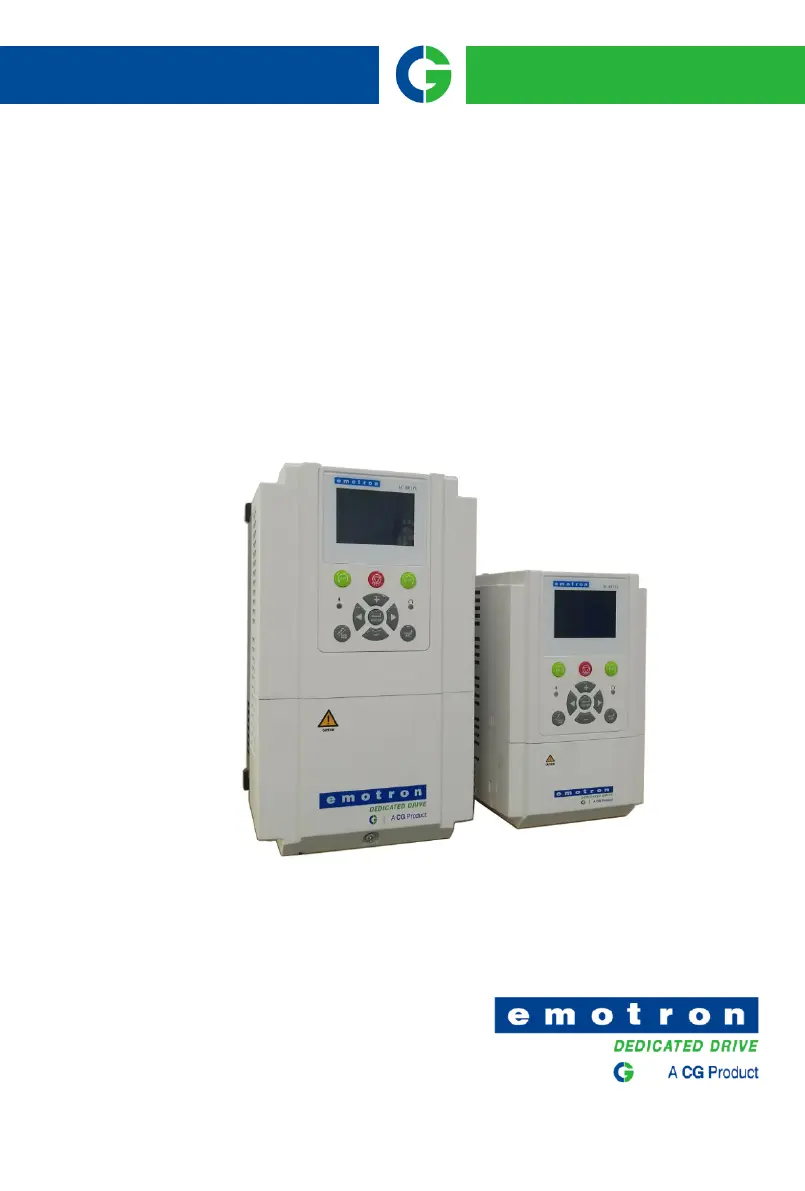
What to do if my CG VSS23 4p2 CEB DC Drives show Err41?
- AAnthony ChristianSep 23, 2025
If your CG DC Drive displays Err41, and E0.18 = 00100, it means that the current output amp is more than E0.19. Check the current load.
What to do if my CG VSS23 4p2 CEB DC Drives show Err41?
If your CG DC Drive displays Err41, and E0.18 = 00100, it means that the current output amp is more than E0.19. Check the current load.
What to do if my CG VSS23 4p2 CEB DC Drives show Err29?
If your CG DC Drive displays Err29, it indicates a fault that can arise from several causes. Here's what you should check: 1. The inverter output circuit is grounded or short-circuited: Troubleshoot peripheral problems. 2. The acceleration and deceleration time is too short: Increase the acceleration time. 3. Manual torque boost or V/F curve is not appropriate: Adjust the manually torque boost or V/F curve. 4. Voltage too low: Adjust the voltage to normal range. 5. Starting the running motor: Select RPM track start or start after the motor has stopped. 6. Sudden load in the acceleration process: Cancel the sudden load. 7. Model selection of inverter power is too small: Select an inverter with a higher rating.
What to do if my CG VSS23 4p2 CEB DC Drives show Err02?
If your CG DC Drives display Err02, it could be due to: * The output circuit being grounded or short-circuited: Eliminate external faults. * The deceleration time is too short: Increase the deceleration time. * The voltage is too low: Adjust the voltage to normal range. * A sudden load is added during deceleration: Remove the added load. * The braking unit and braking resistor are not installed: Install the braking unit and braking resistor.
What to do if my CG DC Drives show Err30?
If your CG DC Drive shows Err30, consider the following potential causes and solutions: 1. Input voltage is too high: Adjust the voltage to the normal range. 2. There is external force dragging the motor to run in the deceleration process: Cancel external force or install a brake resistor. 3. The deceleration time is too short: Increase the deceleration time. 4. No installation of braking resistor: Install braking resistor.
What to do if my CG DC Drives show Err03?
If your CG DC Drives display Err03, it may be caused by: * The output circuit being grounded or short-circuited: Eliminate external faults. * The voltage is too low: Adjust the voltage to normal range. * A sudden load is added during operation: Remove the added load. * The AC drive model is of too small power class: Select an AC drive of higher power class.
What to do if my CG VSS23 4p2 CEB DC Drives show Err13?
If your CG DC Drives display Err13, it indicates that an external fault signal is input via DI. Reset the operation.
What to do if my CG VSS23 4p2 CEB DC Drives show Err18?
If your CG DC Drives display Err18, it could be due to: * The PC is not working properly: Check the PC Connection. * The communication line is not normal: Check the communication cable. * H0 set communication parameters set incorrectly: The communication parameters are set correctly.
What to do if my CG VSS23 4p2 CEB show Err23?
If your CG DC Drives are showing Err23, it could be because: * The brake line failure or damage the brake pipe: Check the brake unit, replace the brake pipe. * An external braking resistor is too small: Increase the braking resistor.
What to do if my CG VSS23 4p2 CEB DC Drives show Err39?
If your CG DC Drive displays Err39, consider these possible causes: 1. PTC sensor configuration not right: Reset PTC sensor parameter. 2. Motor temperature protection value too small: Increase motor temperature protection value. 3. Motor temperature too high: Wait until the motor is cooled.
What to do if my CG DC Drives show Err14?
If your CG DC Drives display Err14, it might be due to: * The ambient temperature is too high: Lower the ambient temperature. * The air filter is blocked: Clean the air filter. * The fan is damaged: Replace the damaged fan. * The thermally sensitive resistor of the module is damaged: Replace the damaged thermally sensitive resistor. * The inverter module is damaged: Replace the inverter module.
General safety guidelines for product use and installation phases.
Specific warnings and recommendations for motor, wiring, and operation.
Detailed wiring diagrams and instructions for various VS series models and connections.
Schematics and functional descriptions of main and control circuit terminals for different VSX, VSM, VSS, and VSR series.
Detailed explanation of control circuit terminals, their functions, and wiring.
Procedure for automatically tuning the motor parameters for optimal performance.
Parameters for setting the frequency command source, digital settings, and limits.
Parameters for controlling the start/stop operations, running direction, and start modes.
Parameters for configuring acceleration and deceleration times, curves, and switchover points.
Motor parameters specific to Motor 1, including type, power, and electrical characteristics.
V/f control parameters for Motor 1, covering curve settings, torque boost, and voltage compensation.
Vector control parameters for Motor 1, including speed/torque control and PI settings.
Motor parameters specific to Motor 2, mirroring those for Motor 1.
V/f control parameters for Motor 2, mirroring those for Motor 1.
Vector control parameters for Motor 2, mirroring those for Motor 1.
Parameters for various protection functions, including current limits, overvoltage, and overload alarms.
Parameters that record and display fault history, including frequency, current, and bus voltage at the time of fault.
Specific parameters relevant to solar pumping inverter operation and PV panel input.
Elevator-specific parameters for brake control, floor leveling, and emergency operations.
Guide for commissioning the elevator application, including parameters for DI/DO functions and fault types.
General safety guidelines for product use and installation phases.
Specific warnings and recommendations for motor, wiring, and operation.
Detailed wiring diagrams and instructions for various VS series models and connections.
Schematics and functional descriptions of main and control circuit terminals for different VSX, VSM, VSS, and VSR series.
Detailed explanation of control circuit terminals, their functions, and wiring.
Procedure for automatically tuning the motor parameters for optimal performance.
Parameters for setting the frequency command source, digital settings, and limits.
Parameters for controlling the start/stop operations, running direction, and start modes.
Parameters for configuring acceleration and deceleration times, curves, and switchover points.
Motor parameters specific to Motor 1, including type, power, and electrical characteristics.
V/f control parameters for Motor 1, covering curve settings, torque boost, and voltage compensation.
Vector control parameters for Motor 1, including speed/torque control and PI settings.
Motor parameters specific to Motor 2, mirroring those for Motor 1.
V/f control parameters for Motor 2, mirroring those for Motor 1.
Vector control parameters for Motor 2, mirroring those for Motor 1.
Parameters for various protection functions, including current limits, overvoltage, and overload alarms.
Parameters that record and display fault history, including frequency, current, and bus voltage at the time of fault.
Specific parameters relevant to solar pumping inverter operation and PV panel input.
Elevator-specific parameters for brake control, floor leveling, and emergency operations.
Guide for commissioning the elevator application, including parameters for DI/DO functions and fault types.
| Category | DC Drives |
|---|---|
| Output Current | 23A |
| Input Voltage | 400V AC |
| Enclosure Rating | IP20 |
| Model | CG VSS23 4p2 CEB |