Need help?
Do you have a question about the Champion 100136 and is the answer not in the manual?
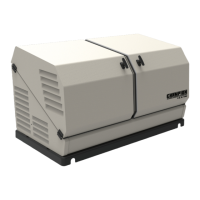
Lists all components shipped with the Home Standby Generator.
Explains the meaning of standard hazard symbols used in the manual.
Details potential dangers and precautions during generator installation.
Outlines essential safety checks and precautions before operating the generator.
Describes dangers associated with operating the generator improperly.
Provides steps to prevent the generator from starting unexpectedly.
Explains the risks of carbon monoxide poisoning from generator exhaust.
Details dangers of electric shock and necessary precautions.
Highlights risks of fire and explosion related to fuel and operation.
Warns about contact with hot surfaces and exhaust components.
Advises caution around rotating parts to prevent injury.
Emphasizes the importance of legible safety labels on the unit.
Shows the location and types of safety labels affixed to the generator.
Illustrates the locations of critical identification and safety labels on the unit.
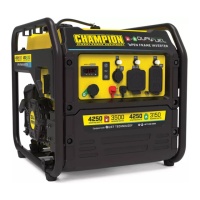
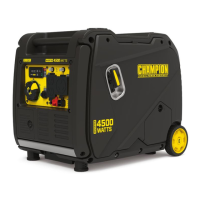
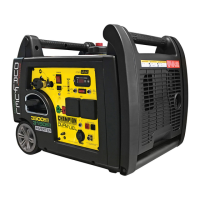
Identifies major external components of the generator and its engine.
Describes the control panel, main circuit breaker, and exercise switch.
Covers setting exercise time, hour meter, control modules, and indicators.
Details emission standards, specifications, fuel, battery needs, and model info.
Explains how to open and access the generator's enclosure and components.
Lists essential checks to perform before starting the generator.
Details the correct procedure for shutting down the generator.
Outlines recommended maintenance tasks and intervals for the generator.
Covers engine oil requirements, checking levels, and changing oil.
Instructions for inspecting and cleaning the engine air cleaner.
Details how to inspect, gap, and replace the spark plug.
Provides guidance on inspecting and maintaining the generator's batteries.
Advises on washing and protecting the generator enclosure from corrosion.
Outlines necessary steps if the generator has been submerged.
Steps to prepare the generator for extended periods of non-use.
Instructions for bringing a stored generator back into service.
Exploded views and part number lists for engine components.
Exploded views and part number lists for enclosure parts.
Exploded views and part number lists for alternator and exhaust.
Exploded views and part number lists for control panel components.
Addresses common starting, running, and stopping problems with the generator.
Guides users on diagnosing and resolving the lack of AC output.
Explains the meaning of LED indicators and how to reset fault codes.
Guides users on selecting essential circuits to be powered by the HSB.
Advises on protecting sensitive electronics from voltage fluctuations.
Key points for educating the homeowner on operation and maintenance.
A form to record HSB and ATS model and serial numbers for reference.
Outlines the 5-year limited warranty terms for home standby units.
Details the coverage periods for parts, labor, and engine components.
Provides guidelines on warranty activation, transfer, and usage.
Lists what is not covered by the warranty and liability limitations.
Provides contact details for obtaining warranty service and support.
Explains the owner's and manufacturer's rights and responsibilities for emissions warranty.
Outlines the specific warranty coverage for emission-related parts.
Details the owner's responsibilities for maintenance and proper use.
Lists parts covered under the emission control system warranty.
Explains the process and requirements for obtaining emission warranty service.
 General
| Model | 100136 |
|---|---|
| Fuel Type | Gasoline |
| Noise Level | 58 dBA |
| Rated AC Voltage | 120V |
| Rated AC Frequency | 60 Hz |
| Engine Displacement | 79 cc |
| Warranty | 3 years |
| Run Time at 25% Load | 11.5 hours |
| Outlets | 2 x 120V 20A |
| Type | Inverter Generator |
| Start Type | Electric / Recoil |

 To Next Page