Need help?
Do you have a question about the CHCNAV i50U and is the answer not in the manual?
Copyright information and trademarks related to the product and manual.
General safety precautions and warnings for using the GNSS receiver.
Compliance statement regarding FCC regulations for digital devices.
Guidelines and warnings for safe operation of the receiver.
Explains the meaning of warning and caution symbols in the manual.
Discusses regulations for wireless modem use and licensing requirements.
Instructions for proper handling, care, and maintenance of the receiver.
Information on how to obtain technical assistance and support.
Legal disclaimer regarding user responsibility and guide updates.
Request for user feedback to improve the user guide.
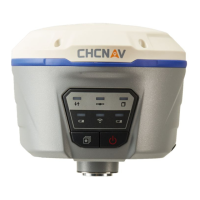
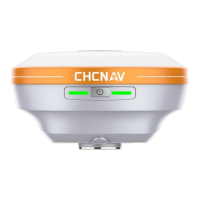
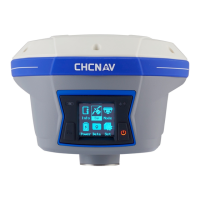
General description of the i50 GNSS receiver features and capabilities.
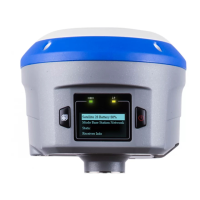
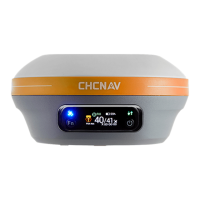
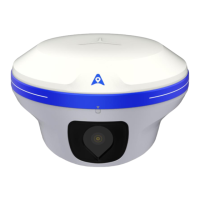
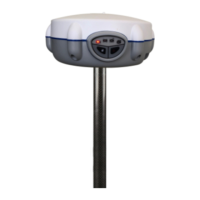
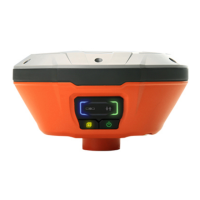
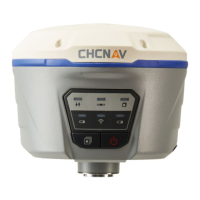
Identifies the physical components and ports of the i50 receiver.
Details the front panel layout, indicator LEDs, and buttons.
Describes the components located on the lower housing of the receiver.
Details the different ports on the receiver and their functions.
Information about the receiver's internal batteries and power management.
Covers the rechargeable Lithium-ion batteries and charging procedures.
Instructions for charging the internal batteries with safety warnings.
Safety precautions and warnings related to handling Lithium-ion batteries.
Methods for powering the receiver using external sources like AC adapter or vehicle battery.
Step-by-step guide for installing the battery and SIM card into the receiver.
Lists the standard accessories included with the receiver.
Details the accessories included in the Base Kit.
Details the accessories included in the Rover Kit.
Instructions for connecting the receiver to a computer for data transfer.
Guide for establishing a connection with a controller device.
Steps to connect the receiver to LandStar 7 software using Wi-Fi.
Steps to connect the receiver to LandStar 7 software using Bluetooth.
Procedures for downloading recorded GNSS measurement data from the receiver.
Recommendations for optimal placement and setup of the base station.
Steps to output correction data using the internal radio modem.
Detailed steps for setting up the base station for correction output.
Instructions for outputting correction data using an external radio.
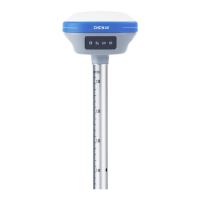
Recommendations for optimal placement and setup of the rover station.
Step-by-step instructions for setting up the rover station.
Lists compatible web browsers for accessing the receiver's web interface.
Steps to establish a connection to the receiver's web interface.
Overview of the receiver's status, position, and satellite information.
Displays detailed position information, DOP values, and satellite data.
Provides insights into the receiver's current operating condition and usage.
Shows the receiver's location on a Google Map.
Allows viewing satellite tracking details and managing constellations.
Displays detailed tracking status of individual satellites.
Presents satellite track diagrams and SNR information.
Visualizes satellite positions in the sky.
Enables or disables specific satellites or constellations.
Allows enabling or disabling tracking signals for satellite systems.
Accesses various receiver settings like antenna, language, and reset.
Shows receiver and reference station information.
Configures antenna parameters affecting data accuracy.
Configures reference station coordinates and broadcast identifiers.
Options to reboot, reset to defaults, or clear data.
Selects the user interface language.
Manages user accounts and passwords.
Switches USB functionality between network and storage.
Configures HCPPP range settings.
Sets up and monitors GNSS data logging and FTP push features.
Configures data logging parameters for each session.
Configures pushing recorded files to an FTP server.
Displays logs of FTP push operations.
Allows downloading recorded data files via the internal FTP site.
Configures receiver inputs and outputs for various data types and ports.
Details input/output settings for RTK Client, TCP/UDP, Serial Port, etc.
Configures serial port settings for data transmission.
Configures Bluetooth settings for data transmission.
Configures radio settings for differential data transmission.
Manages network configurations like mobile, email, HTTP/HTTPS, and FTP.
Displays network setting information.
Configures GPRS model, network mode, and dialing status.
Sets up email alerts for receiver events and specifies recipient addresses.
Configures the HTTP port for network communication.
Configures the HTTPS port for secure network communication.
Configures user name and password for the internal FTP site.
Checks module information and configures WiFi, Bluetooth, and radio settings.
Displays information about WiFi, Bluetooth, and radio modules.
Turns WiFi on/off and modifies the WiFi password.
Turns Bluetooth on/off and modifies the PIN number.
Turns radio function on/off and configures radio parameters.
Manages firmware updates, system logs, and configuration files.
Displays current firmware version and release time.
Shows hardware information like main board and core board versions.
Downloads or updates the configuration file for the receiver.
Downloads the system log file from the receiver.
Selects and downloads user-specific log settings.
Loads new firmware onto the receiver.
Upgrades the GNSS board firmware.
Upgrades the radio firmware.
Allows online firmware upgrade by inputting server address.
Registers the receiver using a provided registration code.
Configures cloud service features like auto start and remote control.
Manages cloud service states, anti-theft, and upload settings.
 General
| Type | GNSS Receiver |
|---|---|
| Frequency | L1, L2, L5 |
| RTK Positioning Accuracy Horizontal | 8 mm + 1 ppm |
| RTK Positioning Accuracy Vertical | 15 mm + 1 ppm |
| Static Positioning Accuracy Vertical | 5 mm + 0.5 ppm |
| Internal Memory | 8 GB |
| Operating Temperature | -40°C to +65°C |
| Humidity | 100% condensing |
| Waterproof/Dustproof | Yes |
| IP Rating | IP67 |
| Battery Life | Up to 10 hours |
| Weight | 1.2 kg |
| Signal Tracking | GPS, GLONASS, Galileo, BeiDou |
| Static Positioning Accuracy Horizontal | 2.5 mm + 0.5 ppm |
| Data Format | CMR, CMR+, RTCM 3.x |
| Communication Interfaces | Bluetooth, Wi-Fi, USB |

 To Next Page