12
2. DETERMINE THE AMOUNT OF BACK PRESSURE THE PLUG
MUST WITHSTAND FOR THE JOB OR APPLICATION.
DETERMINE THE MAXIMUM BACK PRESSURE (the differential uid
pressure, either air or liquid, restrained by the plug) the plug must withstand
before selecting a plug.
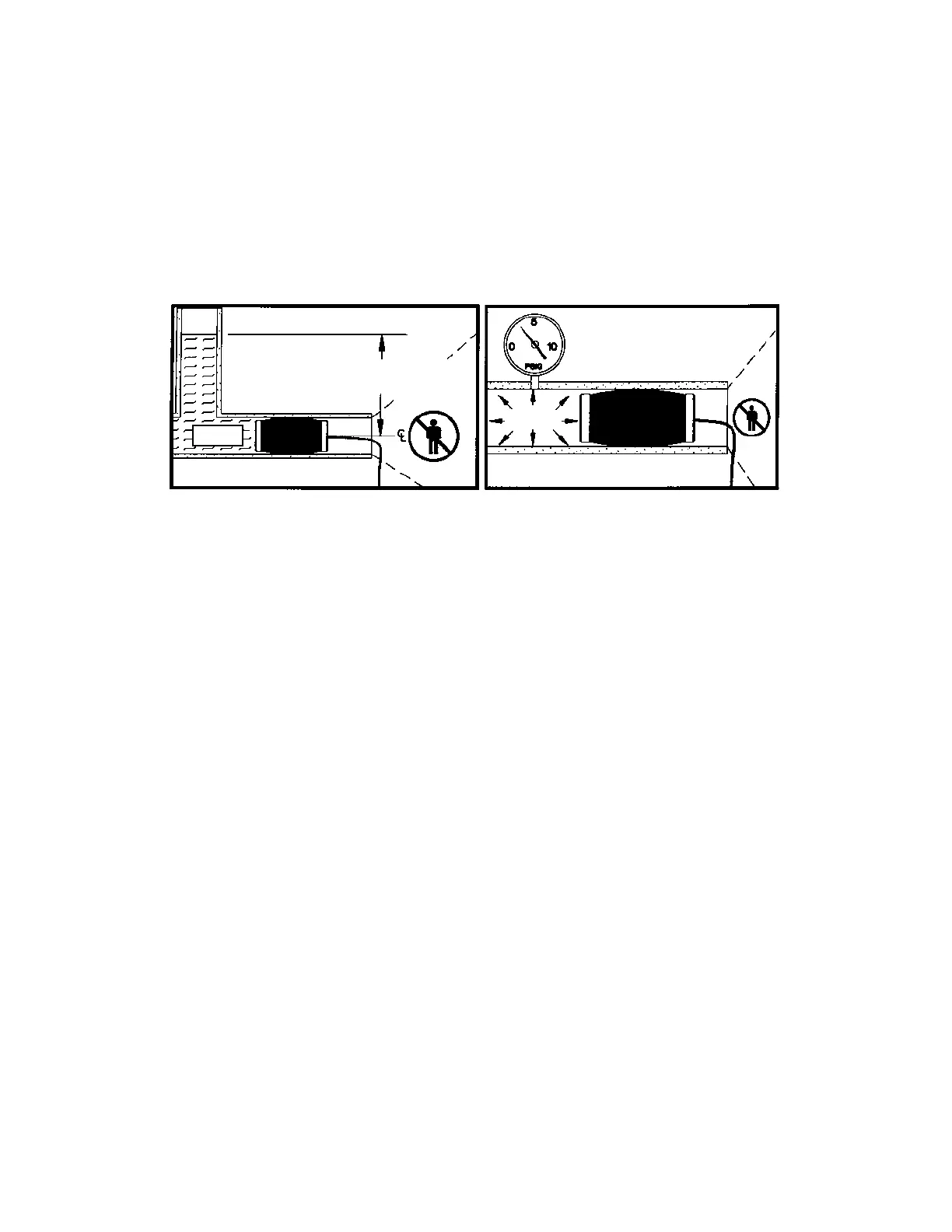
WATER BACK PRESSURE
(hydrostatic back pressure) is measured in either
feet-of-head (uid height above centerline of the plug) or PSIG (Pounds Per
Square Inch Gauge). AIR BACK PRESSURE (pneumatic back pressure) is
measured in PSIG (Pounds Per Square Inch Gauge). See Conversion Table on
page 15.
MAXIMUM ALLOWABLE BACK PRESSURE
for each Cherne pneumatic
pipeline plug is clearly outlined in the data section of this manual, Cherne
catalogs and product specication sheets. Maximum back pressure ratings
listed are for plugs installed in clean, dry pipe of nominal size. Usage of plugs
in pipeline that varies from these conditions may reduce maximum allowable
back pressure.
MAXIMUM BACK PRESSURE RATING - AIR VERSUS WATER.
Pipeline
plugs will normally hold (withstand) nearly equal back pressure for water
pressure (hydrostatic pressure) or air pressure (pneumatic pressure).
However, extra caution must be given when using a plug in an air pressure
application. Air pressure is more likely to cause a pipeline plug to dislodge at
high velocity.
EQUAL BACK PRESSURE MAY BE RESTRAINED FROM EITHER
THE FRONT OR THE BACK OF THE PLUG. VACUUM IS NEGATIVE
PRESSURE. A plug’s maximum allowable back pressure rating is
independent of the direction the back pressure is applied. This also
includes pressure caused by a vacuum which is equivalent to a negative
pressure in the direction of the vacuum. Each 1” Hg (Mercury) of vacuum is
approximately -0.5 PSIG of pressure. If pressure exists on one side of the
plug and vacuum on the other side, the forces must be added to calculate
total back pressure. A vacuum may be created by pumping water from either
side of the plug and not venting the evacuated area.
NEVER ENTER THE DANGER ZONE.
The approximate Danger Zone exists
in front of the plugged pipe opening in an area which expands outwardly in
a cone shape. The Danger Zone includes the entire area where a pipeline
plug, any portions (fragments) thereof and/or any media (back pressure)
restrained by the pipeline plug may be ejected from the pipeline should the
plug rupture or dislodge for any reason. Although the Danger Zone described
applies to normal usage conditions, the foreseeable Danger Zone increases
as ination pressure is increased, as back pressure builds and by possible
ricochet effects from pipes, walls or other objects in the Danger Zone. The
area of foreseeable Danger Zone may be reduced by the use of a backup
system (refer to Section 11 of this manual).
DANGER
ZONE
WATER
WATER BACK PRESSURE
WATER COLUMN IN FEET
ABOVE PIPE CENTERLINE
DANGER
ZONE
AIR BACK PRESSURE
PSIG
BACK
PRESSURE


 To Next Page