EasyManua.ls Logo

Chicago Electric 62370 - User Manual

Chicago Electric 62370
16 pages
Print Icon
To Next Page IconTo Next Page
Loading...
!"#"$%&'(%)*+#"$*%,$-%.$$/-00)))1.,(+&(2(*"3.$14&5
%65,"7%&'(%$*4.8"4,7%#'//&($%,$-%/(&9'4$#'//&($:.,(+&(2(*"3.$14&5
;%<=>
RECIPROCATING SAW
?@AB%CDA<A@EF%B<EGH6
IJ,)%K7,9*%J&79%J*/,(,$*7LM
Owners Manual & Safety Instructions
Save This Manual Keep this manual for the safety warnings and precautions, assembly,
operating, inspection, maintenance and cleaning procedures. Write the product’s serial number in the
back of the manual near the assembly diagram (or month and year of purchase if product has no number).
Keep this manual and the receipt in a safe and dry place for future reference. 19e
When unpacking, make sure that the product is intact
and undamaged. If any parts are missing or broken,
please call 1-888-866-5797 as soon as possible.
Copyright
©
2014 by Harbor Freight Tools
®
. All rights reserved.
No portion of this manual or any artwork contained herein may be reproduced in
any shape or form without the express written consent of Harbor Freight Tools.
Diagrams within this manual may not be drawn proportionally. Due to continuing
improvements, actual product may differ slightly from the product described herein.
Tools required for assembly an d se rv ic e may n ot b e in cl uded.
Read this material before using this product.
Failure to do so can result in serious injury.
SAVE THIS MANUAL.
Question and Answer IconNeed help?

Do you have a question about the Chicago Electric 62370 and is the answer not in the manual?

Summary

Important Safety Information

General Power Tool Safety Warnings

General safety warnings applicable to all power tools.

Work Area Safety

Safety guidelines pertaining to the work environment and area.

Electrical Safety

Critical safety practices related to electrical usage and shock prevention.

Personal Safety

Personal protective measures and user conduct during operation.

Power Tool Use and Care

Reciprocating Saw Safety Warnings

Specific safety precautions for operating the reciprocating saw.

Vibration Safety

Guidance on minimizing risks associated with tool vibration exposure.

Grounding Procedures

Grounded Tools: Three Prong Plugs

Information on grounding requirements for tools with three-prong plugs.

Double Insulated Tools: Two Prong Plugs

Details for double-insulated tools that do not require grounding.

Extension Cord Guidelines

Symbology Explained

Explanation of various symbols and their meanings used in the manual.

Tool Specifications and Setup

Specifications

Technical specifications of the power tool.

Setup - Before Use

Essential steps and checks to perform before operating the tool.

Tool Functions Overview

Identification and overview of the tool's key components and controls.

Operating Instructions

Tool Setup Procedures

Procedures for preparing and setting up the power tool.

Installing the Saw Blade

Step-by-step guide for safely installing the saw blade.

Handle Rotation Adjustment

Instructions on how to adjust the tool's handle position.

Workpiece and Area Preparation

General Cutting Instructions

Standard procedures for performing cutting operations.

Specific Cutting Techniques

Plunge Cutting Method

Specific technique for making plunge cuts with the saw.

Metal Cutting Guide

Guidelines and procedures for cutting metal materials.

Maintenance and Servicing

Cleaning, Maintenance, and Lubrication

Routine procedures for cleaning, maintaining, and lubricating the tool.

Troubleshooting Common Issues

Parts List and Diagram

Parts List Details

Comprehensive list of all parts with quantities and descriptions.

Assembly Diagram

Limited 90 Day Warranty

Summary

Important Safety Information

General Power Tool Safety Warnings

General safety warnings applicable to all power tools.

Work Area Safety

Safety guidelines pertaining to the work environment and area.

Electrical Safety

Critical safety practices related to electrical usage and shock prevention.

Personal Safety

Personal protective measures and user conduct during operation.

Power Tool Use and Care

Reciprocating Saw Safety Warnings

Specific safety precautions for operating the reciprocating saw.

Vibration Safety

Guidance on minimizing risks associated with tool vibration exposure.

Grounding Procedures

Grounded Tools: Three Prong Plugs

Information on grounding requirements for tools with three-prong plugs.

Double Insulated Tools: Two Prong Plugs

Details for double-insulated tools that do not require grounding.

Extension Cord Guidelines

Symbology Explained

Explanation of various symbols and their meanings used in the manual.

Tool Specifications and Setup

Specifications

Technical specifications of the power tool.

Setup - Before Use

Essential steps and checks to perform before operating the tool.

Tool Functions Overview

Identification and overview of the tool's key components and controls.

Operating Instructions

Tool Setup Procedures

Procedures for preparing and setting up the power tool.

Installing the Saw Blade

Step-by-step guide for safely installing the saw blade.

Handle Rotation Adjustment

Instructions on how to adjust the tool's handle position.

Workpiece and Area Preparation

General Cutting Instructions

Standard procedures for performing cutting operations.

Specific Cutting Techniques

Plunge Cutting Method

Specific technique for making plunge cuts with the saw.

Metal Cutting Guide

Guidelines and procedures for cutting metal materials.

Maintenance and Servicing

Cleaning, Maintenance, and Lubrication

Routine procedures for cleaning, maintaining, and lubricating the tool.

Troubleshooting Common Issues

Parts List and Diagram

Parts List Details

Comprehensive list of all parts with quantities and descriptions.

Assembly Diagram

Limited 90 Day Warranty

Overview

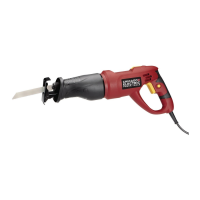
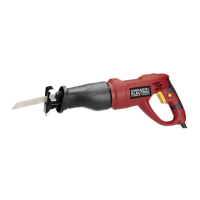
The document describes the Chicago Electric 6 AMP Reciprocating Saw with Rotating Handle, model number 62370. This is a corded power tool designed for various cutting operations, including general cutting, plunge cutting, and metal cutting, when equipped with the appropriate saw blade (sold separately).

Function Description

The reciprocating saw is designed to cut through various materials using a back-and-forth motion of the saw blade. Its primary function is to provide controlled and efficient cutting for different applications. A key feature is its rotating handle, which allows the user to adjust the handle position up to 180 degrees with five positive stops (0°, 45°, 90° to the left and 45°, 90° to the right) for comfort and controlled cutting from any angle. The tool features a variable speed trigger, allowing the user to control the strokes per minute (SPM) by applying more or less pressure, which is useful for cutting different materials (faster speed for softer materials, slower speed for harder materials). It also includes a trigger lock button for continuous cutting operations. The saw blade is secured in a 1/2" Twist-lock chuck for easy installation and removal. The pivoting shoe rests against the workpiece to provide stability and prevent kickback during cutting.

Important Technical Specifications

  • Electrical Rating: 120VAC / 60Hz / 6A
  • Speed: 0-2500 SPM (Strokes Per Minute)
  • Stroke Length: 7/8"
  • Chuck Type: 1/2" Twist-lock

Usage Features

General Operation: Before use, the saw blade must be installed by twisting the chuck counterclockwise, inserting the blade to its deepest position, and then releasing the chuck to lock it. The saw blade's teeth should point downward, and it's crucial to ensure the blade is firmly locked before plugging in the power cord. The handle rotation switch allows for quick adjustment of the handle's angle for optimal comfort and control.

To begin cutting, the user should grip the saw firmly with both hands, rest the front of the pivoting shoe on the workpiece with the blade above the work, and then depress the variable speed trigger. It is critical not to start the saw if the blade is in contact with anything to prevent kickback. For continuous cutting, the trigger lock button can be engaged. The user should guide the blade smoothly through the material without forcing it, allowing the tool to work at its own rate. After cutting, the tool should be allowed to come to a complete stop before being set down, and then unplugged and stored.

Plunge Cutting: This saw is capable of plunge cutting into plywood and thin board panels. It is explicitly stated not to attempt plunge cuts into thick, hard wood or metal panels. For plunge cutting, the line of cut should be clearly marked. The blade tip is placed over the starting point with the saw parallel to the line of cut, and the edge of the pivoting shoe rests on the workpiece, ensuring the blade is not touching the workpiece when the trigger is squeezed to start the tool. Once the saw reaches full speed, it is slowly rotated on the pivoting shoe as the blade contacts and penetrates the workpiece. The pivoting shoe should be pressed firmly against the workpiece throughout the cut.

Metal Cutting: For metal cutting, a metal cutting blade must be installed, and the handle adjusted as needed. The cutting surface should be coated with cutting oil to prevent the blade from overheating. The general cutting procedure, as described above, should then be followed.

Safety Precautions: The manual emphasizes several safety measures:

  • Work Area Safety: Keep the work area clean, well-lit, and free of flammable liquids, gases, or dust. Keep children and bystanders away.
  • Electrical Safety: Ensure power tool plugs match the outlet and are never modified. Avoid body contact with grounded surfaces. Do not expose power tools to rain or wet conditions. Do not abuse the cord. Use appropriate extension cords for outdoor use, and a Ground Fault Circuit Interrupter (GFCI) in damp locations.
  • Personal Safety: Stay alert, wear eye protection (ANSI-approved), hearing protection, and a dust mask (NIOSH-approved) when appropriate. Dress properly, keeping loose clothing and hair away from moving parts. Prevent unintentional starting by ensuring the switch is off before connecting to a power source. Maintain proper footing and balance.
  • Vibration Safety: The tool vibrates during use, and prolonged exposure can cause physical injury. Recommendations include medical check-ups for regular users, avoiding smoking, wearing suitable gloves, choosing tools with lower vibration, incorporating vibration-free periods, gripping the tool lightly, and maintaining the tool properly.
  • Reciprocating Saw Specific Warnings: Hold the tool by insulated gripping surfaces to avoid electric shock if cutting hidden wiring. Secure workpieces with clamps. Do not leave the tool unattended when plugged in. People with pacemakers should consult their physician and avoid operating alone or with the switch locked on.

Maintenance Features

General Maintenance:

  • Before Each Use: Inspect the tool for loose hardware, misalignment or binding of moving parts, cracked or broken parts, damaged electrical wiring, and any other condition that may affect its safe operation.
  • After Use: Wipe external surfaces of the tool with a clean cloth.
  • Periodical Maintenance: Periodically blow dust and grit out of the motor vents using dry compressed air while wearing ANSI-approved safety goggles and NIOSH-approved breathing protection.
  • Blade Condition: Regularly check the condition of the saw blade. Bent, cracked, worn, or dull blades should be discarded and replaced to prevent damage or injury.
  • Cord Replacement: If the supply cord is damaged, it must be replaced only by a qualified service technician.

Troubleshooting: The manual provides a troubleshooting guide for common issues:

  • Tool will not start: Check if the cord is connected, if there's power at the outlet, if the thermal reset breaker has tripped, or if there's internal damage.
  • Tool operates slowly: May be due to an extension cord that is too long or has too small a diameter.
  • Performance decreases over time: Could be caused by a dull or damaged accessory, or worn/damaged carbon brushes.
  • Excessive noise or rattling: Indicates internal damage or wear (e.g., carbon brushes or bearings).
  • Overheating: Can result from forcing the tool to work too fast, a dull/damaged accessory, blocked motor housing vents, or a long/small diameter extension cord.

For all maintenance and troubleshooting, it is emphasized that the tool should be disconnected from the power supply before service, and procedures not specifically explained in the manual should be performed only by a qualified technician.

Chicago Electric 62370 Specifications

General IconGeneral
BrandChicago Electric
Model62370
CategorySaw
LanguageEnglish

Related product manuals