EasyManua.ls Logo

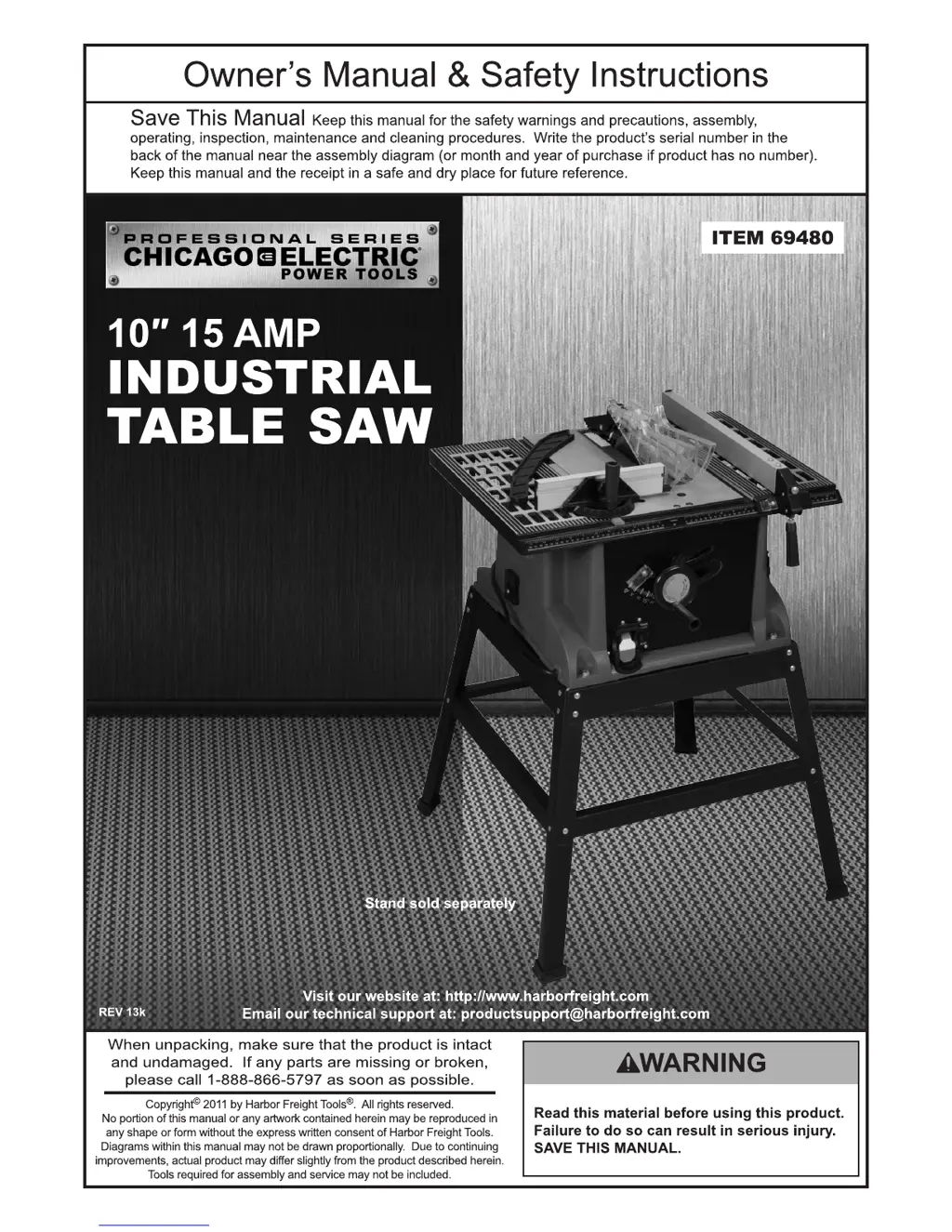
Chicago Electric 69480 - User Manual

Chicago Electric 69480
24 pages
Print Icon
To Next Page IconTo Next Page
Loading...

Questions and Answers

  • M
    Maria DiazAug 19, 2025
    Why won't my Chicago Electric Saw motor start?
    • B
      Brianna LucasSep 12, 2025
      The motor may not start due to several reasons. It could be due to low voltage, so check the power supply. Ensure the key is installed. Inspect the line cord and plug for any shorts or faulty insulation. Also, check the motor connections for shorts or loose connections. The fuses or circuit breakers might be incorrect, so replace them if needed. A defective switch or capacitor could also be the cause, requiring replacement. Finally, the motor overload might have tripped the circuit breaker; in this case, turn off the saw and reset the overload protection.
  • J
    Jeffrey CameronAug 21, 2025
    What to do if the circuit breaker frequently trips with my Chicago Electric Saw?
    • S
      Steven RamirezAug 21, 2025
      If the circuit breaker trips frequently, it could be due to a motor overload, so reduce the load on the motor. It may also be due to inadequate circuit capacity, so connect the saw to a larger circuit. Disconnect other devices from the circuit to prevent circuit overload. Dull blades can also cause this issue, so sharpen or replace the blades.
  • H
    hsnyderAug 23, 2025
    Why is my Chicago Electric 69480 motor stalling or failing to reach full speed?
    • H
      Heather HancockAug 23, 2025
      The motor might be stalling or failing to reach full speed due to a power overload, so reduce the workload. Check the power supply for proper voltage, as low voltage can cause this. An undersized line cord can also be the problem, so use a cord of adequate size or reduce the wiring length. If the motor is overloaded, reduce the load. Inspect the motor connections for shorts or looseness. Incorrect fuses or circuit breakers can also cause this, so replace them with the correct ones. Wood chips clogging the system can also be a factor; inspect the chip blower assembly and fan belt, and remove any excessive wood chips.
  • C
    Cody WeaverAug 26, 2025
    What to do if workpiece kicked back from blade on Chicago Electric Saw?
    • E
      eric62Aug 27, 2025
      If the workpiece is kicked back from the blade, it could be caused by several factors. The fence might be out of alignment, so align it with the mitre gauge slot. The Riving Knife may not be aligned with the blade, so align it. Ensure you are using the fence when feeding the workpiece. Also, make sure the Riving Knife is in place. A dull blade can cause kickback, so replace it. Ensure you push the material all the way past the blade before releasing the workpiece. Finally, check if the miter angle lock knob is tight and tighten it if necessary.
  • M
    Marvin BryantAug 28, 2025
    Why does my Chicago Electric 69480 motor overheat?
    • E
      Emily HamptonAug 28, 2025
      The motor may be overheating due to being overloaded; reduce the load on the motor and turn off the machine until the motor cools down. Excessive dust build-up, which decreases air circulation, can also cause overheating, so remove any dust build-up.
  • E
    egoodAug 30, 2025
    How to fix unsatisfactory cuts with my Chicago Electric 69480?
    • G
      gtaylorAug 30, 2025
      Unsatisfactory cuts can be due to a dull blade, so replace it. Ensure the blade is not mounted backwards; if it is, turn it around. Gum or pitch on the blade can also affect cut quality, so remove the blade and clean it with turpentine and coarse steel wool. Using the incorrect blade for the work being done can also cause issues, so change the blade. Lastly, a dirty table can interfere with cuts, so clean the table with turpentine and steel wool.
  • D
    David DavisSep 1, 2025
    Why does my Chicago Electric 69480 vibrate excessively?
    • Z
      Zachary MuellerSep 1, 2025
      Excessive vibration could be due to the saw not being securely mounted to the workbench, so tighten all mounting hardware. An uneven floor under the bench can also cause vibration, so reposition the saw on a flat, level surface. A damaged saw blade can also lead to vibration, so replace the blade.
  • P
    pwyattSep 4, 2025
    What to do if the workpiece pinched blade during ripping with Chicago Electric 69480 Saw?
    • R
      Robert HughesSep 4, 2025
      If the workpiece is pinching the blade during ripping, the rip fence might not be aligned with the blade, so check and adjust the rip fence. Warped wood with an edge that isn't straight against the fence can also cause this, so select another piece of wood.
  • W
    william44Sep 6, 2025
    How to fix inaccurate 45° and 90° rip cuts on Chicago Electric 69480 Saw?
    • M
      Mark DuranSep 6, 2025
      Inaccurate 45° and 90° rip cuts can occur if the positive stop is not adjusted correctly, so check the blade with a square and adjust the stop. The tilt angle pointer may also not be set accurately, so check the blade with a square and adjust it to zero.
  • L
    Lori MarshallSep 8, 2025
    What to do if workpiece binds on Riving Knife of Chicago Electric 69480?
    • D
      Darryl GrahamSep 9, 2025
      If the workpiece binds on the Riving Knife, it's likely that the Riving Knife is not aligned correctly with the blade, so check and align the Riving Knife with the blade.

Summary

Warning Symbols and Definitions

Danger Symbol Meaning

Defines the 'Danger' symbol, indicating a hazardous situation leading to death or serious injury.

Warning Symbol Meaning

Defines the 'Warning' symbol, indicating a hazardous situation leading to death or serious injury.

Caution Symbol Meaning

Defines the 'Caution' symbol, indicating a hazardous situation leading to minor or moderate injury.

Notice Symbol Meaning

Defines the 'Notice' symbol, pertaining to practices not related to personal injury.

General Tool Safety Warnings

Guards, Keys, and Workspace Safety

Ensure guards are functional, remove tools, keep area clean, and keep children away.

Tool Usage and Maintenance

Use the correct tool, don't force it, maintain it properly, and use recommended accessories.

Personal Safety Precautions

Wear proper apparel, safety glasses, and use correct extension cords.

Operational Hazard Prevention

Secure work, maintain balance, prevent accidental starts, and never leave unattended.

Grounding Instructions

110-120 V Grounded Tool Safety

Instructions for using 110-120V grounded tools with three-prong plugs for shock prevention.

Table Saw Specific Safety Warnings

Blade and Guard Safety

Ensure guards are in place and functional; keep hands clear of the blade.

Kickback Prevention and Workpiece Handling

Understand kickback causes and support workpieces properly to prevent it.

Safe Operation Practices

Use push sticks, correct accessories, and follow all safety guidelines.

Additional Safety and Health Precautions

Operational Safety Practices

Do not depress spindle lock, stay alert, maintain labels, and avoid unintentional starting.

Health and Environmental Warnings

Be aware of chemical dust exposure and lead hazards; consult physician if you have a pacemaker.

Vibration Safety

Health Precautions for Vibration Exposure

Consult a doctor, avoid smoking, and wear gloves to reduce vibration-related injury risk.

Tool Selection and Usage for Vibration

Use low-vibration tools, take breaks, grip lightly, and maintain the tool properly.

Push Stick Design and Features

Essential Push Stick Features

Covers handle notch depth, stick length, notch angle, and material requirements for safe push stick construction.

Setup and Mounting Instructions

Pre-Setup Safety Review

Read all safety information and warnings before setting up or using the product.

Mounting the Table Saw

Instructions for securely mounting the table saw onto a metal stand or wooden surface.

Accessory Installation

Push Stick Bracket Installation

Steps for attaching push stick clamps and blocks to the table saw housing.

Plug Holder Installation

Procedure for securing the plug block and installing the plug clamp.

Table Saw Specifications

Key Technical Specifications

Details electrical rating, motor speed, cutting depth, and arbor size.

Table Saw Component Identification

Overview of Key Functions and Controls

Identifies major components like the fence, blade guard, and height adjustment.

Blade Installation and Replacement

Blade Guard and Pawl Lock Removal

Steps to remove the blade guard and anti-kickback pawl assembly before changing the blade.

Table Insert and Height Adjustment

Procedure for removing the table insert and adjusting the saw blade height.

Blade Removal and Installation

Instructions for loosening, removing, installing, and tightening the saw blade and nut.

Riving Knife Adjustment

Riving Knife Adjustment Procedure

Steps for adjusting the Riving Knife to follow the saw blade and prevent binding.

Anti-Kickback Pawl Installation

Installing Anti-Kickback Pawls

Procedure for installing the pawl socket and pawls onto the Riving Knife.

Blade Guard Installation

Attaching and Securing the Blade Guard

Steps for attaching the blade guard to the Riving Knife and locking it in place.

Fence Attachment and Adjustment

Attaching and Adjusting the Fence

Instructions for attaching the fence and adjusting its position parallel to the blade.

Operating Instructions

Tool Setup and Blade Adjustment

Instructions for raising, lowering, and adjusting the angle of the saw blade.

Adjusting the Width Of Cut

Adjusting the Fence for Cut Width

Steps for adjusting the fence position using the graduated scale for desired cut width.

Work Area Setup

Preparing the Work Area

Designate a clean, well-lit area and route the power cord safely.

General Operating and Cutting Instructions

Hand Placement During Cutting

Proper hand placement to avoid contact with the saw blade during cutting operations.

Making a Cut

Step-by-step guide for plugging in, turning on, and performing cuts with the table saw.

Overload Protection and Servicing

Overload Protection System

Explanation of the overload protector and how to reset it after a shutdown.

Maintenance and Servicing Procedures

Guidelines for inspecting, cleaning, lubricating, and servicing the table saw.

Troubleshooting

Motor and Circuit Breaker Issues

Addresses common problems like motor not starting, stalling, overheating, or tripping circuit breakers.

Cut Accuracy and Workpiece Binding

Solutions for inaccurate cuts, workpiece binding, and blade issues.

Troubleshooting (Continued)

Kickback and Blade Movement Issues

Addresses workpiece kickback, blade not moving freely, and vibration problems.

Crosscut Accuracy and Saw Performance

Solutions for inaccurate crosscuts and general unsatisfactory saw performance.

Parts List

Table Saw Parts Identification

Comprehensive list of all parts with their descriptions and quantities for the table saw.

Assembly Diagram

Main Assembly Diagram

Visual representation of the table saw's main components and their assembly.

Assembly Diagram (Continued)

Motor Assembly Diagram

Detailed diagram of the motor and related components for assembly.

Limited 90 Day Warranty

Warranty Terms and Conditions

Details the 90-day warranty, exclusions, and procedures for making a claim.

Chicago Electric 69480 Specifications

General IconGeneral
TypeMiter Saw
Motor Power15 Amp
Voltage120V
No Load Speed5000 RPM
Blade Diameter/Size10 inch
Amperage15 Amp
Arbor Size5/8 in.

Related product manuals