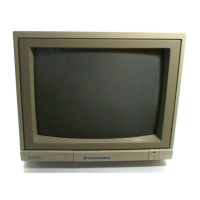
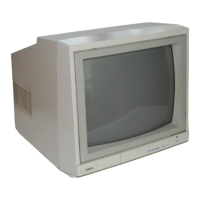
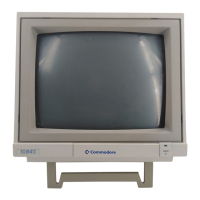
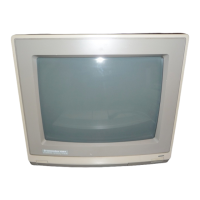
1930 SERVICE MANUAL
NAPCEC SAFETY GUIDELINES FOR THE
PROFESSIONAL SERVICE TECHNICIAN
Safety Checks
After the original service problem has been cor
rected, a complete safety check should be made.
Be sure to check over the entire set, not just the
areas where you have worked. Some previous ser
vicer may have left an unsafe condition, which
could be unknowingly passed on to your customer.
Be sure to check all of the following:
Fire and Shock Hazard
1. Be sure all components are positioned in such
as way as to avoid the possibility of adjacent
component shorts. This is especially important
on those chassis which are transported to and
from the service shop.
2. Never release a repaired receiver unless all
protective devices such as insulators, barriers,
covers, strain reliefs, and other hardware have
been installed according to the original design.
3. Soldering and wiring must be inspected
to locate possible cold solder joints, solder
splashes, sharp solder points, frayed leads, pin
ched leads, or damaged insulation (including ac
cord). Be certain to remove loose solder balls
and all other loose foreign particles.
4. Check across-the-line components and other
components for physical evidence of damage
or deterioration and replace if necessary. Follow
original layout, lead length and dress.
5. No lead or component should touch a receiv
ing tube or a resistor rated at 1 watt or more.
Lead tension around protruding metal surfaces
or edges must be avoided.
6. Critical components having special safety
characteristics are identified with an S by the
Ref. No. in the parts list and enclosed within
a broken line* along with the safety symbol A
on the schematics. Replacement parts without
the same safety characteristics may create
shock, fire or other hazards.
7. When servicing any receiver, always use a
separate isolation transformer for the chassis.
Failure to use a separate isolation transformer
may expose you to possible shock hazard, and
may cause damage to servicing instruments.
8. Many receivers use a polarized line cord (one
wide pin on the plug). Defeating this safety
device may create a potential hazard to the ser
vicer and the user. Extension cords which do
not incorporate the polarizing feature should
never be used.
9. After re-assembly of the set, always perform
an ac leakage test or resistance test from
the line cord to all exposed metal parts of the
cabinet. Also, check all metal control shafts
(with knobs removed), antenna terminals,
handles, screws, etc. to be sure the set is safe
to operate without danger of electrical shock.
•Broken lin e :
_______
________
Implosion
1. All picture tubes used in current model receivers
are equipped with an integral implosion system.
Care should always be used, and safety glasses
worn, whenever handling any picture tube.
Avoid scratching or otherwise damaging the
picture tube during installation.
2. Use only replacement tubes as specified by the
manufacturer.
X-radiation
1. Be sure procedures and instructions to all your
service personnel cover the subject of X-
radiation. Potential sources of X-rays in TV
receivers are the picture tube and the high
voltage circuits. The basic precaution which
must be exercised is to keep the HV at the fac
tory recommended level.
2. To avoid possible exposure to X-radiation and
electrical shock, only the manufacturer's
specified anode connectors must be used.
3. It is essential that the service technician has
available at all times an accurate HV meter. The
calibration of this meter should be checked
periodically against a reference standard.
4. When the HV circuitry is operating properly
there is no possibility of an X-radiation prob
lem. High voltage should always be kept at the
manufacturer's rated value—no higher—for op
timum performance. Every time a color set is
serviced, the brightness should be run up and
down while monitoring the HV with a meter to
be certain that the HV does not exceed the
21



 To Next Page