2. Introduction
MF0150A9A_prel.docx Manual for ION-M23 SDARS 3-Sector Page 13
2. Introduction
2.1. Purpose
If the direct satellite link does not provide sufficient signal strength in a certain area due
to topological conditions, the optical terrestrial repeater is a suitable means to cover
this area with sufficient signal strength.
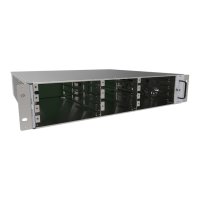
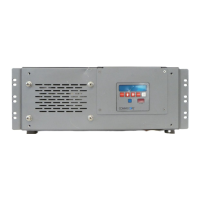
Such an optical terrestrial repeater contains an optical Master Unit and one or several
Remote Units. The number of the Remote Units depends on the hardware and
software configuration. The Remote Units are connected to the Master Unit with optical
links. The optical loss must be less than 10 dB inclusive optical couplers or splitters.
The Master Unit is the interface to the supplied signals. The configuration of a Master
Unit depends on the number of the Remote Units and the frequency range.
The ION uses lasers in the wavelength range 1310 nm and 1550 nm. The maximum
optical output power of the lasers is 6.7 mW.
2.2. The ION-M23 SDARS 3-Sector
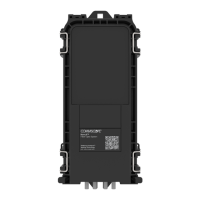
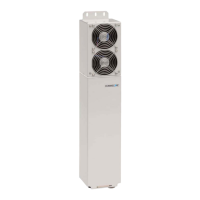
The ION-M23 SDARS 3-Sector is a Remote Unit configuration used in conjunction with
a Master Unit, both forming an optical terrestrial repeater. This system transports
signals in the frequency range 2324 to 2341.5 MHz, providing a cost-effective solution
for coverage.
The ION system allows the distribution of RF over long distances without affecting
signal quality. The combination of these units gives maximum flexibility while providing
a scalable solution. The system is optimized for OFDM signals in the band 2324 -
2341.5 MHz. and an integrated 3-way divider allows the symmetrical distribution of
transported signals to three antenna ports. Furthermore, it is provisioned for future
modulation schemes and frequency bands.
The ION can be easily set-up and supervised from a graphical user interface (GUI).
Remote units are commissioned through the use of built-in test equipment. An auto
levelling function compensates for the optical link loss making installation easy and
quick.
The entire system as well as complete network of systems can be managed remotely
most efficiently by Commscope’s A.I.M.O.S, which includes alarm monitoring, task
automation, statistics, inventory management, and many more features. Should a
sophisticated interface not be required, the Master Unit can be directly connected to
the alarm interface of a base station via its contact relay.


 To Next Page