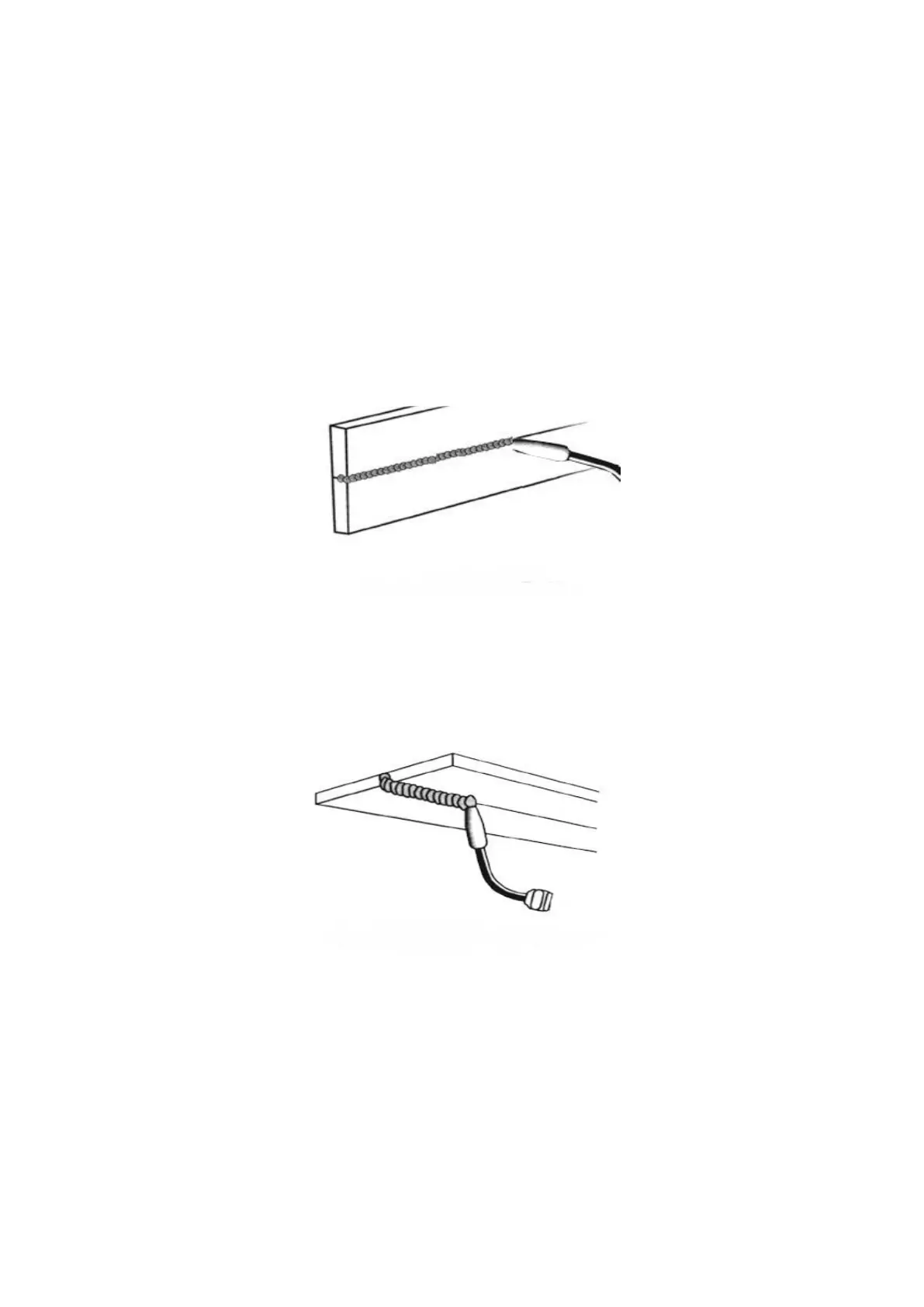
The HORIZONTAL POSITION is performed very similarly to the flat weld except that
angle B (see HOLDING THE TORCH) is such that the wire, directed more toward the
metal above the weld joint, is to help prevent the weld puddle from running downward
while still allowing slow enough travel speed. A good starting point for angle B is
about 30 degrees DOWN from being perpendicular to the work piece.
VERTICAL POSITION it is easier for many people to pull the torch from top to bottom.
It can be difficult to prevent the puddle from running downward. Pushing the torch
from bottom to top may provide better puddle control and allow slower rates of travel
speed to achieve deeper penetration. When vertical welding, angle B (see HOLDING
THE TORCH) is usually always kept at zero, but angle A will generally range from 45
to 60 degrees to provide better puddle control.
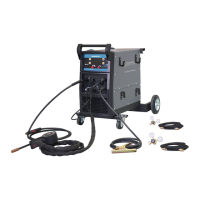
The OVERHEAD POSITION is the most difficult welding position. Angle A (see
HOLDING THE TORCH) should be maintained at 60 degrees. Maintaining this angle
will reduce the chances of molten metal falling into the nozzle. Angle B should be held
at zero degrees so that the wire is aiming directly into the weld joint. If you experience
excessive dripping of the weld puddle, select a lower heat setting. Also, the weave
bead tends to work better than the stringer.
4.4 Multiple Pass Welding
Butt Weld Joints When butt welding thicker materials; you will need to prepare the
edges of the material to be joined by grinding a bevel on the edge of one or both
pieces of the metal being joined. When this is done, a “V” is created between the two
pieces of metal that will have to be welded closed. In most cases more than one pass
or bead will need to be laid into the joint to close the “V”.


 To Next Page