6.4 Welding position
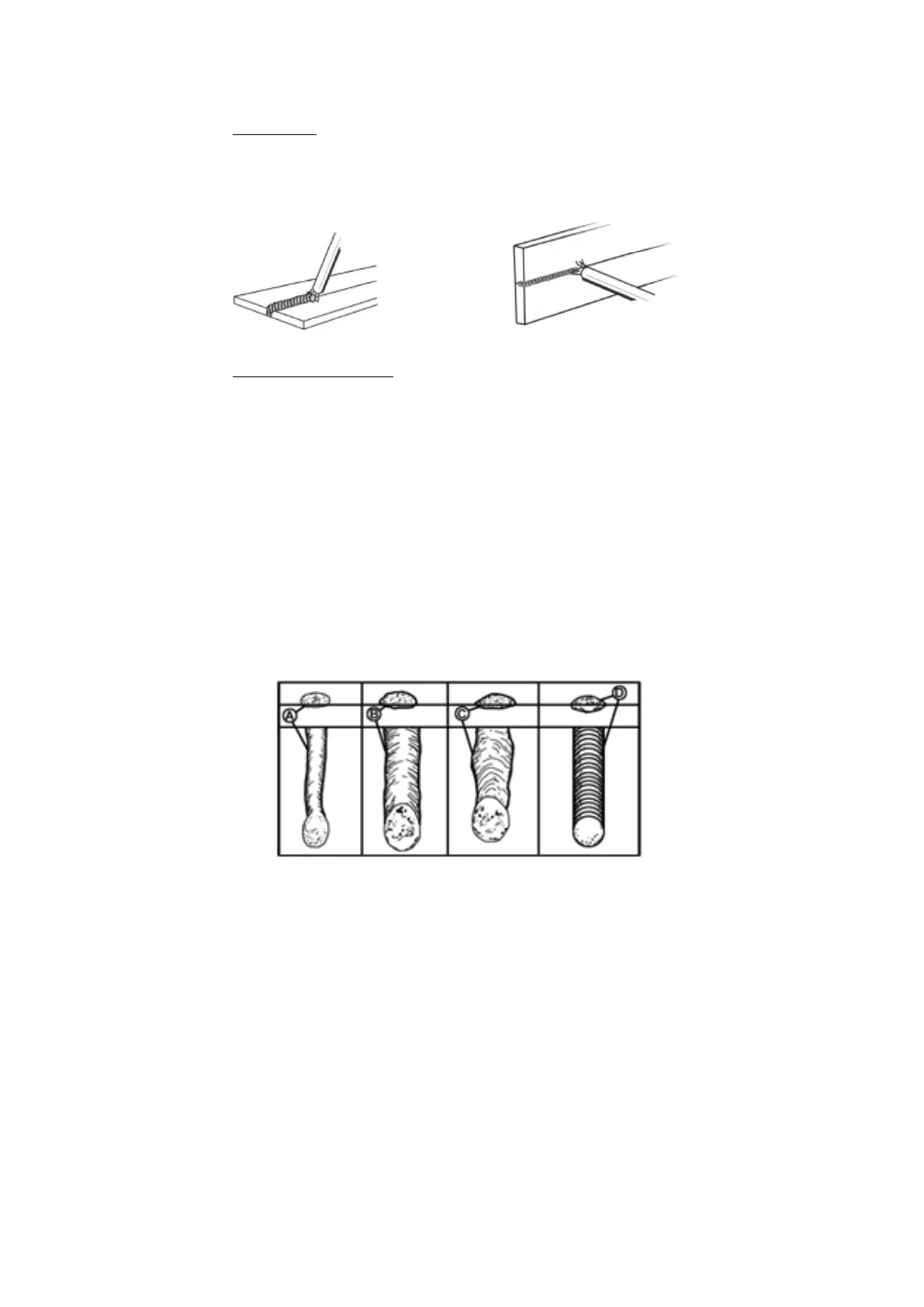
Flat position is the easiest of the welding positions and is most commonly used. It is
best if you can weld in the flat position if at all possible, as good results are easier to
achieve.
The horizontal position is performed very much the same as the flat weld except that
the angle is different such that the electrode, and therefore the arc force, is directed
more toward the metal above the weld joint. This more direct angle helps prevent the
weld puddle from running downward while still allowing slow enough travel speed to
achieve good penetration. A good starting point for your electrode angle is about 30
degrees DOWN from being perpendicular to the work piece.
6.5 Judge the good weld bead
When the trick of establishing and holding an arc has been learned, the next step is
learning how to run a good bead. The first attempts in practice will probably fall short
of acceptable weld beads. Too long of an arc will be held or the travel speed will vary
from slow to fast (see following).
A. Weld speed is too fast.
B. Weld speed is too slow.
C. Arc is too long.
D. Ideal weld.
A solid weld bead requires that the electrode be moved slowly and steadily along the
weld seam. Moving the electrode rapidly or erratically will prevent proper fusion or
create a lumpy, uneven bead.
6.6 Finish the bead
As the coating on the outside of the electrode burns off, it forms an envelope of
protective gases around the weld. This prevents air from reaching the molten metal
and creating an undesirable chemical reaction. The burning coating, however, forms
slag. The slag formation appears as an accumulation of dirty metal scale on the
finished weld. Slag should be removed by using a chipping hammer.


 To Next Page