EasyManua.ls Logo

Craftsman 137.218030 - User Manual

Craftsman 137.218030
30 pages
Print Icon
To Next Page IconTo Next Page
Loading...
Operator's Manual
®
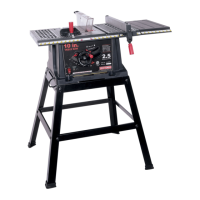
10 in. TABLE SAW WiTH STAND
Model No, 137.218030
CAUTION:
Before using this Table Saw,
read this manual and follow
all its Safety Rules and
Operating instructions
e Safety Instructions
Installation
o Operation
e Maintenance
Parts List
Customer Help Line
For Technical Support
1-800-843-1682
Sears Parts &
Repair Center
1-800-488-1222
Sears, Roebuck and Co., Hoffman Estates, IL 60179 USA
Visit our Craftsman website: www.sears.comlcraftsman
Part No. 137218030001
Question and Answer IconNeed help?

Do you have a question about the Craftsman 137.218030 and is the answer not in the manual?

Summary

Warranty

Product Specifications

Power Tool Safety

Table Saw Safety

Electrical Requirements and Safety

Grounding Instructions

Provides a path of least resistance for electric currents to reduce shock risk.

Guidelines for Extension Cords

Details on selecting and using appropriate extension cords for safety and performance.

Carton Contents

Unpacking and Checking Contents

Instructions for unpacking and verifying all parts against the packing list.

Tools Needed For Assembly

List of tools required for assembling the table saw.

Know Your Table Saw

Glossary of Terms

Assembly and Adjustments

Assemble Stand

Step-by-step instructions for assembling the saw's stand.

Assemble Table Saw to Stand

Instructions for mounting the table saw unit onto its assembled stand.

Storage

Details on storage locations for the rip fence and miter gauge.

Mounting Saw onto Work Surface

Instructions for securing the saw to a workbench instead of its stand.

Blade Raising and Tilting Mechanism

Procedure for attaching and using handwheels to adjust blade height and tilt.

Installing and Changing the Blade

Detailed steps for safely installing and replacing the saw blade.

Blade Guard Assembly

Instructions for assembling and installing the blade guard and splitter.

Installing the Table Extension Fence

Guidance on installing the table extension fence for wider workpieces.

Using the Table Extension Fence

How to adjust the position and height of the table extension fence.

Miter Gauge Adjustment

Steps to check and adjust the miter gauge for accurate cuts.

Rip Fence Adjustment

Procedure for aligning the rip fence parallel to the blade and miter slots.

Rip Fence Indicator Adjustment

How to calibrate the rip fence indicator to the measurement scale.

Adjusting the 90° and 45° Positive Stops

Setting positive stops for quick and accurate 90° and 45° blade angle positioning.

Blade Tilt Pointer

Adjusting the pointer for accurate reading of the blade tilt angle.

Blade Parallel to the Miter Gauge Groove

Procedure to ensure the saw blade is perfectly parallel to the miter gauge slots.

Additional Blade Adjustments

Detailed steps for fine-tuning blade alignment using adjustment rods.

Operation

Basic Saw Operations

Fundamental operations including raising and lowering the blade.

Tilting the Blade

How to adjust the blade tilt for bevel cuts.

On;Off Switch

Locating and operating the power switch for the saw.

Locking Switch in Off Position

Securing the saw by removing the safety key when not in use.

Overload Protection

Understanding and resetting the motor overload protection feature.

Using the Table Extension Fence

How to adjust and use the table extension fence for various cuts.

Cutting Operations

Ripping

Step-by-step guide for making rip cuts along the length of the workpiece.

Bevel Ripping

Performing rip cuts with the blade set at a bevel angle.

Ripping Small Pieces

Safety precautions and techniques for ripping narrow workpieces.

Crosscutting 90° Miter Angle

Instructions for making crosscuts perpendicular to the workpiece length.

Bevel Crosscutting

Crosscuts performed with the blade set at a bevel angle.

Compound Miter Crosscutting

Making cuts that combine both miter and bevel angles.

Mitering 0°~45° Miter Angle

Crosscuts made with the miter gauge set at an angle other than 90°.

Using Wood Facing on the Rip Fence

Adding a wood facing to the rip fence for special cutting operations.

Dado Cuts

Maintenance

General Maintenance

Routine cleaning, polishing, and safety checks for the table saw.

Blade Raising and Tilting Mechanism

Checking and adjusting the blade lift and tilt mechanisms for proper function.

Lubrication

Information on lubricating mechanical parts with dry lubricants.

Troubleshooting Guide

Parts List

Parts List for Table Saw Schematic

Detailed list of all parts for the table saw, referencing the schematic.

Parts List and Schematic for Motor

Parts List and Schematic for Stand

Push Stick Construction

Summary

Warranty

Product Specifications

Power Tool Safety

Table Saw Safety

Electrical Requirements and Safety

Grounding Instructions

Provides a path of least resistance for electric currents to reduce shock risk.

Guidelines for Extension Cords

Details on selecting and using appropriate extension cords for safety and performance.

Carton Contents

Unpacking and Checking Contents

Instructions for unpacking and verifying all parts against the packing list.

Tools Needed For Assembly

List of tools required for assembling the table saw.

Know Your Table Saw

Glossary of Terms

Assembly and Adjustments

Assemble Stand

Step-by-step instructions for assembling the saw's stand.

Assemble Table Saw to Stand

Instructions for mounting the table saw unit onto its assembled stand.

Storage

Details on storage locations for the rip fence and miter gauge.

Mounting Saw onto Work Surface

Instructions for securing the saw to a workbench instead of its stand.

Blade Raising and Tilting Mechanism

Procedure for attaching and using handwheels to adjust blade height and tilt.

Installing and Changing the Blade

Detailed steps for safely installing and replacing the saw blade.

Blade Guard Assembly

Instructions for assembling and installing the blade guard and splitter.

Installing the Table Extension Fence

Guidance on installing the table extension fence for wider workpieces.

Using the Table Extension Fence

How to adjust the position and height of the table extension fence.

Miter Gauge Adjustment

Steps to check and adjust the miter gauge for accurate cuts.

Rip Fence Adjustment

Procedure for aligning the rip fence parallel to the blade and miter slots.

Rip Fence Indicator Adjustment

How to calibrate the rip fence indicator to the measurement scale.

Adjusting the 90° and 45° Positive Stops

Setting positive stops for quick and accurate 90° and 45° blade angle positioning.

Blade Tilt Pointer

Adjusting the pointer for accurate reading of the blade tilt angle.

Blade Parallel to the Miter Gauge Groove

Procedure to ensure the saw blade is perfectly parallel to the miter gauge slots.

Additional Blade Adjustments

Detailed steps for fine-tuning blade alignment using adjustment rods.

Operation

Basic Saw Operations

Fundamental operations including raising and lowering the blade.

Tilting the Blade

How to adjust the blade tilt for bevel cuts.

On;Off Switch

Locating and operating the power switch for the saw.

Locking Switch in Off Position

Securing the saw by removing the safety key when not in use.

Overload Protection

Understanding and resetting the motor overload protection feature.

Using the Table Extension Fence

How to adjust and use the table extension fence for various cuts.

Cutting Operations

Ripping

Step-by-step guide for making rip cuts along the length of the workpiece.

Bevel Ripping

Performing rip cuts with the blade set at a bevel angle.

Ripping Small Pieces

Safety precautions and techniques for ripping narrow workpieces.

Crosscutting 90° Miter Angle

Instructions for making crosscuts perpendicular to the workpiece length.

Bevel Crosscutting

Crosscuts performed with the blade set at a bevel angle.

Compound Miter Crosscutting

Making cuts that combine both miter and bevel angles.

Mitering 0°~45° Miter Angle

Crosscuts made with the miter gauge set at an angle other than 90°.

Using Wood Facing on the Rip Fence

Adding a wood facing to the rip fence for special cutting operations.

Dado Cuts

Maintenance

General Maintenance

Routine cleaning, polishing, and safety checks for the table saw.

Blade Raising and Tilting Mechanism

Checking and adjusting the blade lift and tilt mechanisms for proper function.

Lubrication

Information on lubricating mechanical parts with dry lubricants.

Troubleshooting Guide

Parts List

Parts List for Table Saw Schematic

Detailed list of all parts for the table saw, referencing the schematic.

Parts List and Schematic for Motor

Parts List and Schematic for Stand

Push Stick Construction

Overview

This document is the Operator's Manual for a Craftsman 10-inch Table Saw with Stand, Model No. 137.218030. It provides comprehensive information on the saw's function, technical specifications, usage, and maintenance.

Function Description:

The Craftsman 10-inch Table Saw is a power tool designed for cutting wood and similar materials. It is primarily used for ripping (cutting with the grain) and crosscutting (cutting across the grain) workpieces. The saw features a circular blade that protrudes through a flat table, allowing the user to guide material against a fence or miter gauge for precise cuts. Key components include a blade guard and splitter assembly for safety, a rip fence for straight cuts, and a miter gauge for angled crosscuts. The saw can perform various types of cuts, including 90° crosscuts, bevel crosscuts (0°-45° blade bevel), mitering (0°-45° miter angle), compound miter crosscuts (combining miter and bevel angles), and dado cuts for creating grooves.

Important Technical Specifications:

  • Model No.: 137.218030
  • Motor Type: Universal
  • Amps: 15
  • Voltage: 120 Volt
  • Hz: 60
  • RPM (no load): 5000
  • Rip Capacity With Extension: 24 inches (Right & Left)
  • Blade Size: 10 inches
  • Blade Arbor Size: 5/8 inches
  • Maximum Cut Depth @ 90°: 3 inches
  • Maximum Cut Depth @ 45°: 2-1/2 inches
  • Maximum Diameter Dado: 6 inches (Stackable only)
  • Maximum Dado Cut Width: 1/2 inches
  • Circuit Protection: Requires a 110-120 Volt / 15 Ampere time delay fuse or circuit breaker.
  • Extension Cord Guidelines: Minimum gauge depends on cord length and ampere rating (e.g., 18 AWG for 25ft at 10 Amps, 14 AWG for 150ft at 10 Amps).

Usage Features:

The table saw is designed for versatility and precision in woodworking.

  • Safety Features:
    • Blade Guard, Splitter, and Anti-Kickback Pawls: Must be used for all through-sawing operations to prevent kickback and ensure safety.
    • ON/OFF Switch with Safety Key: Prevents unintentional starting. The key can be removed to lock the switch in the OFF position.
    • Overload Reset Switch: Automatically shuts off the motor in case of overloading or overheating, protecting the motor from damage.
    • Eye Protection: Always wear safety goggles that comply with ANSI safety standard Z87.1.
    • Push Stick: Essential for ripping narrow stock and for completing cuts, keeping hands away from the blade. A pattern for making a push stick is provided.
  • Adjustments and Controls:
    • Blade Raising Handwheel: Used to raise and lower the blade to the desired cutting height (typically 1/8 inch higher than the workpiece).
    • Blade Tilting Handwheel and Bevel Lock Knob: Allows tilting the blade for bevel cuts from 0° to 45°.
    • Rip Fence: Guides the workpiece for straight ripping cuts. It can be adjusted for both IN-RIP and OUT-RIP positions to accommodate different workpiece widths.
    • Miter Gauge: Used for crosscutting and making accurate straight or angle crosscuts. It slides in the table top channels.
    • Table Extension Fence: Provides additional support for long or wide workpieces, adjustable for different ripping capacities.
  • Cutting Operations:
    • Ripping: Cutting along the length of the workpiece. Requires the rip fence.
    • Crosscutting: Cutting across the width of the workpiece. Requires the miter gauge.
    • Bevel Ripping/Crosscutting: Performing rip or crosscuts with the blade tilted at an angle.
    • Mitering: Crosscutting with the miter gauge set at an angle other than 90°.
    • Compound Miter Crosscutting: Combines a miter angle with a bevel angle.
    • Dado Cuts: Special cutting blades (stackable dadoes only, max 6-inch diameter, 1/2-inch width) are used to cut grooves. A special dado insert plate is required.
  • Workpiece Handling:
    • Always hold work firmly against the m miter gauge or rip fence.
    • Never perform operations freehand.
    • Provide adequate support for long or wide workpieces.
    • Feed work into the blade against the direction of rotation only.
    • Avoid kickbacks by keeping the blade sharp, the rip fence parallel to the blade, and the splitter/anti-kickback pawls aligned.
    • Never attempt to free a stalled blade without turning the saw OFF.
    • Always position the larger surface of the workpiece on the table when crosscutting/bevel crosscutting for stability.

Maintenance Features:

Regular maintenance is crucial for safe and efficient operation.

  • General Cleaning:
    • Clean out sawdust from the saw cabinet and motor frequently to prevent fire hazards and motor damage.
    • Polish the saw table with automotive wax to reduce friction.
    • Clean cutting blades with pitch and gum remover.
    • Clean plastic parts with liquid dishwashing detergent and water; avoid ammonia or other harsh solvents.
  • Cord Inspection: Immediately replace a worn, cut, or damaged power cord.
  • Blade Raising and Tilting Mechanism:
    • After every five full hours of operation, check for looseness, binding, or abnormalities.
    • Adjust play in the blade raising screw if necessary (maximum allowable play is 0.16 inches (4 mm)).
    • Keep the bevel angle adjustment rod clean and free of sawdust, gum, and pitch.
  • Lubrication:
    • Motor bearings are permanently lubricated and require no additional lubrication.
    • Lubricate mechanical parts with pivots or threaded rods (e.g., graphite or silicone) to prevent sawdust accumulation.
  • Blade Alignment:
    • Periodically check and adjust the blade's 90° and 45° positive stops.
    • Ensure the blade is parallel to the miter gauge groove.
    • Adjust the rip fence indicator for accurate measurements.
    • Realign the blade guard and splitter assembly after any adjustments or blade changes.
  • Professional Service: All electrical or mechanical repairs should only be attempted by a trained repair technician. Contact the Sears Service Center for service and use only identical replacement parts.

The manual emphasizes the importance of reading and understanding all safety rules and operating instructions before using the tool to prevent serious injury or damage. It also provides contact information for customer support and Sears Parts & Repair Center.

Craftsman 137.218030 Specifications

General IconGeneral
BrandCraftsman
Model137.218030
CategorySaw
LanguageEnglish

Related product manuals