Need help?
Do you have a question about the Crumar Seventeen and is the answer not in the manual?
Warnings regarding physical handling, cleaning, and material care to maintain warranty and product integrity.
Details adjustable parameters for the physically modeled Tine Piano sound engine.
Describes adjustable parameters for the sampled sound engine, including velocity and resonance.
Explains FX1, FX2, AMP simulator, Delay, Reverb, and Equalization effects and their parameters.
Details the layout and function of all input/output ports on the instrument.
Explains the distinct functions of the Type-A (System) and Type-B (MIDI I/O) USB ports.
Highlights the key differences in the front panel controls and displays between the 73 and 88-key models.
Navigating and selecting different instrument sounds within the edit mode.
Accessing and adjusting FX-1, FX-2, AMP, DELAY, REVERB, and EQ.
Adjusting parameters for the physically modeled Tine piano.
Modifying parameters for the sampled sounds.
Moving, storing, exporting, and importing presets.
Configuring MIDI, velocity, tuning, and light intensity.
Installing and uninstalling new sounds or sample content.
Managing firmware updates and factory resets.
Details MIDI message compatibility, notes, pitch bend, aftertouch, NRPN, Sysex, and channel selection.
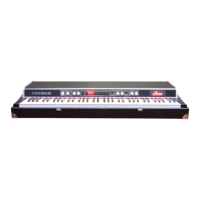
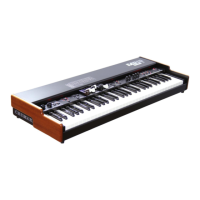
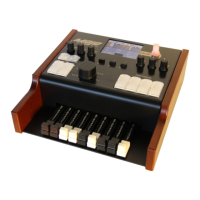
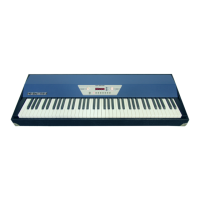
The Crumar Seventeen and Seventeen "Parsifal" are high-quality digital musical instruments, entirely conceived, developed, and built in Italy. They are designed to bridge the gap between digital and real instruments, offering a sound and feel as close to the real thing as possible. This manual covers both variations, which share the same operating system, though they have differences in pre-installed factory sounds and physical characteristics.
The Crumar Seventeen and Seventeen "Parsifal" are digital pianos that feature two primary synthesis engines:
Beyond the core sound engines, the instruments include a comprehensive effects section:
The instrument's front panel serves as the main interface for all operations, from performance controls to deep sound editing and global settings.
 General
| Brand | Crumar |
|---|---|
| Model | Seventeen |
| Category | Musical Instrument |
| Language | English |

 To Next Page