25
OM 1364-1
WWW.DAIKINAPPLIED.COM
A2L DETECTION AND MITIgATION
A2L Detection and Mitigation
A2L Leak Detection System
Daikin Applied WSHP units that have above 4 lbs. of refrigerant
per circuit and have a factory installed leak detection system. The
A2L leak detection system consists of the following parts:
• Refrigerant Sensor(s) (quantity 2)
Part Number: 910419801
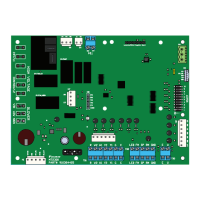
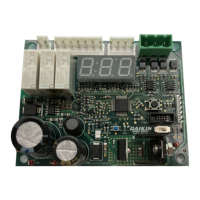
• A2L Leak Detection Control Board (quantity 1)
Part Number: 910419225
The sensors are wired in a daisy chain conguration and
terminated at the mitigation board. The A2L Main Control board
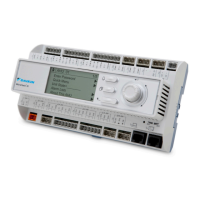
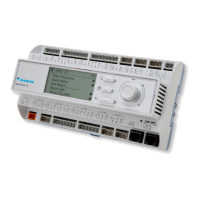
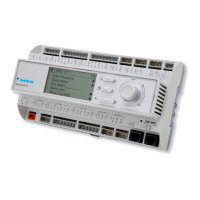
connects to the MicroTech controller and signal alarms based on
this system status.
Alarms
• Refrigerant Leak:
— The leak detection control board will trigger a leak
alarm when at least 1 sensor detects a refrigerant
concentration above 15% of the refrigerant Lower
Flammability Level (LFL).
— Upon detection of a leak, the mitigation board ALM and
CUST relays are energized and the alarm is indicated to
the MicroTech unit controller.
• Refrigerant Sensor Fault:
— The leak detection control board will trigger a fault alarm
when any connected sensor is determined to be faulty
(self-test failure, loss of communications, etc.).
— Upon detection of a sensor fault, the fault is indicated to
the MicroTech unit controller.
A2L Leak Mitigation
The MicroTech controller performs the following mitigation
sequences to maintain safe operation in the event of an alarm
condition:
Refrigerant Leak Detected
Upon notication from the leak detection system that a leak
was detected, the MicroTech controller will disable compressor
operation immediately, turn the fan on at its highest speed,
disable electric heat, and indicate a refrigerant leak alarm.
• The mitigation controls continue to monitor the refrigerant
sensors in the system and noties the MicroTech unit
controller when no refrigerant has been detected for ve
minutes, allowing the unit to resume normal operation.
Leak Detection Board Detects a Sensor Fault
A fault can be caused by a leak sensor malfunctioning or being
disconnected or an A2L board malfunction.
Upon notication from the leak detection system that a sensor
fault was detected, the MicroTech controller will allow normal
operation except that it will turn the fan on at its highest speed, to
maintain adequate airow through the system to dilute any of the
leaked refrigerant, and indicate a sensor fault alarm.
A2L Leak Detection Sensor and
Board Service
• The sensors are not considered “Limited Life Sensors” and
therefore, under normal operation, are not expected to be
replaced within the life expectancy of the unit.
• The sensors have self-reporting diagnostics, which are
monitored by the mitigation board. In the event that the
sensor fails, the mitigation board will trigger a “Fault” alarm.
• There are no servicing nor maintenance requirements for
the sensor(s) and board.
A2L Leak Detection Sensor and
Board Troubleshooting and
Diagnostics
At power up, the Leak Detection Control Board display shows
what sensors are detected (SX = 1 , sensor X is active and
communicating), and what sensors are not detected (SX = 0,
sensor X is not communicating or inactive). Where X, is the
sensor number (from 1 to 8).
By pressing and holding the push button for:
• Less than 2 seconds
The Leak Detection Control Board display shows the last
10 sensor faults (can be loss of communication or faulted
state reported by a specic sensor). General conguration
fault (Flt CFG) is also shown when the expected number of
sensors does not match the number of sensors detected
online.
• More than 2 seconds and less than 5 seconds
The display shows sensor(s) status info:
— The current LFL level.
— Loss of communication or faulted state reported by a
specic sensor.
• More than 5 seconds and less than 10 seconds
The Leak Detection Control Board starts a mitigation test.
The board will go into alarm mode and the MicroTech
controller will begin the mitigation sequence. The mitigation
test will last approximately 5 minutes.
• More than 10 seconds
The display shows all the GID values supported by the
sensor board as shown in Table 11 on page 26.




 To Next Page