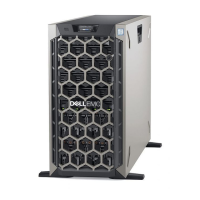
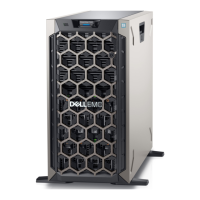
The Dell EMC PowerEdge T340 is a tower server designed for system deployment, configuration, update, maintenance, and diagnosis. It supports one Intel Xeon, Core i3, Pentium, or Celeron processor and features four DIMM slots. The system can be configured with redundant and cabled AC power supply units and supports up to eight 3.5-inch or four 3.5-inch SAS, SATA drives, or SSDs. All instances of SAS, SATA drives, and SSDs are referred to as drives in this document, unless specified otherwise.
Technical Specifications:
- Chassis Dimensions:
- Xa: 218 mm (8.58 inches)
- Xb: 307.9 mm (12.12 inches)
- Ya: 430.3 mm (16.94 inches)
- Yb: 443.3 mm (17.45 inches)
- Yc: 471.3 mm (18.56 inches)
- Za (with bezel): 14.1 mm (0.56 inches)
- Zb: 545.4 mm (21.47 inches)
- Zc: 589.1 mm (23.19 inches)
- System Weight: Maximum weight (with all drives/SSDs) for an 8 x 3.5-inch drive system is 26 Kg (57.32 lb).
- Processor Specifications: Supports one processor from the Intel Xeon E-2200 product family, Intel Core i3 9100 processor, Intel Pentium G5420 processor, Intel Celeron G4930 processor, Intel Xeon E-2100 product family, Intel Core i3 8100 processor, Intel Pentium G5500 processor, or Intel Celeron G4900 processor.
- Supported Operating Systems: Canonical Ubuntu LTS, Citrix Hypervisor, Microsoft Windows Server, Red Hat Enterprise Linux, SUSE Linux Enterprise Server, and VMware ESXi.
- PSU Specifications: Supports up to two AC power supply units (PSUs).
- 495 W AC Platinum: 1908 BTU/hr heat dissipation, 50/60 Hz frequency, 100–240 V AC autoranging voltage, 6.5 A–3 A current.
- 350 W AC Bronze: 1455 BTU/hr heat dissipation, 50/60 Hz frequency, 100–240 V AC autoranging voltage, 5.5 A–3 A current.
- Cooling Fan Specifications: Supports one system cooling fan.
- System Battery Specifications: Uses a CR 2032 3.0-V lithium coin cell system battery.
- Expansion Card Specifications: Supports up to four PCI express (PCIe) Generation 3 slots.
- Slot 1 (Gen3): Processor connection, Full Height, Half Length, x8 link in x8 slot.
- Slot 2 (Gen3): Processor connection, Full Height, Half Length, x8 link in x16 slot.
- Slot 3 (Gen3): Platform Controller Hub connection, Full Height, Half Length, x1.
- Slot 4 (Gen3): Platform Controller Hub connection, Full Height, Half Length, x4 link in x8 slot.
- Expansion cards are not hot-swappable.
- Memory Specifications: Supports DDR4 unbuffered DIMMs (UDIMMs) in four 288-pin memory module sockets.
- Speeds: 2666 MT/s, 2400 MT/s, 2133 MT/s.
- DIMM Ranks: Single rank (8 GB, 16 GB), Dual rank (8 GB, 16 GB).
- DIMM Capacity: 8 GB, 16 GB.
- Minimum RAM: 8 GB (single rank), 16 GB (single rank), 8 GB (dual rank), 16 GB (dual rank).
- Maximum RAM: 32 GB (single rank), 64 GB (single rank), 32 GB (dual rank), 64 GB (dual rank).
- Storage Controller Specifications: Supports internal controllers (PERC H730P, PERC H330, S140, HBA330) and external controllers (12Gbps SAS Ext. HBA).
- Drive Specifications:
- Supports 4 x 3.5-inch SAS, SATA drives, 2.5-inch hotplug drives.
- Supports 8 x 3.5-inch SAS, SATA drives, 2.5-inch hotplug drives.
- 2.5-inch drives in 3.5-inch carriers are supported for SAS and SATA SSD drives.
- Optical Drives: Supports one dedicated SATA DVD-ROM drive or DVD +/-RW drive.
- Tape Drives: Supports up to two dedicated 5.25-inch tape drives.
- Ports and Connectors Specifications:
- USB Ports: Front panel (one USB 3.0-compliant port, one iDRAC USB MGMT port (USB 2.0)), Back panel (two USB 3.0-compliant ports, four USB 2.0-compliant ports), Internal USB (one internal USB 3.0-compliant port).
- NIC Ports: Two 10/100/1000 Mbps Network Interface Controller (NIC) ports on the back panel.
- Serial Connector: One 9-pin, Data Terminal Equipment (DTE), 16550-compliant serial connector on the back panel.
- VGA Ports: One 15-pin VGA port on the back of the system.
- IDSDM Module: Supports optional Internal Dual SD module (IDSDM) with three microSD cards (two for IDSDM, one for vFlash). Available in vFlash or vFlash and IDSDM configurations.
- Supported microSD card storage capacity: 16 GB, 32 GB, 64 GB (IDSDM card); 16 GB (vFlash card).
- Two dip switches on the IDSDM or vFlash module for write-protection.
- One IDSDM card slot is dedicated for redundancy.
- Only Dell EMC branded microSD cards are associated with the IDSDM or vFlash configured systems.
- Video Specifications: Matrox G200eR2 graphics card with 16 MB capacity.
- Supported resolutions: 640x480, 800x600, 1024x768, 1152x864, 1280x1024.
- Refresh rates: 60, 70, 75, 85.
- Color depth: 8, 16, 24 bits.
- Environmental Specifications:
- Temperature:
- Storage: -40–65°C (-40–149°F).
- Continuous operation (altitude < 950 m): 10–35°C (50–95°F) without direct sunlight.
- Maximum temperature gradient: 20°C/h (68°F/h).
- Expanded operating temperature: 5°C–40°C (5% to 85% RH, 29°C dew point) continuously, or -5°C–45°C (5% to 90% RH, 29°C dew point) for ≤ 1% annual operating hours. Performance may be impacted in expanded range.
- Relative Humidity:
- Storage: 5% to 95% RH with 33°C (91°F) maximum dew point, noncondensing.
- Operating: 10% to 80% RH with 29°C (84.2°F) maximum dew point.
- Maximum Vibration:
- Operating: 0.26 Grms at 5 Hz to 350 Hz (all operation orientations).
- Storage: 1.88 Grms at 10 Hz to 500 Hz for 15 minutes (all six sides tested).
- Maximum Shock Pulse:
- Operating: Six consecutively executed shock pulses in positive and negative x, y, and z axis of 6 G for up to 11 ms.
- Storage: Six consecutively executed shock pulses in positive and negative x, y, and z axis (one pulse on each side) of 71 G for up to 2 ms.
- Maximum Altitude:
- Operating: 3048 m (10,000 ft).
- Storage: 12,000 m (39,370 ft).
- Particulate and Gaseous Contamination Specifications:
- Air filtration: ISO Class 8 per ISO 14644-1 with 95% upper confidence limit for data centers. MERV11 or MERV13 filtration for air entering data center.
- Conductive dust: Air must be free of conductive dust, zinc whiskers, or other conductive particles.
- Corrosive dust: Air must be free of corrosive dust. Residual dust present in air must have a deliquescent point less than 60% relative humidity.
- Copper Coupon Corrosion: <300 Å/month per Class G1.
- Silver Coupon Corrosion: <200 Å/month per AHSRAE TC9.9.
- Maximum corrosive contaminant levels measured at ≤50% relative humidity.
Usage Features:
- Initial System Setup: Unpack, connect peripherals, connect to electrical outlet, power on system and peripherals.
- iDRAC Configuration: The Integrated Dell Remote Access Controller (iDRAC) enhances system administration productivity and availability. It alerts administrators to system issues and enables remote management, reducing physical access needs. iDRAC IP address can be set up via DHCP (default) or static IP. Access via iDRAC9 dedicated network port or shared LOM mode. Log in as iDRAC user, Microsoft Active Directory user, or LDAP user. Secure default password is on the system information tag; otherwise, use 'root' and 'calvin'.
- Operating System Installation: If shipped without an OS, install a supported OS using iDRAC, Lifecycle Controller, OpenManage Deployment Toolkit, Dell certified VMware ESXi, or installation videos.
- Firmware and Driver Downloads: Available from Dell EMC support site, Dell Remote Access Controller Lifecycle Controller (iDRAC with LC), Dell Repository Manager (DRM), Dell OpenManage Essentials, Dell OpenManage Enterprise, Dell Server Update Utility (SUU), Dell OpenManage Deployment Toolkit (DTK), or iDRAC virtual media.
- System Setup (BIOS): Configure BIOS settings, iDRAC settings, and device settings. View system information (model name, BIOS version, Service Tag, Management Engine Version, CPLD Version). Memory settings include size, type, speed, voltage, testing (Enabled/Disabled), and operating mode (Optimizer Mode default). Processor settings include Logical Processor (Enabled default), Virtualization Technology (Enabled default), Adjacent Cache Line Prefetch (Enabled default), Hardware Prefetcher (Enabled default), Logical Processor Idling (Disabled default), x2APIC Mode (Disabled default), Number of Cores per Processor (All default), Processor Core Speed, and Processor 1 details (Family-Model-Stepping, Brand, Level 2 Cache). SATA settings include Embedded SATA (AHCI Mode default), Security Freeze Lock (Enabled default), Write Cache (Disabled default), and Port n details (Model, Drive Type, Capacity). Boot settings include Boot Mode (UEFI default), Boot Sequence Retry (Enabled default), Hard-Disk Failover (Disabled default), Generic USB boot (Disabled default), UEFI Boot Settings (IPv4 default). Network settings (UEFI mode only) include PXE Device, HTTP Device, and UEFI iSCSI settings. Integrated Devices settings include User Accessible USB Ports (All Ports Off, Only Back Ports On), Internal USB Port (On default), iDRAC Direct USB Port (On default), Embedded NIC1 and NIC2 (available on systems without Integrated Network Card 1). System Security settings include CPU AES-NI (Enabled default), System Password, Setup Password, Password Status (Unlocked default), TPM Security (Off default), TPM Information, TPM Status, TPM Command (None default), Intel(R) TXT (Off default), Intel(R) SGX (Software default), SGX Launch Control Policy (Unlocked default), Power Button (Enabled default), AC Power Recovery (Last default), AC Power Recovery Delay (Immediate default), User Defined Delay, UEFI Variable Access (Standard default), In-Band Manageability Interface (Enabled default), Secure Boot (Disabled default), Secure Boot Policy (Standard default), Secure Boot Mode, and Secure Boot Policy Summary.
- Dell Lifecycle Controller (LC): Provides advanced embedded systems management capabilities for system deployment, configuration, update, maintenance, and diagnosis. Functions independently of the operating system.
- Boot Manager: Select boot options and diagnostic utilities. Includes Continue Normal Boot, One-shot Boot Menu, Launch System Setup, Launch Lifecycle Controller, and System Utilities (Launch Diagnostics, BIOS Update File Explorer, Reboot System).
- PXE Boot: Boot and configure networked systems remotely.
- System Diagnostics and Indicator Codes: Front panel indicators display system status.
- System Health and System ID Indicator: Solid blue (system on, healthy, ID mode inactive), Blinking blue (ID mode active), Solid amber (fail-safe mode), Blinking amber (fault).
- iDRAC Direct LED Indicator: Solid green (laptop/tablet connected), Flashing green (laptop/tablet recognized), Powers off (laptop/tablet unplugged).
- NIC Indicator: Link LED (green for max speed, amber for less than max speed), Activity LED (blinking green for data flow, off for no data flow).
- Non-redundant Cabled PSU Indicator: Self-diagnostic button. Not lit (power not connected or PSU faulty), Green (valid power source, operational).
- AC PSU Status Indicator: Illuminated translucent handle. Green (valid power source, operational), Blinking amber (PSU problem), Not illuminated (power not connected or PSU faulty), Blinking green (firmware update), Blinking green and turns off (PSU mismatch).
- Drive Indicator: Activity LED (flashes on access), Status LED (bicolor green/amber). Flashes green twice/sec (identifying drive), Off (ready for removal), Flashes green, amber, then off (predicted drive failure), Flashes amber four times/sec (drive failed), Flashes green slowly (drive rebuilding), Solid green (drive online), Flashes green for 3 sec, amber for 3 sec, then off after 6 sec (rebuild stopped).
- Dell Embedded System Diagnostics (ePSA): Run tests automatically or interactively, repeat tests, display/save results, run thorough tests, view status/error messages.
Maintenance Features:
- Safety Instructions: Always use an antistatic mat and strap. Get assistance when lifting the system. Do not operate without the cover for more than five minutes. Only certified service technicians should perform complex repairs. All bays and fans must be populated with components or blanks for proper cooling.
- Before Working Inside: Power off, disconnect peripherals and electrical outlet, remove system cover.
- After Working Inside: Install system cover, place upright, reconnect peripherals and electrical outlet, power on.
- Recommended Tools: Bezel key (if applicable), Phillips #1 screwdriver, Phillips #2 screwdriver, 5mm hex nut screwdriver, plastic scribe, wrist grounding strap, ESD mat.
- Front Bezel: Remove by unlocking, pressing release latch, unhooking tabs. Install by aligning tabs, pressing release latch, locking.
- System Feet: Remove by rotating inward, removing screws. Install by aligning tabs, securing screws, rotating outward.
- Caster Wheels (Optional): Remove by loosening captive screw, pushing unit, pulling out. Install by aligning retention hooks, pushing unit, securing screw.
- System Cover: Remove by turning release latch counterclockwise, pressing latch. Install by aligning tabs, pressing latch, turning lock clockwise.
- Air Shroud: Remove by lifting blue touch points. Install by aligning tabs, lowering into place. Never operate system with air shroud removed.
- Intrusion Switch: Disconnect cable, slide out with plastic scribe. Install by sliding into slot, connecting cable.
- Drive Blank: Remove by pressing release tab, sliding out. Install by sliding into slot until latch clicks. Drive blanks must be installed in empty slots for cooling.
- Drive Carrier: Prepare drive for removal using management software. Press release button, slide out. Install by pressing release button, inserting carrier, closing handle.
- Drive from Drive Carrier: Remove screws from slide rails, lift drive out. Install by inserting drive, aligning screw holes, replacing screws.
- 2.5-inch Drive from 3.5-inch Drive Adapter: Remove screws, remove drive. Install by aligning screw holes, installing screws.
- 3.5-inch Drive Adapter from 3.5-inch Drive Carrier: Remove screws, lift adapter out. Install by inserting adapter, aligning screw holes, installing screws.
- Optical/Tape Drive Blank: Slide release latch down, push out. Install by aligning guide, sliding into slot. Blanks must be installed in empty slots for FCC certification and cooling.
- Optical Drive: Disconnect power/data cables, slide release latch down, slide drive out. Install by aligning, sliding into slot, connecting cables.
- Tape Drive: Disconnect power/data cables, remove screw, push release latch, slide drive out. Install by aligning, sliding into bay, securing screw, connecting cables.
- Drive Backplane: Disconnect cables, pull release pin, lift out. Install by aligning slots, lowering into place, connecting cables.
- Four-slot Drive Blank: Push release tabs from inside, pull out from front. Install by locating slots, inserting blank until tabs click.
- Memory Module: Push ejectors outward, lift out. Install by opening ejectors, aligning edge connector, inserting module, pressing until ejectors click. Install blanks in unoccupied sockets.
- Cooling Fan: Disconnect cable, press release tab, slide out. Install by aligning tabs, sliding into slots, connecting cable. Do not remove/install by holding blades.
- Optional Internal USB Memory Key: Remove from USB port. Insert replacement key.
- Expansion Cards: Disconnect cables (if applicable), press retention latch, pull card up. Install filler bracket if no card. Install by opening retention latch, removing existing card/filler, aligning card, inserting firmly, closing latch. Filler brackets must be installed in empty slots.
- M.2 SSD Module: Remove screws, pull module out. Install by aligning, inserting firmly, securing screw.
- Optional IDSDM or vFlash Module: Lift pull tab, lift card out. Install by aligning, pushing until seated. Write-protect switch is on the module.
- MicroSD Card: Press card to release, remove. Install by orienting, inserting into slot, pressing to lock.
- Processor and Heat Sink: Allow to cool. Loosen screws in specific order, lift heat sink. Remove processor by releasing socket lever, lifting lever, lifting processor. Install processor by aligning pin1-indicator, placing in socket, closing shield, lowering lever. Install heat sink by cleaning thermal grease, applying new grease in spiral, aligning screws, tightening diagonally.
- Power Supply Unit Blank: Pull outward. Install by aligning, pushing until clicks.
- Redundant AC Power Supply Unit: Press orange release latch, slide out. Install by sliding into system until seated. Ensure PSUs are same type and output power.
- Cabled Power Supply Unit: Disconnect power cables, remove screw, slide out. Install by sliding into bay, tightening screw, connecting cables.
- Power Interposer Board (PIB): Disconnect cables, press release latch, lift out. Install by aligning slots, sliding until snaps, routing cables.
- System Battery: Push battery toward positive side, lift away. Install by holding with + sign facing positive side, inserting until snaps.
- System Board: Disconnect all cables, remove screws, incline board, lift out. Install by unpacking, inclining board, lowering into system, pushing toward back, securing with screws. After replacement, restore Service Tag, update BIOS/iDRAC, reenable TPM.
- Disabling Forgotten Password: Move jumper on system board, boot, then move jumper back.
- Easy Restore: Restore service tag, license, UEFI configuration, system configuration data automatically from backup flash device.
- Manually Update Service Tag: Enter service tag in System Setup if Easy Restore fails.
- Trusted Platform Module (TPM): Upgrading requires OS support, latest BIOS firmware, UEFI boot mode. Removing involves locating connector, removing screw, sliding out, pushing plastic rivet. Installing involves aligning edge connectors, inserting, pressing rivet, replacing screw.
- Control Panel Assembly: Remove screw, disconnect cables, slide out. Remove information tag. Install by replacing information tag, connecting cables, aligning, inserting, securing screw.

 Need help?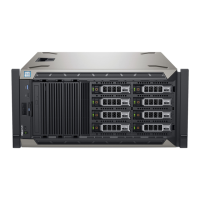

 To Next Page
 General