6. Maintenance
Inspect the gas hose periodically for cracks or deep chafing marks. Connections can be tested for leaks using a soap
solution.
Cleaning the refrigerator
General: Do not use harsh chemicals, abrasives, ammonia, chlorine bleach, concentrated detergents, solvents or
metal scouring pads. SOME of these chemicals may dissolve, damage and/or discolor your absorption refrigerator.
1. Remove the contents of the appliance
2. Wipe the inside and outside surfaces with a damp cloth. The addition of vinegar to the water is good for the
prevention of mold and fungus.
3. Wipe all parts thoroughly after the cleaning.
The cooling unit behind the refrigerator should be cleaned with a brush from time to time, but make sure that the
refrigerator is switched off when doing this.
The entire unit must be left for drying completely after cleaning with damp cloth
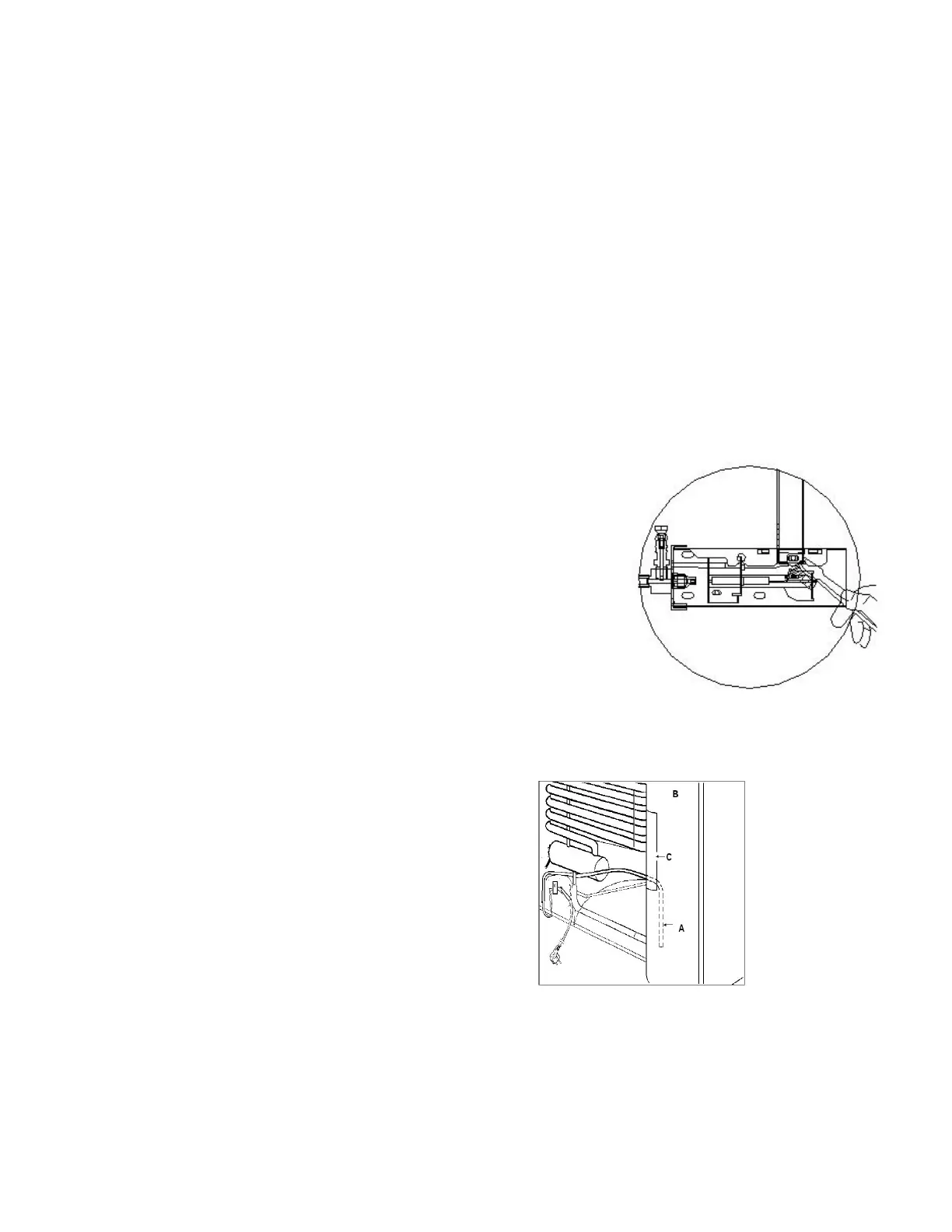
Cleaning the burner
Changing the heating element
The heater which is fitted inside the boiler casing (B), of the refrigerator unit, can be changed as follows:
1. Pull the power cord out of the wall socket.
2. Remove the cover C.
3. Remove some insulation wool so that the
heater A is accessible.
4. Open the terminal block cover and
disconnect the heater leads.
5. Turn and lift the heater out of its pocket.
6. Fit the new heater into the pocket.
7. Connect the leads and close the terminal
Block cover.
8. Carefully put the insulation wool back.
13
Take off the protection hood and do the following:
1. Clean the openings and the burner screen with a toothbrush;
2. Clean and inspect the electrode and thermocouple. If it is
corroded, have it changed. Check that they are well attached and
if necessary tighten the screws.
3. Check that the spark is created by pressing the electric ignition
button on the control panel.
4. Do not use thin objects to either clean or unblock the injector


 To Next Page