31
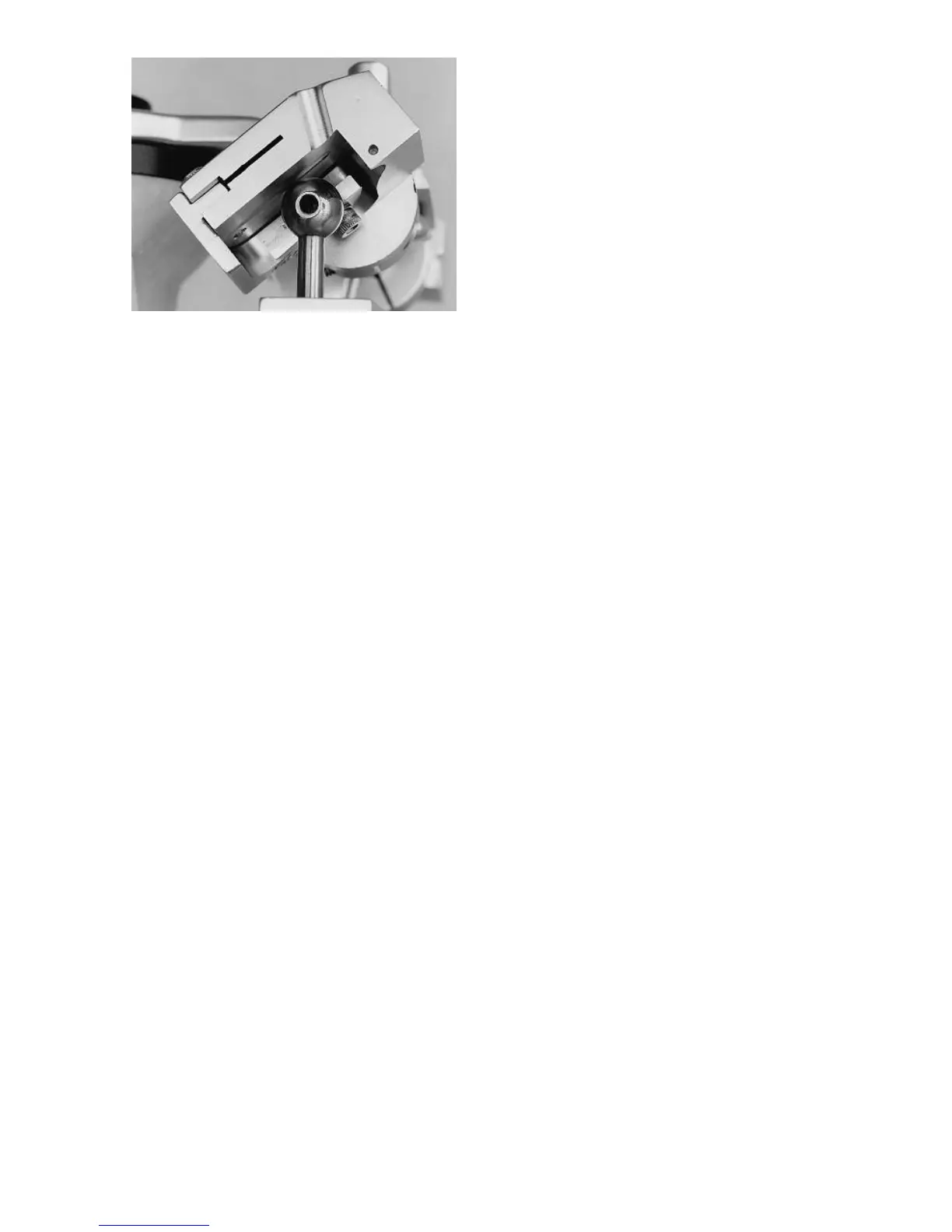
Lock the immediate side shift adjust-
ment lockscrew.
Note: These three articulator adjust-
ments, the immediate side shift, the pro-
gressive side shift and the protrusive
inclination of the superior fossa wall
establish the character of the orbiting
path on the left side of the articulator.
Use the left lateral checkbite record and
follow the same procedure to adjust the
settings of the right articulator fossa and
diagnosis the character of the orbiting
path of the right condyle.
Record the articulator settings on the
patient’s record.
Note: It is the adjustment of the right
medial fossa wall medialward that
allows for a mandibular side shift to
the left as the right condyle moves
medially to bear and move against
its medial fossa wall. Therefore,
when the operator writes on the
patient’s record “right immediate
side shift .6mm” the reference is to
the articulator adjustment on the
right side of the articulator and not
to the side to which the mandible
moves. The right articulator adjust-
ment will allow for a mandibular
side shift to the left. The articulator’s
right side is the right side of the
a
rticulator. A medialward adjust-
ment of the right medial fossa wall
(right immediate side shift adjust-
ment of the articulator) allows for a
mandibular side shift to the left.
Repeat. It is important to note that
the right immediate side shift
adjustment refers to the articulator
setting on the right side of the artic-
ulator which allows for a mandibular
side shift to the left and not to the
right.
SIMULATING THE PROTRUSIVE
CONDYLAR PATHS
The inclinations of the protrusive condy-
lar paths are diagnosed in the following
manner.
Again loosen the lockscrews of the pro-
trusive adjustment on both sides of the
articulator. Set the protrusive condylar
path inclinations to zero degrees. Do not
tighten the lockscrews. Seat the protru-
sive checkbite record on the mandibular
cast and seat the maxillary cast in the
checkbite record. Apply downward
pressure to the maxillary cast or upper
bow to stabilize the maxillary cast in the
record. Note that the condyles do not
contact their superior fossa walls.
Increase the inclination of the protrusive
condylar path on both fossae until the
superior fossa wall contact their respec-
tive condyles. Lock the protrusive
adjustments lockscrews. The inclina-
tions of the patient’s protrusive condylar
path have now been diagnosed. Record
the protrusive condylar path settings on
the patient’s record.
A recommended manner for utilizing the
diagnostic data obtained by adjusting
the articulator to protrusive and lateral
checkbite records for fixed and remov-
able prosthodontics is presented in the
“Treatment Procedures” section of this
manual on page 35.
fig. 62


 To Next Page