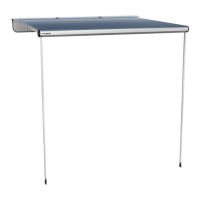
The Dometic 9200 Series Power Awning is designed for use on recreational vehicles (RVs) and provides an extendable overhead cover. This power awning offers several convenient features for ease of use and maintenance, ensuring a comfortable outdoor experience while traveling.
Function Description
The Dometic 9200 Series Power Awning serves as an extendable shade and shelter solution for RVs. It operates on a 12 VDC power supply, allowing for quick and effortless deployment and retraction with the push of a button. The primary function is to provide protection from sun, light rain, and other elements, enhancing the outdoor living space of an RV. The awning's design incorporates an adjustable pitch mechanism, which allows users to modify the slope of the awning fabric to optimize water runoff and shade coverage. In the event of a power failure or motor malfunction, the awning can be manually retracted, ensuring that it can always be stowed safely for travel. The system is designed with safety in mind, including warnings against leaving the awning unattended in severe weather and precautions for adjusting the pitch.
Usage Features
The Dometic 9200 Series Power Awning is engineered for user-friendly operation with several key features:
- Easy Operation: The awning extends and retracts with a simple press of a switch. The switch may vary in appearance but typically includes "Extend," "Stop," and "Retract" functions. Releasing the button automatically stops the awning's movement.
- Automatic Stop: When extending the awning, it will automatically stop once the button is released, allowing for precise control over its deployment.
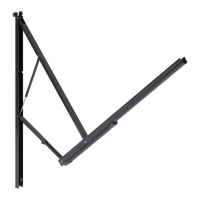
- Adjustable Pitch (Optional): This feature allows users to change the slope of the awning fabric. To adjust the pitch, the awning must be fully extended. Users loosen a knob on one of the adjustable pitch arm assemblies, pull the top arm assembly down to lower the fabric roller tube assembly (FRTA), and then tighten the knob to secure the new pitch. This process is repeated for the opposite side if desired. A steeper pitch helps with water runoff, preventing pooling on the fabric. It is crucial to always lower one side of the hardware into a water shed position when adjusting the pitch to prevent water pooling.
- Quiet Operation: The awning is designed to operate smoothly and quietly, minimizing disturbance.
- Manual Override: In case of a power outage or motor issue, the awning can be manually closed. This involves pressing a push-button release, removing a cover, and then turning a manual override nut with a 3/8" socket wrench or electric drill driver until the awning is fully retracted. This ensures the awning can always be secured for travel.
- Preparation for Water Shed: To prevent water from pooling on the awning fabric, it is recommended to adjust the pitch. This involves ensuring the top arm assembly nearest the entry door is fully extended and its knob tightened, then adjusting the awning on the side farthest from the entry door to achieve a minimum 10° slope (9" minimum). This slope is in addition to the natural slope from the RV's awning rail.
- Preparation for Travel: Before traveling, it is essential to ensure the awning is fully closed and the knobs on both sides are tightened. For motorhomes, the ignition interlock system should be tested to confirm that the awning cannot be operated when the ignition is in the ON position, preventing accidental deployment during transit. If the interlock system fails, the awning must be disabled and serviced by a qualified technician.
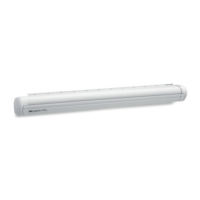
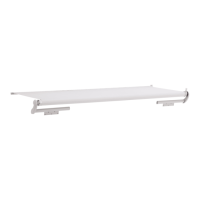
- Optional Accessories: The awning system can be enhanced with optional accessories such as LED lights (available for the rail or roller tube), a Veranda Room, a Veranda Shade, and Power Channel Hardware, which can be purchased separately.
Maintenance Features
Proper maintenance is crucial for the longevity and optimal performance of the Dometic 9200 Series Power Awning.
- Hardware Maintenance:
- Lubrication: Moving parts on the fabric roller tube assembly and all pins and sliding surfaces of the arm assemblies should be lubricated with silicone spray as needed. This helps ensure smooth operation and prevents wear.
- Cleaning: Awning hardware should be cleaned with a mild surface cleaner as needed. Avoid strong chemicals or abrasives, as they can damage protective surfaces.
- Fabric Maintenance:
- Cleaning: The vinyl awning fabric should be cleaned regularly to prevent mildew, discoloration, and stains. To clean, open the awning, mix 1/4 cup dish soap and 1/4 cup bleach with five gallons of fresh water, and liberally drench the fabric with this solution. Close the awning and let the solution soak for five minutes. Then, open the awning and thoroughly hose off both the top and bottom of the fabric with clean water. Repeat if necessary, ensuring all cleaning solution is completely rinsed off, as bleach can degrade the fabric if left on.
- Drying: Always ensure the awning fabric is completely dry before closing (rolling up) for storage. Closing a wet awning can lead to mildew, discoloration, and stains. If temporary closure while wet is necessary, roll it out and let it dry as soon as conditions allow.
- Debris Removal: Do not allow dirt, leaves, or other debris to accumulate on the awning, as this can cause abrasion, stains, and promote mildew growth.
- Chemical Avoidance: Do not use insecticides or other sprays near the awning fabric, as they can cause stains and negatively affect its water-repellent properties.
- Environmental Protection: Avoid exposing the awning to adverse environmental conditions, corrosive agents, or other harmful substances.
- Wrinkling: Vinyl awning fabric is durable and water-resistant, and some wrinkling is normal, especially when retracted or after prolonged storage. Leaving the awning open during warm weather can help minimize wrinkling.
- Fabric Repair:
- Pinhole Repair: Small pinholes or spots where the coating flakes off from the top layer of the vinyl fabric can be repaired using vinyl liquid patch (VLP). Apply a very small dab of VLP onto the tip of a cotton swab and gently roll it around the pinhole. The VLP will melt the coating and fill the pinhole, blending with the vinyl.
- Drying After Repair: Ensure the VLP is completely dry before closing the awning, as closing a wet VLP can cause damage to other parts of the fabric. VLP is available from Dometic Corporation (part number 3314216.000).
- General Inspections: Regularly examine the product for any signs of imbalance, sagging, loose parts, wear or damage to wiring, or other critical components such as the awning fabric, cables, and arm assemblies. Do not use the product if adjustments or repairs are necessary, and contact a qualified service technician for any issues.
- Preventative Maintenance: Annual preventative maintenance is suggested, including assuring proper winding of fabric, cleaning fabric, and inspecting and lubricating the cam lock lever, lift-lock assembly, and hardware slide areas. This maintenance is the owner's responsibility and typically takes about one hour.

 Need help?
 General



 To Next Page
