4
❖
English
L-2091 Introduction
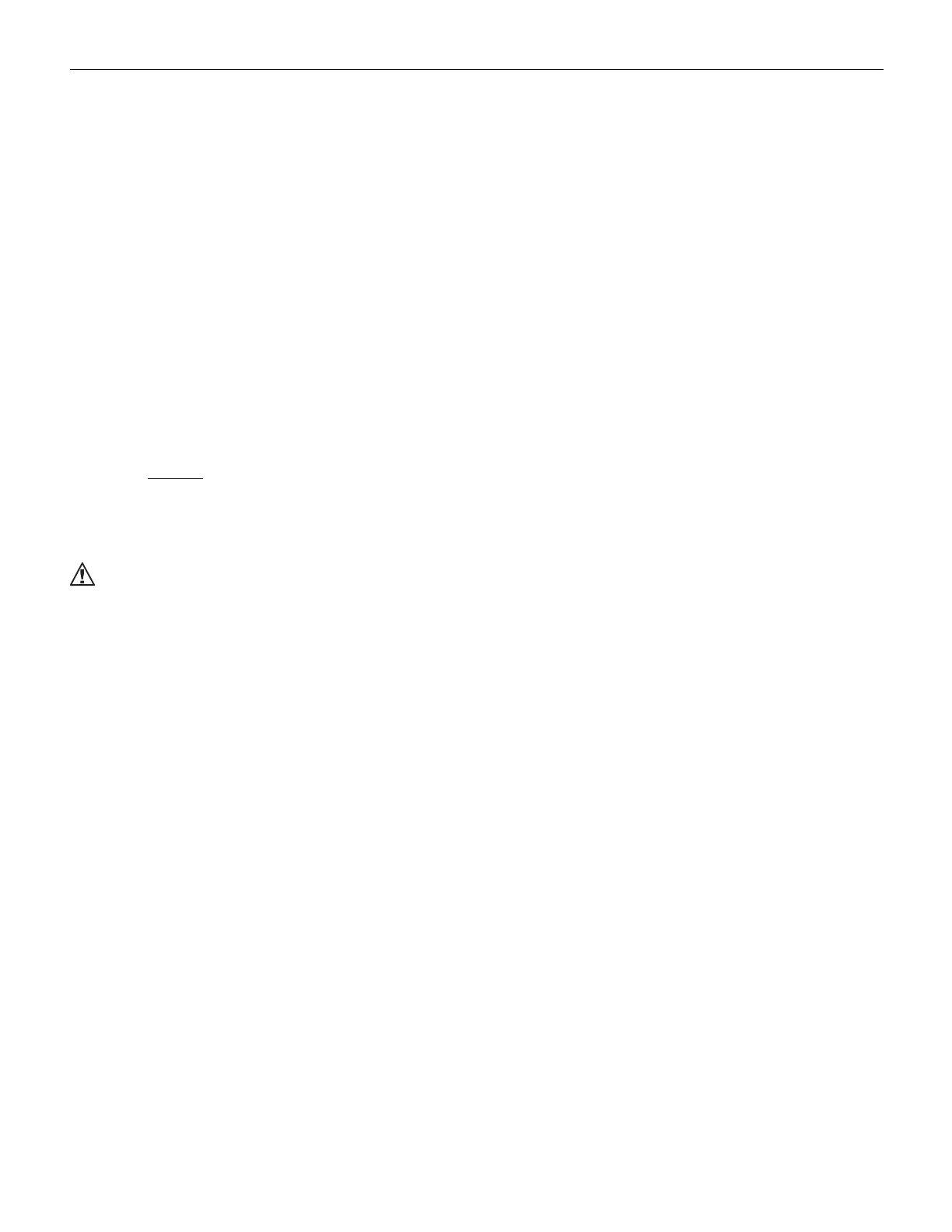
3. The WAR050T had a 1/2 HP compressor with a water
cooled condenser. Service valves were slightly different
than the WAAF033T unit. A mechanical thermostat was
included on the unit.
Evaporator
The evaporator will be either stainless steel plate(s), or a
wrapped box in which the evaporative tubing is located against
the outside surface of the box. See Figures 2 and 3.
Stainless plates should be designed to cover about 30% to
40% of the box’s interior surface area for good freezer perfor-
mance. For instance, a box that is 36" long, 16" deep and 20"
wide, should use plates that are about 36" x 16". This calcu-
lates to about 35% of the box’s interior surface area. Less plate
area is needed for a box that is to be only a refrigerator.
Box design is extremely important and requires considerations
that are mostly outside the scope of this manual. For the power
boat industry, where constant power is available, evaporators
must have a minimum of 2" of insulation (R7 per inch) for
a freezer. When power availability is not constant, 4" of R7
insulation is required. It is best to use as much insulation as is
practical.
Warning
Do not drill through the inside of a wrapped box
evaporator. If the refrigerant tubing is punctured by
doing so, it will not be covered under warranty.
Suction Line
The suction line returns refrigerant gas from the evaporator to
the condenser and should be fully insulated.
Liquid Line
The liquid line is the bare, 1/4" copper line. It may have a
fi lter/dryer and/or a sight glass built into it, and includes the
Constant Pressure Valve (CPV) or Thermostatic Expansion
Valve (TXV).
Refrigerant Metering Device
Refrigerant metering is handled by either a constant pres-
sure valve (CPV), standard, or a thermostatic expansion
valve (TXV), optional. The CPV is a simple device that holds
the suction pressure constant, regardless of box or ambient
temperature. The TXV regulates the refrigerant fl ow into the
evaporator depending on load. Either valve is set at the factory,
or at installation, and does not require further adjusting. A
valve which has been severely misadjusted can damage the
condensing unit, and will void warranty. The metering valve
must be insulated airtight!
The CPV simply holds the suction pressure at a constant set-
ting. It is set at the factory and should not need to be adjusted.
It has a plastic cover, sealed with an O-ring, to keep moisture
away from the valve. If this cover is not present, the system will
not operate properly. The system either uses a CPV or a TXV
(see next).
The TXV controls the fl ow rate of liquid refrigerant entering
the evaporator in response to the superheat of the refrigerant
gas leaving the evaporator. It keeps the entire evaporator
active, without permitting unevaporated refrigerant liquid to
be returned through the suction line to the compressor. The
function on the TXV is to feed liquid into the evaporator coils
at a rate that will keep liquid evaporating in all the coils, and to
control that feed so that only vapor will reach the outlet (return
line to the compressor).
Thermostat
A thermostat controls the operation of the condensing unit,
based on box temperature. Easy to use digital thermostats are
standard.
Seawater System
Condensing units that are using the water cooled option must
be installed with the necessary seawater system. The seawater
system consists of a through-hull fi tting, seacock, strainer,
seawater pump, seawater hose and overboard discharge. If
more than one condensing unit is supplied by a single pump,
or the air conditioning system pump is being shared for the
refrigeration, a pump relay is required.
Refrigerator/Freezer Boxes
The Dometic Applications Department can assist in box
design. Box design is very important to the proper operation
of a system. A poorly designed and/or built refrigerator/freezer
box will result in poor operation of the overall system. Care
must be taken to address type of insulation, thickness of
insulation, air circulation and drains.


 To Next Page