Need help?
Do you have a question about the Dräger Plus Series and is the answer not in the manual?
Crucial safety instructions for users, emphasizing adherence, proper training, and correct product use to prevent injury or damage.
Explains the meaning of alert icons (WARNING, CAUTION) used in the document to highlight potential hazards and safety information.
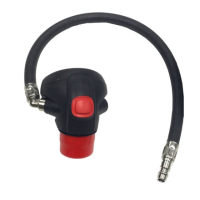
Introduces Dräger lung demand valves, their function, connection types, and variants like positive/negative pressure and supplementary air.
Details the types of couplings between the lung demand valve and face mask, including apparatus type and coupling specifications.
Differentiates between negative-pressure valves activated by inhalation and positive-pressure valves maintained above atmospheric pressure.
Describes lung demand valves with non-silicone diaphragms for specific environments, noting H2S resistance.
Explains the function of supplementary air flow for visor clearing or temporary air supply, warning against its use with SCBA without airlines.
Specifies that Dräger lung demand valves are for protecting wearers in contaminated or oxygen-deficient atmospheres with Dräger breathing apparatus.
Refers to European standards and directives for product approval, directing users to the declaration of conformity or website.
Instructions for preparing the breathing apparatus with a medium-pressure coupling before connecting the lung demand valve.
Step-by-step guide on how to properly connect the lung demand valve to the face mask, including checks for security.
Provides a table outlining recommended inspection, testing, and servicing frequencies for the lung demand valve components.
Detailed procedures for cleaning the lung demand valve, including precautions for drying and specific instructions for external and internal cleaning.
Steps for manually cleaning the exterior of the lung demand valve with a cloth and cleaning solution, followed by rinsing and drying.
Instructions for trained personnel to internally clean and disinfect the lung demand valve, with warnings against ultrasonic methods and damage to parts.
Guidance on visually inspecting the lung demand valve for damage like impact, abrasion, or cutting, emphasizing checks on levers, diaphragm, and hoses.
Describes performing a functional and leak test for the lung demand valve as per the breathing apparatus instructions, highlighting fault reporting.
Procedure for replacing a defective diaphragm, referencing internal cleaning steps and requiring a subsequent functional test.
The Dräger Plus Series and PSS® Series Lung Demand Valves (Types A, AE, ESA, and N) are high-performance valves designed to control the flow of breathing air from a breathing apparatus to the wearer's mask. These valves are essential for protecting users in contaminated or oxygen-deficient atmospheres.
The lung demand valve connects the medium-pressure supply from the breathing apparatus to the mask. A sealed and balanced piston unit inside the valve precisely controls the quantity of air flow in response to the wearer's demand.
These valves can be either integral or removable. Integral variants feature a medium-pressure hose with a pneumatic end fitting for connection to the breathing apparatus pressure reducer. Removable variants have a male quick coupling that connects to a female quick coupling on the breathing apparatus medium-pressure hose.
The valves are available in two primary types: positive-pressure and negative-pressure.
Some variants also offer a manually operated supplementary air supply. This feature can provide additional air flow into the face mask to clear a misted visor or to offer a temporary increase in air supply. This supplementary air flow is activated by pressing the front button. However, it's important to note that this functionality is not present in lung demand valves used with dedicated escape breathing apparatus. Using the supplementary air flow with self-contained breathing apparatus not connected to an airline should only be done when essential, as it decreases the breathing time from the air cylinder.
Specialized lung demand valves with a green rubber cover at the reset button indicate the presence of a non-silicone diaphragm. This non-silicone diaphragm offers greater permeation resistance compared to a silicone diaphragm, making these valves suitable for use in environments containing vapors and gases such as hydrogen sulphide (H2S).
Dräger lung demand valves are designed for use with Dräger breathing apparatus to ensure wearer protection. Dräger strongly recommends using only Dräger face masks with these lung demand valves to guarantee trouble-free operation.
Connecting the lung demand valve to the face mask involves ensuring both the valve coupling and face mask connection are clean and undamaged. For N and AE types, the lung demand valve is screwed into the face mask connection hand-tight. For A and ESA types, the valve is pushed into the face mask connection, rotating it slightly if necessary until it clicks into place. After connection, the valve should be securely retained, which can be checked by gently pulling the coupling apart. If local regulations require, a second person should verify the connection's firmness and correctness.
The lung demand valve couplings feature a swivel at the face mask, allowing radial movement of the valve without leaking during head and body movement.
Regular inspection, testing, and servicing of the lung demand valve are crucial for maintaining its performance and safety. Dräger provides a maintenance table outlining recommended tasks and their frequency (after every use, every month, or every year). Additional maintenance may be required to comply with national regulations.
Maintenance tasks include:
If the diaphragm is defective, it can be replaced by following the instructions in the internal cleaning procedure. After replacement, a full functional test of the lung demand valve must be carried out.
The equipment should be stored between -15 °C and +25 °C in a dry, dust-free, and dirt-free environment, protected from abrasion and direct sunlight. The medium-pressure hose should be routed to avoid small bend radii, stretching, compression, or twisting.
 General
| Brand | Dräger |
|---|---|
| Model | Plus Series |
| Category | Control Unit |
| Language | English |

 To Next Page