Weather
– Never operate your inverter outdoors during
rain, snow or any combination of weather conditions that
could lead to moisture collecting on, in or around the
generator.
Dry Surface
– Always operate the inverter on a dry sur-
face free of any moisture.
No Connected Loads
– Make sure the inverter has no
connected loads before starting it. To ensure there are no
connected loads, unplug any electrical extension cords
that are plugged into the control panel receptacles.
Starting the inverter with loads already applied to
it could result in damage to any appliance being
powered off the inverter during the brief start-up
period.
Grounding
Consult with your local municipalities for your
ground-
ing codes.
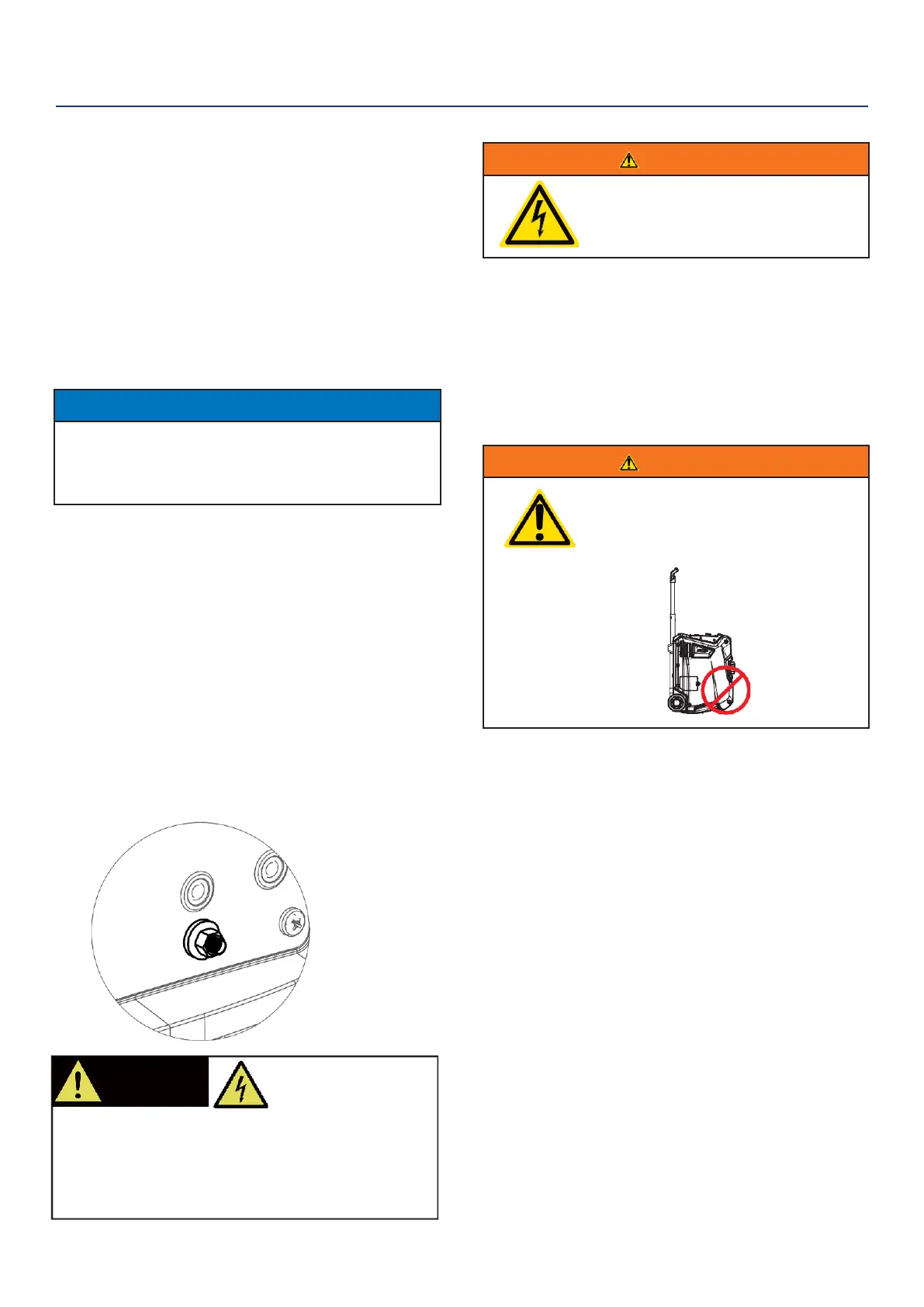
Ground Terminal
The generator’s ground terminal must always be used
to connect the generator to a driven ground rod.
Connect the ground terminal to the driven ground rod
with copper wire. The wire connects to the terminal
between the lock washer and nut. Tighten the nut se-
curely to ensure good connection. Grounding the gen-
erator protects you from electric shock that results
from a build up of static electricity or undetected
ground faults.
Be sure the inverter is properly
con-
nected to earth ground before operat-
ing.
High Altitude Operation
Engine power is reduced the higher you operate above
sea level. Output will be reduced approximately 3.5% for
every 1000ft of increased altitude from sea level. This is
a natural occurrence and cannot be adjusted by engine.
Increased exhaust emissions can also result due to in-
creased fuel mixture. Other issues include hard starting,
in-
creased fuel consumption and spark plug fouling.
Do not rest inverter on exhaust panel.
Do not move Generator while it is
on. The inverter will be damaged if
operated in this manner.
Generator must be
properly grounded to
prevent electrocution.
• Only operate generator on a level surface.
• Always connect the nut and ground terminal on the
frame to an appropriate ground source.


 To Next Page