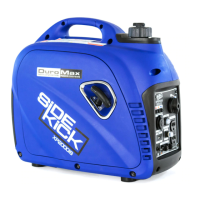
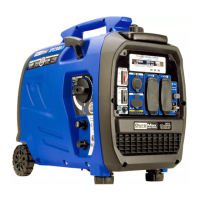
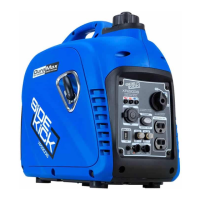
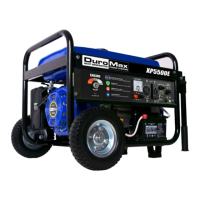
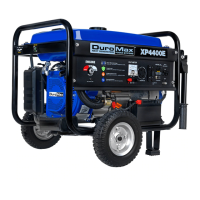
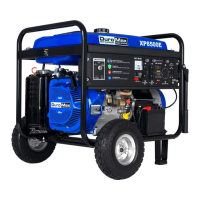
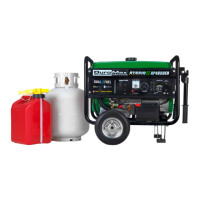
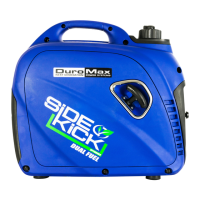
The DuroMax XP2000EH is a portable inverter gasoline propane hybrid generator designed to supply electrical power for various applications, including tools, appliances, camping equipment, lighting, or as a backup power source during outages. This generator is engineered for reliable service, provided it is operated and maintained according to the instructions in its manual.
Function Description
The XP2000EH operates as an engine-driven generator, capable of producing electrical power from either gasoline or propane. Its hybrid nature offers flexibility in fuel choice, which can be advantageous depending on availability and preference. As an inverter generator, it produces clean, stable power suitable for sensitive electronics.
The generator features a fuel selector switch to choose between gasoline and LPG (propane) operation. When starting on gasoline, the choke lever is used to facilitate ignition, then pushed back in for normal running. For propane, the choke is not required, and the propane hose is connected to the panel. A decompression valve button assists in starting on propane.
An engine economy control allows the generator to adjust its engine speed based on the connected electrical load. In the "ON" position, this feature optimizes fuel economy and reduces noise by automatically determining the proper engine speed. When the economy switch is "OFF," the engine runs at its rated speed, which is recommended for devices requiring a large starting current, such as compressors.
The generator is equipped with several indicator lights on its control panel. An oil warning indicator illuminates and automatically stops the engine if the oil level falls below the minimum, preventing damage. The engine will not restart until the proper amount of oil is in the crankcase. An engine overload indicator light signals when the generator's wattage or amperage capacity has been exceeded, or due to a power surge. In such cases, the AC pilot indicator light turns off, and power supply to connected devices ceases, though the engine continues to run. To correct an overload, electronic devices must be disconnected, the engine stopped, and the total wattage reduced before restarting. The AC pilot indicator light confirms that the engine is running and generating power.
For increased power output, two XP2000EH generators can be connected in parallel using a special cable kit. This parallel operation allows for a combined rated output of 3.0kVA and a rated current of 25A/120VAC. It is crucial to use only compatible XP2000EH generators and an approved parallel operation cable kit.
Safety features include a ground terminal that must always be connected to a driven ground rod with a No. 12 AWG copper wire to prevent electrocution from static electricity buildup or ground faults. The fuel cap is designed with an air vent that must be in the "ON" position for fuel to flow to the carburetor and in the "OFF" position to stop fuel flow, aiding in safe transport and storage.
Usage Features
The XP2000EH is designed for ease of use with clear instructions for starting and stopping on both gasoline and propane. Before operation, all electrical loads must be disconnected. When starting, the engine switch is turned "ON," and the fuel cap air vent is opened. For gasoline, the fuel selector is set to "Gas," the choke pulled out, and the recoil handle pulled rapidly after feeling resistance. For propane, the fuel selector is set to "LPG," the propane hose connected, propane supply turned on, and the decompression valve button pressed before pulling the recoil handle. The engine should be allowed to run for several seconds to warm up before connecting any load.
When attaching electronic devices, it is important to ensure the generator is grounded, the load is within the generator's rated output, and all cords and receptacles are in good condition. Devices should be turned "OFF" before plugging them into the generator. For small loads, the economy switch can be "ON" for fuel efficiency. For larger or multiple loads, it should be "OFF." After the engine stabilizes and the AC pilot light is on, devices should be plugged in and turned on, starting with the largest output first to prevent overloading.
Stopping the engine involves turning the economy switch to "OFF," disconnecting all electronic devices, turning the engine switch to "OFF," and finally turning the fuel supply to "OFF." It is critical never to start or stop the engine with electrical devices plugged in to avoid damage.
The manual provides a wattage reference guide to help users estimate the power requirements of common electronic devices, aiding in preventing generator overload. This guide distinguishes between "rated watts" (for running a device) and "surge watts" (for starting a device), emphasizing the need to account for surge watts when selecting loads.
Maintenance Features
Regular maintenance is crucial for extending the life and improving the performance of the XP2000EH generator. The manual outlines a comprehensive maintenance schedule, including pre-operation steps, after-each-use procedures, and periodic checks based on operating hours or time intervals.
Pre-Operation Steps: Before each start, users should check the engine oil level, fuel tank level, and inspect for any leaks or cracks in the fuel hose. The air filter should be clean, and any debris around the generator, muffler, and controls should be removed. The work area should also be inspected for hazards.
After Each Use: The engine should be shut off, and the unit stored in a clean, dry area.
Scheduled Maintenance:
- After First 5 Hours: Change the engine oil.
- After 8 Hours or Daily: Clean debris and check the engine oil level.
- Every 6 Months (or 100 hours): Check and clean the air filter element (more often in wet or dusty conditions), change engine oil (more often in dirty conditions), check and replace the muffler screen if necessary, service the spark plug, and inspect the muffler and spark arrester.
- Every 12 Months (or 300 hours): Clean the fuel filter (replace if necessary), check the crankcase breather hose for cracks or damage (replace if necessary), and consult a dealer for de-carbonizing the cylinder head, checking/adjusting valve clearance, and checking all fittings and fasteners.
Specific Maintenance Procedures:
- Checking Spark Plug: Involves removing the spark plug cap, disconnecting the wire, cleaning the area, removing the plug, checking for discoloration and carbon deposits, adjusting the electrode gap (0.7 - 0.8mm), reinstalling, and tightening to 20.0Nm. The spark plug should be replaced annually with an equivalent part.
- Changing Oil: Requires placing the generator on a level surface, running it for several minutes to warm the engine, turning it off, removing the outer casing, crankcase dipstick, and draining used oil into a pan. New SAE 10W-30 4-Cycle engine oil is then carefully added until it reaches the outer edge of the oil fill hole. It is crucial not to tilt the generator during oil addition to prevent overfilling.
- Cleaning Air Filter: Involves removing the air filter cover, washing the foam element in solvent, drying it, applying a small amount of oil, squeezing out excess, and reinserting it. The generator should not be run without the foam element.
- Checking Muffler and Spark Arrestor: Requires inspecting for cracks/corrosion, removing the muffler cover, loosening the bolt, and removing the muffler cap, screen, and spark. Carbon deposits should be removed with a wire brush, and damaged parts replaced with DuroMax originals. The spark, muffler screen, and cap are then reinstalled. Users are warned to avoid hot areas of the unit.
- Cleaning Fuel Tank Filter: Involves removing the fuel cap and filter, cleaning the filter with gasoline, wiping it dry, and reinstalling.
- Cleaning Fuel Filter (internal): Requires removing screws, outer casing, and draining fuel. The hose is removed from the tank, the fuel filter taken out, cleaned with gasoline, wiped dry, and reinstalled. The fuel valve is opened, and the outer casing tightened.
Storage and Transportation:
For transportation, the start switch should be "OFF," the fuel selector to "LPG," and the fuel cap valve "OFF" to prevent spillage. The generator must be kept level. For short-term storage, starting the generator every 7 days is recommended. For semi-long term storage, a fuel stabilizer should be added. For long-term storage, the fuel should be drained, and the unit stored indoors with a protective cover. Engine long-term storage also involves adding 1 teaspoon of 10W30 engine oil into the spark plug hole, pulling the recoil starter several times to coat cylinder walls, and leaving the engine in a state of compression to prevent corrosion. Fuel draining from the carburetor is also detailed.
The manual emphasizes the importance of using only specified DuroMax replacement parts and seeking service from a DuroMax dealer if unsure about maintenance tasks. It also includes warnings about contacting hot engine parts and handling the generator carefully during transport.


 To Next Page
 General