Need help?
Do you have a question about the EasyIO FS-20 and is the answer not in the manual?
Information contained in this document is confidential EasyIO Holdings Pte Ltd.
EasyIO logo and BACnet/ASHRAE are registered trademarks of their respective owners.
Document content is protected by copyright and may not be reproduced without written consent.
Manual content is for information purposes only and subject to change without notice.
Details tested brands, capacity, and class for compatible SD cards.
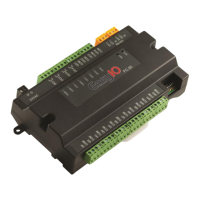
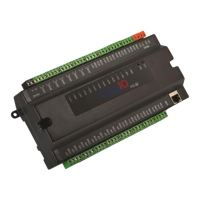
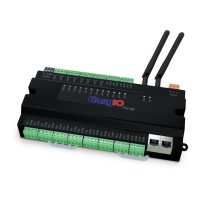
The EasyIO FS-20 is a versatile controller designed for building automation and control systems, offering a robust solution for managing various environmental parameters. This device is engineered for ease of installation and maintenance, making it suitable for a wide range of applications.
The EasyIO FS-20 serves as a central component in a building management system, capable of integrating and controlling diverse inputs and outputs. Its primary function is to monitor and regulate environmental conditions, ensuring optimal performance and energy efficiency within a facility. The controller supports various communication protocols, allowing it to interact seamlessly with other devices and systems in a networked environment. This interoperability is crucial for creating a cohesive and intelligent building infrastructure.
The device is equipped with multiple analog and digital inputs and outputs, providing flexibility in connecting to a variety of sensors, actuators, and other field devices. These connections enable the FS-20 to gather data from environmental sensors such as temperature, humidity, and pressure, and to send commands to control devices like valves, fans, and lighting systems. The controller's processing capabilities allow for complex control logic to be implemented, enabling sophisticated automation sequences and strategies.
One of the key features of the EasyIO FS-20 is its ability to execute advanced control algorithms. This includes proportional-integral-derivative (PID) control, scheduling, alarming, and data logging. PID control ensures precise regulation of controlled variables, minimizing deviations from setpoints and optimizing system performance. The scheduling function allows for time-based control operations, such as adjusting HVAC setpoints based on occupancy schedules or turning off lights during non-business hours. Alarming capabilities provide immediate notification of critical events or system malfunctions, enabling prompt corrective actions. Data logging is essential for performance analysis, troubleshooting, and compliance reporting, as it records historical data of various system parameters.
The FS-20 is designed to be a programmable controller, meaning users can customize its behavior to meet specific application requirements. This programmability allows for tailored solutions that can adapt to the unique needs of different buildings and systems. The controller can be configured to perform tasks such as demand-controlled ventilation, optimal start/stop routines for HVAC equipment, and integrated lighting control. Its ability to handle complex control strategies contributes to significant energy savings and improved occupant comfort.
Furthermore, the EasyIO FS-20 supports network integration, allowing it to be part of a larger distributed control system. This means that multiple FS-20 controllers can communicate with each other and with a central management platform, creating a scalable and flexible automation architecture. The controller's networking capabilities facilitate remote monitoring and control, enabling facility managers to oversee and manage building operations from a centralized location or even off-site.
The EasyIO FS-20 is designed with user-friendliness in mind, from its physical installation to its operational aspects. The device's compact form factor and DIN rail mounting option simplify its integration into control panels and enclosures. The improved DIN rail mounting mechanism allows for easy dismantling, which is beneficial during installation or when maintenance is required. For situations where DIN rail mounting is not practical, the FS-20 also provides optional mounting holes, allowing it to be securely fastened to an enclosure base plate using screws. This dual mounting flexibility ensures that the controller can be deployed in various physical environments.
The physical installation process is straightforward, involving securing the DIN rail, positioning the controller, and locking it into place. The locking clips are designed for easy manipulation, allowing users to unlock them with a screwdriver or even a finger. Once positioned, the controller is pushed towards the bottom part of the DIN rail and pressed to ensure the base cover touches the enclosure base plate. The locking clips are then secured, either with a screwdriver or by pressing them upwards with a finger, to firmly hold the FS-20 in position. To further enhance the security of the assembly, a DIN rail end clip (end stopper) can be used.
The FS-20 also features a micro SD card slot, which is crucial for data storage and system configuration. The micro SD card is optional and not included as standard, but it can be purchased separately. The installation of the micro SD card is a simple slide-in process. Users need to locate the slot at the bottom right corner, above the Ethernet port. The card is inserted with the contact pins facing down and pushed in until a click sound indicates it is locked in position. This secure locking mechanism ensures the card remains in place during operation. For removal, the card is pushed in again until a click sound is heard, after which it ejects and can be slid out. This feature allows for easy expansion of storage for historical data, program backups, or firmware updates.
The design of the FS-20 emphasizes clear labeling of all connection points, which aids in accurate wiring and reduces the potential for errors during installation. The various inputs and outputs are logically grouped and clearly marked, making it easy for technicians to connect sensors, actuators, and communication lines correctly. This attention to detail in the physical layout contributes to a smoother and more efficient commissioning process.
The EasyIO FS-20 is engineered for long-term reliability and ease of maintenance, minimizing downtime and operational costs. The design incorporates features that facilitate quick access to internal components for servicing or upgrades.
One significant maintenance feature is the ease of opening the top cover. This process involves unscrewing two Philips screws located on the top cover. Once the screws are removed, the top cover can be lifted from both ends. In cases where the cover might be stuck, a small flat head screwdriver can be used to gently pry it open. This accessibility allows technicians to inspect internal components, perform diagnostic checks, or replace parts if necessary, without having to completely dismantle the entire unit.
The modular design of the FS-20, particularly with its micro SD card slot, supports easy upgrades and data management. The ability to easily insert and remove the micro SD card means that firmware updates can be applied by simply loading the new firmware onto the card and inserting it into the controller. Similarly, logged data can be easily retrieved from the card for analysis or archiving. This eliminates the need for complex network connections or specialized tools for routine data handling and software maintenance.
The robust construction of the EasyIO FS-20 is designed to withstand typical industrial environments. However, the installation guide explicitly advises against mounting the device in areas with excessive moisture, corrosive fumes, explosion vapors, excessive vibration or shock, or high electrical noise. Adhering to these guidelines is a crucial aspect of preventative maintenance, ensuring the longevity and reliable operation of the controller. By avoiding harsh environmental conditions, the internal components are protected from premature wear and damage, reducing the frequency of repairs.
In the event of technical issues, EasyIO provides dedicated support channels for different regions. This includes worldwide and Asia Pacific support, Americas support, and Europe support, each with its own contact email. This structured support system ensures that users can quickly get assistance from knowledgeable personnel, facilitating efficient troubleshooting and resolution of any problems that may arise. Access to timely technical support is a key maintenance feature, as it helps to minimize operational disruptions and keeps the system running smoothly.
The controller's ability to log data is also a powerful diagnostic tool. By reviewing historical data, technicians can identify trends, pinpoint anomalies, and diagnose intermittent issues that might not be apparent during a live inspection. This data-driven approach to troubleshooting significantly reduces the time and effort required to resolve complex problems, improving overall system uptime.
Overall, the EasyIO FS-20 is designed to be a low-maintenance device, with features that simplify installation, operation, and servicing. Its robust build, accessible internal components, and comprehensive support infrastructure make it a reliable choice for critical building automation applications.
 General
| Model | FS-20 |
|---|---|
| Controller Type | Field Controller |
| Input Voltage | 24VAC/DC |
| Processor | ARM Cortex-M4 |
| Certifications | CE, FCC, UL |
| Communication Protocols | BACnet |
| Enclosure | Plastic |
| Number of Outputs | 8 Universal Outputs |

 To Next Page