Need help?
Do you have a question about the Eccotemp L10 and is the answer not in the manual?
Appliance can produce odorless carbon monoxide; never use in enclosed space.
Vapors from flammable liquids explode; do not store near heater.
Warnings regarding proper installation, outdoor use, and flammable materials.
Procedures to follow if a gas leak is detected to prevent fire or explosion.
Precautions for handling liquid propane, including leak detection and air density.
Procedure for testing gas connections for leaks using soapy water or detector.
Requirements for installing a pressure relief valve on the hot water outlet.
Discusses outdoor installation and avoiding corrosive atmospheres.
Details the advantages and various applications of the portable tankless water heater.
Provides an overview of included parts and initial setup steps for the water heater.
Specifies the required outdoor placement and clearance for the water heater.
Details how to properly connect the water inlet, outlet, and gas supply to the unit.
Step-by-step guide for securely attaching the rain cap, hoses, and gas regulator.
Instructions for starting, operating, and shutting down the water heater.
Guide to adjusting gas and water flow knobs for desired water temperature.
Details automatic ignition, auto cut-off, and anti-dry combustion protections.
Instructions for inspecting and cleaning the rain cap on the exhaust pipe.
Guidelines for storing the water heater, especially regarding freezing conditions.
Procedure for cleaning the water inlet filter screen to ensure proper flow.
Recommends regular cleaning, inspection of burner, and checking for leaks.
Troubleshooting steps for when the water heater does not start or make clicking sounds.
Addresses issues with water not getting hot enough, including altitude and knob adjustments.
Troubleshooting steps for when water is flowing but not heating up.
Diagnoses issues with the water heater failing to stay lit or active.
Details the warranty period and coverage for the water heater components.
Explains the process and required information for submitting a warranty claim.
Outlines limitations and exclusions of warranties and liabilities.
Lists conditions and circumstances under which the limited warranty is voided.
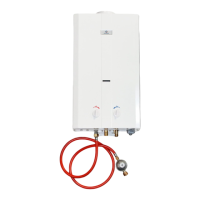
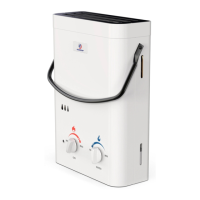
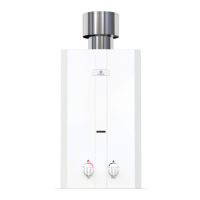
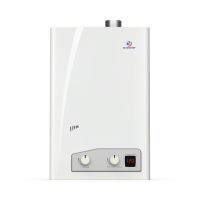
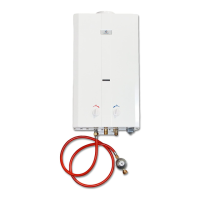
The Eccotemp L10/L10nr is a portable tankless water heater designed for outdoor recreational use, offering instant hot water for various activities. This device is not recommended for permanent or indoor installation and should be stored in a warm, dry place after each use.
The L10/L10nr is a liquid propane-fired tankless water heater capable of delivering 1.5 to 3 gallons of hot water per minute. It operates on a water-controlled automatic ignition system, meaning the burner ignites and starts producing hot water when water flows through the unit. This eliminates the need for a pilot light, making it convenient and efficient. The device requires a standard 20-pound (4.7-gallon) liquid propane (LP) cylinder for gas supply and is powered by two "D" Cell batteries for ignition. It is designed to provide hot water for a range of outdoor activities, from washing down equipment to pet bathing and emergency preparedness.
The L10/L10nr is user-friendly with clear controls for gas and water adjustment. To operate, users first ensure the water outlet device is off, then set the water regulator knob to its highest setting and the gas regulator knob to its minimum setting. After ensuring the gas cylinder is upright and its valve is fully open, the incoming water supply is turned on, requiring adequate water pressure between 20-80 PSI. Once the water outlet device is turned on and adjusted for desired flow, the unit will produce a series of audible clicks as the burner ignites. If the burner does not ignite within 5 seconds, the user should shut off the hose and refer to the troubleshooting section.
The device includes a built-in tilt switch that automatically shuts off the water heater if it is tilted more than 45 degrees in any direction, enhancing safety during use. It is crucial to use the L10/L10nr only outdoors and avoid high wind conditions. The exhaust gas and the top of the heater can become very hot, so users should avoid placing hands or foreign objects near the top. For optimal performance, the unit should not be operated above 2,000 feet, as efficiency and performance may decrease by 10% for every 1,000 feet above this recommendation. The temperature of the outgoing water depends on the incoming water temperature and the heat applied, requiring careful adjustment of the gas and water knobs. Colder incoming water will result in lower achievable temperatures.
The L10/L10nr is suitable for a variety of recreational uses, including wash-downs, equestrian activities, hunting, general recreation, poolside use, food trucks, pet bathing, greenhouses, camping, tiny homes, emergency preparedness, and off-grid living. It features standard 1/2" NPT pipe fittings and an adapter for a standard garden hose for inlet water supply. The gas regulator connection should not be overtightened with a wrench, as this can cause a crack and a gas leak.
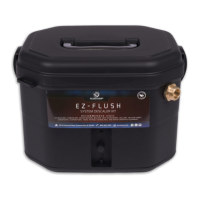
Regular maintenance is key to ensuring the longevity and efficient operation of the L10/L10nr. It is highly recommended to clean the unit every six months to prevent water scale, lime, or rust deposit buildup, which can be exacerbated by unfiltered water. Eccotemp offers an EZ-Flush Descaler System for this purpose.
Before any maintenance or storage, the unit must be turned off, and the water supply disconnected. The area around the tankless water heater should be regularly vacuumed to remove dust, dirt, and lint. The front panel and surfaces can be cleaned with a damp, soft cloth and mild detergent, followed by a dry cloth to remove any remaining moisture.
For storage, especially in freezing conditions (at or below 32°F / 0°C), it is critical to drain all water from the unit to prevent internal damage. This involves unscrewing the drain plug located at the bottom of the heater and unhooking the outgoing water line to ensure the heat exchanger is completely drained. Failure to do so can result in irreparable water damage. The water heater should then be stored in a safe, warm, and dry place. If the unit remains connected to an LP-gas supply cylinder, both the heater and cylinder must be stored outdoors in a well-ventilated space, out of reach of children, and never in an enclosed area. Storage indoors is only permissible if the cylinder is disconnected and removed.
The water inlet screen should be cleaned monthly. To do this, disconnect the water supply, locate the screen at the end of the water inlet pipe, gently remove it with a screwdriver, rinse it to remove debris, and then reinsert it.
Periodic inspections of the burner, water screen, and top exhaust should be performed by qualified service personnel. The area around the water heater should be kept clear of combustible materials, gasoline, and other flammable vapors and liquids. All piping should be checked for gas and water leaks using a commercial leak detector or soapy water solution; bubbles indicate a leak that must be corrected. If any abnormal sounds are detected during operation or if the unit feels wrong, it should not be operated, and children should not handle it.
 General
| Type | Tankless |
|---|---|
| Fuel Type | Propane |
| Flow Rate | 2.6 GPM |
| Ignition | Electronic |
| Installation | Outdoor |
| Maximum Temperature | 140°F |
| Power Source | 2 D cell batteries |

 To Next Page