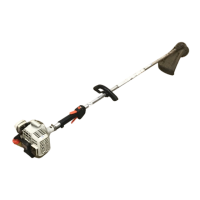
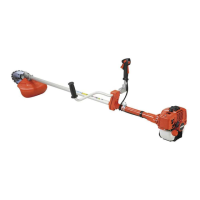
This document is an operator's manual for the ECHO BCLS-580 Grass-Trimmer/Brushcutter, a lightweight, high-performance, petrol-engined unit designed for weed control, grass trimming, and brush cutting in areas difficult to control by other means. It is not intended for any other purpose.
Before using the product, operators must carefully read and fully understand the manual's content. The product should not be used by anyone who has not read the manual, is suffering from a cold, tiredness, or is in poor physical condition, or by children. The operator is responsible for any accidents or hazards to other people or property. The manual contains essential information on assembly, operation, and maintenance. It should always be kept in an easily accessible place. If lost or damaged, a new one should be purchased from an ECHO DEALER. All units used in the manual are SI units, with figures in parentheses being reference values that may have slight conversion errors. When loaning or assigning the product, the manual must always accompany it. For further information, consumables, or repairs, contact an ECHO DEALER. The manual's content may change without notice for product upgrades, and some illustrations may differ from the actual product. Some parts require assembly.
Safety Decals and Symbols:
The product features safety decals that must be understood before use. If a decal becomes unreadable, a replacement should be purchased and affixed. The manual uses various symbols:
- DANGER: Indicates acts or conditions leading to serious personal injury or death.
- WARNING: Indicates acts or conditions that can lead to serious personal injury or death.
- CAUTION: Indicates potentially hazardous situations that may result in minor or moderate injury.
- Circle and slash: Prohibits the depicted action.
- NOTE: Provides tips for use, care, and maintenance.
- IMPORTANT: Contains crucial information on use, checking, maintenance, and storage.
- Read operator's manual: Always read the manual carefully.
- Max speed of cutting attachment shaft: Indicates the maximum rotational speed in r/min.
- Wear eye, ear, and head protection: Essential personal protective equipment.
- Keep bystanders away 15 m: Maintain a safe distance from others.
- Wear foot protection and gloves: Essential personal protective equipment.
- Petrol and oil mixture: Indicates the type of fuel required.
- Emergency stop: Action to take in an emergency.
- Purge bulb (Primer): Component for fuel priming.
- Warning! Thrown objects!: Hazard of objects being ejected.
- Carburettor adjustment - Low speed mixture: Adjustment for low-speed operation.
- Warning, side thrust: Indicates a potential hazard from side thrust.
- Carburettor adjustment - High speed mixture: Adjustment for high-speed operation.
- Usage without shield not permitted: Prohibits operation without the protective shield.
- Carburettor adjustment - Idle speed: Adjustment for idle speed.
- Usage of metal blades not permitted: Prohibits the use of metal blades.
- U-handle: Indicates the type of handle.
- Usage of nylon line cutting head not permitted: Prohibits the use of nylon line cutting heads.
- Loop handle: Indicates the type of handle.
- Do not use the product in places with poor ventilation: Avoid poorly ventilated areas.
- Beware of high-temperature areas: Indicates hot surfaces.
- Beware of fire: Fire hazard.
- Guaranteed sound power level: Indicates the guaranteed sound power level in dB.
- Choke Control "Cold Start" Position (Choke Closed): Choke position for cold starting.
- Choke Control "Run" Position (Choke Open): Choke position for normal operation.
- Beware of electric shocks: Electric shock hazard.
- Engine start: Indicates the engine starting procedure.
Handling Fuel:
Fuel is highly flammable. Refuelling must always be done outdoors, away from flames or smoking, and never when the engine is hot or running. Use an approved fuel container and loosen the cap slowly to equalize pressure. Do not overfill the tank; keep fuel below the shoulder level. Clean up any spills immediately and tighten the cap securely. Move at least 3m from the refuelling spot before starting the engine. Regularly check for fuel leaks from pipes, grommets, or the tank cap; if leaks are found, stop using the product and contact a dealer. Stored fuel ages, so mix only the amount expected to be used within 30 days. Do not mix directly in the engine fuel tank.
Handling the Engine:
Before starting, ensure all nuts and bolts are tight, there are no fuel leaks, and the product is on a flat, well-ventilated surface with ample space around it, away from people and animals. Start the engine with the throttle trigger in the idle speed position and hold the product firmly to the ground. After starting, check for abnormal vibrations or sounds; if present, do not use the product and contact a dealer. Avoid touching high-temperature components (silencer, spark plug, angle transmission) or high-voltage components (spark plug, spark plug wire) while the product is running or shortly after stopping, as this can cause burns or electric shock. In case of fire or smoke from the engine, move away from the product and use sand or a fire extinguisher to put out the fire. Turn off the engine and allow it to cool before checking or maintaining, and remove the spark plug cap to prevent unexpected starts. Inspect the spark plug for wear, cracks, or deposits, and replace if necessary. Spark tests should only be performed by a dealer, away from the spark plug hole, fuel spills, or flammable gases.
Handling the Product:
Always read the operator's manual for correct operation. Do not use the product for purposes other than its intended use, and do not modify it. Use the product only after it has been checked and maintained regularly. When lending or assigning the product, ensure the manual is included. In case of injury, have a first aid kit, towels, a whistle, or a mobile phone ready. Do not use the product if the trimmer blade rotates at idle speed. Never operate without the shield in place. The area within a 15m radius of the product is a danger zone; keep children, people, and pets away. If someone enters the danger zone, turn off the engine. Signal to the operator before approaching and ensure the engine is off and the blade stopped. If multiple people are working, maintain a 15m distance and signal each other.
Vibration and Cold:
Exposure to vibration and cold may cause Raynaud's Phenomenon. To reduce risk: keep warm (especially head, neck, feet, ankles, hands, wrists), maintain good blood circulation with arm exercises during breaks, and avoid smoking. Limit operating hours and alternate with non-power equipment tasks. Consult a physician if experiencing discomfort, redness, swelling, whitening, or numbness in fingers.
Repetitive Stress Injuries (RSI):
Over-using muscles and tendons can cause RSI. To reduce risk: avoid bent, extended, or twisted wrist positions; take periodic breaks; reduce speed and force of repetitive movements; do hand and arm exercises. Consult a doctor if experiencing tingling, numbness, or pain in fingers, hands, wrists, or arms.
Proper Training:
Do not permit operation without proper training and protective equipment. Be familiar with controls, stopping procedures, and quick unhooking of the harnessed unit.
Cutting Attachment Precautions:
Always stop the engine if the cutting attachment jams. Do not remove obstructions while the engine is running.
Use only metal blades with U-handle machines and suitable protection. The 3-cutter blade is for weeds and grass, not brush or trees, to prevent kickback or blade fracture. Use only YAMABIKO CORPORATION recommended attachments. Inspect blades for cracks before each use and discard cracked blades. Worn nuts and cups for blades are dangerous and should be replaced. Fit the blade securely with the supplied socket spanner; do not use other tools. Ensure the fuel tank cap is secure when turning the product over. Understand reaction forces (push, pull, kickback) and how they affect balance.
With Nylon Line Cutting Head:
Use only nylon line cutting heads recommended by YAMABIKO CORPORATION. Do not use metal blades. Be aware that excessive nylon line can fly off. Do not trim near cars or pedestrians, especially over bare spots or gravel, as the line can throw small rock particles. Avoid trimming in areas with broken fencing wire.
Protective Gear:
Always wear:
- Head protection (helmet)
- Ear muffs or ear plugs
- Safety goggles
- Face shield
- Safety gloves
- Fitted work clothes (long sleeves, long trousers)
- Heavy duty, non-slip protective boots (with toecaps) or shoes
- Shin guards
Additionally, use a dust mask and bee net if necessary. Do not wear ties, jewelry, or loose clothing that could get caught. Avoid open-toed footwear or bare legs. For heavy brush cutting with metal blades, logger's trousers or leg chaps with protective inserts are recommended.
Packing List:
The product comes with the following parts:
- Engine and right handle
- Safety goggles (ANSI Z 87.1 compliant)
- Caution tag
- Operator's manual
- Shield (for metal blade)
- Shield (for nylon line cutting head)
- Convex of fitting plate
- Bolt M5x25 (x2)
- Cut off knife
- Screw 5x12
- Left handle
- Operation Shaft
- Blade cover
- Shoulder harness
- Locking tool
- Socket wrench
- Hexagonal wrench
- Band (x2)
- Stand
Description of Components:
- Angle transmission: Two gears to change the angle of the rotating axis.
- Blade cover: Used for transport with metal blade.
- Shield: Protects operator from contact with cutting head and thrown objects.
- Shaft tube: Casing for power transmission shaft.
- U-handle: Bicycle handlebar configuration for reduced working effort.
- Suspension point: Device for harness attachment.
- Ignition switch: Slide switch (RUN/STOP) on throttle trigger housing.
- Throttle trigger: Controls engine speed.
- Throttle trigger lockout: Locks throttle trigger in idle position until right hand grips handle.
- Air cleaner cover: Covers air filter.
- Fuel tank cap: Closes fuel tank.
- Fuel tank: Contains fuel and fuel filter.
- Starter handle: Pull to start engine.
- Silencer cover: Covers silencer to prevent contact with hot surface.
- Spark plug
- Shoulder harness: Adjustable straps to suspend unit.
- Hip pad: Protects hip/leg and clothing.
Assembly:
- Stand assembly: Fasten the stand to the operation shaft using bolt M5x20.
- Operation shaft assembly: Stand engine upright, fit operation shaft, and tighten with bolts M5x25.
- U-handle assembly: Install left handle in support, lightly tighten bolts M5x35, adjust inclination for comfort, and firmly tighten.
- Cable guide: Open cover with socket wrench, place throttle cable inside, close cover carefully to avoid pinching wire. Fix throttle cable to right handle with short band, and secure cable guide with long bands.
- Bracket installation: Fit bracket to angle transmission, press fitting plate from beneath, and lightly tighten 4 bolts M5x25. Align notches and convexes of fitting plate with bracket, then securely tighten bolts. Fit cut-off knife to nylon line cutting head shield using screw 5x12.
- Nylon line cutting head installation: Insert locking tool into angle transmission hole (right side), forcing retainer spring left. Insert tool further into blade retainer fixing slot to fix output shaft. Thread nylon line cutting head (Type B6, Left-hand thread M12x1.75 pitch) onto shaft anticlockwise until tight. Remove locking tool. Use only flexible, non-metallic line recommended by YAMABIKO CORPORATION.
- Shield change (for metal blade): Two types of shields exist (nylon line or metal blade). Remove bolt M5x18, slide shield left to remove. Insert other shield type into groove, slide right until it stops, and fasten with bolt M5x18.
- Blade installation: Inspect blades for sharpness and cracks before installation; discard cracked blades. Finger-tighten blade retainer, blade, lower blade retainer, cup, and nut. Insert locking tool to fix output shaft. Use supplied socket spanner to tighten nut anticlockwise; do not apply body weight. Replace worn nut and cup.
Adjusting the Balance:
The shoulder harness is suitable for adults 150-195 cm tall and 60-140 cm waist size. Adjust harness and suspension point so the unit hangs a few centimeters above ground level, with the cutting attachment and shield level in all directions. Harness on the right side. Slide suspension point up/down to find balance, rotate clamp to level cutting attachment and shield, then lock. If free-spinning, level attachment and shield on front-to-rear axis. Balancing may require relocating the clamp and readjusting harness straps.
Preparing the Fuel:
Fuel is a mixture of regular grade petrol (minimum 89 Octane unleaded, no more than 10% ethyl alcohol) and air-cooled 2-stroke engine oil (ISO-L-EGD Standard, JASO FC, FD grade, ECHO Premium 50:1 oil) at a 50:1 ratio. Do not mix directly in the engine fuel tank. Avoid spills and wipe them up immediately. Handle petrol with extreme care as it is highly flammable. Store fuel in approved containers in a shaded area away from fire. Refuel in a well-ventilated outdoor location, on the ground, away from vehicles. Keep fuel below the shoulder level of the tank. Loosen the fuel tank cap slowly to equalize pressure.
Engine Operation:
- Starting a cold engine: (If stored for long, connect spark plug cap). Remove blade cover, check blade, replace if damaged. Place product on level ground, ensuring blade does not contact surface or obstructions. Check for fuel leaks. Move ignition switch to Start. Ensure throttle trigger is at idle speed. Move choke knob to Closed. Pull starter grip gently, then rapidly (no more than 2/3 length). Do not let go of the starter grip as it returns. If engine is hard to start, use throttle latch (pull throttle fully, lower latch while pressing lockout, release trigger to activate latch; after starting, pull trigger slightly to release latch). If an explosion-like sound is heard and engine stops, move choke knob to Open and continue pulling. If engine starts immediately, return choke knob gently to Open. Let engine warm up at idle speed for 2-3 minutes. Never run engine without cutting attachment.
- Starting a warm engine: Move ignition switch to Start. Ensure throttle trigger is at idle speed. Check choke knob is in Open position. Hold product firmly near engine and pull starter grip. If engine doesn't start after 4 pulls, use cold starting procedure.
- Stopping the engine: Move throttle trigger to idle speed. Move ignition switch to Stop. In emergency, stop immediately with ignition switch. If engine fails to stop, move choke knob to "Cold Start" position (emergency stop). If ignition switch fails, have it checked by a dealer. Always disconnect spark plug wire to prevent unauthorized starts.
Trimming Operation:
Never operate with one hand. Hook thumbs around grips. Always mount trimmer correctly with shoulder harness. The harness has an emergency release function (pull quick release pin up to release product from body).
- Basic trimming operation with nylon line cutting head: Buckle waist belt snugly. Attach product to harness. Check adjustment by moving cutting attachment along ground; readjust suspension point if necessary. Place harness over left shoulder, quick release pin below waist. Basic cutting actions include trimming, scything, scalping, and lawn edging.
- Trimming: Feed trimmer carefully into material, tilt head slightly to direct debris away. Approach barriers at an angle to avoid ricochet. Move slowly until grass is cut, but don't jam line. For wire mesh, feed carefully. Cut weed stems one at a time, near the bottom.
- Scything: Cut large grassy areas with a smooth, level arc. Tilt head to direct debris away. Return without cutting grass. Can scythe in both directions if protected.
- Scalping and edging: Tilt nylon line cutting head at a steep angle. Scalping removes top growth, leaving earth bare. Edging trims grass from pavement or driveway. Hold unit at a steep angle to prevent debris/stones from returning. Tilt head so line contact is on the part moving away from you and the shield to direct debris away. Tilting the wrong way or holding flat will throw debris towards you, slow the engine, and use more line.
- Basic trimming operation with metal blade: Always wear eye protection. Do not trim at high speed near roadways or pedestrians. Do not push line into tough weeds, trees, or wire fences. Avoid nylon line contact with broken wire fencing.
- Using shoulder harness: Buckle waist belt snugly. Attach product to harness. Check adjustment by moving cutting attachment along ground; readjust suspension point if necessary. Place harness over both shoulders, connecting point latch as shown.
- Use correct blade: Always use the blade suited for the job. Avoid contact with hard obstructions (stone, concrete, metal) or ground. If blade hits obstruction, turn off engine, ensure blade stops, then check for damage. Never use cracked, dull, bent, fractured, or discolored blades or worn/damaged nuts. Never run engine at full throttle without a load. Remove foreign objects from work area. Do not operate brushcutter without shoulder harness and shield.
- Scything weeds: Swing cutting attachment in a level arc to clear field grass and weeds. Not for large, tough weeds or woody growths. If sapling/shrub binds attachment, do not use it as a lever; shut off engine and free blades. Do not use cracked or damaged blades.
- Precautions to observe when working: The area within 15m is a danger zone; keep children, onlookers, pets away. If someone enters, turn off engine. If working with others, signal each other and maintain 15m distance (whistle advised). Turn off engine immediately if abnormal vibration occurs; do not use until cause is identified and repaired. Trimmer blade could fly off if not tightened securely. Replace damaged shield. Worn blade nut and cup from ground contact should be replaced. After turning off engine, ensure blade has stopped rotating before lowering product. Silencer remains hot; carry product with silencer away from body. When transporting, turn off engine and fit blade cover.
Maintenance and Care:
Servicing Guidelines:
- Air filter: Clean/Replace (Before use, Monthly)
- Fuel filter: Inspect/Clean/Replace (Before use)
- Spark plug: Inspect/Clean/Adjust/Replace (Monthly)
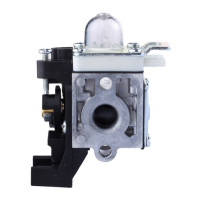
- Carburettor: Adjust/Replace and adjust (Monthly)
- Cooling system: Inspect/Clean (Before use)
- Silencer: Inspect/Tighten/Clean (Before use)
- Drive shaft: Grease (Every 100 hours)
- Angle transmission: Grease (Every 50 hours)
- Starter: Inspect (Monthly)
- Cut off knife: Inspect/Clean (Before use)
- Fuel system: Inspect (Before use)
- Screws, bolts and nuts: Inspect, Tighten/Replace (Monthly)
Time intervals are maximum; actual use determines frequency. Contact dealer for questions or problems.
- Cleaning air filter: Close choke, loosen screw, remove air cleaner cover. Remove air filter, brush dirt or clean with compressed air. Reinstall filter, cover, and tighten screw.
- Replacing fuel filter: Use metal wire to pick up filter through tank opening. Pull old filter from line, install new filter. Replace if excessively dirty or ill-fitting.
- Carburettor adjustment: Factory-set for emissions, with "H" (High Speed) and "L" (Low Speed) needle limiters.
- Clean/replace air filter and muffler.
- Start engine, warm up for minutes, flash choke twice to clear fuel system air.
- Stop engine. Turn "H" speed needle anticlockwise to stop. Turn "L" speed needle midway between full clockwise and anticlockwise stop.
- Idle Speed Adjustment: Start engine, turn "Idle" speed adjustment knob clockwise until wheel turns, then anticlockwise until wheel stops, then an additional 1/4 turn anticlockwise.
- Accelerate to full throttle for 2-3 seconds to clear excess fuel, then return to idle. Accelerate again to check smooth transition. If engine hesitates, turn "L" needle anticlockwise 1/8 turn and repeat.
- Check and reset idle speed if necessary. If tachometer available, set to manual specifications.
WARNING: Cutting attachment may move during adjustment.
CAUTION: Idle speed adjustment screw (T) must prevent cutting attachment rotation at start. Contact dealer for carburettor issues.
- Cooling system maintenance: Cooling air must flow freely through cylinder fins to dissipate combustion heat. Overheating occurs if air intakes are blocked or dust/grass builds up on cylinder. Clearing blockages and cleaning fins are normal maintenance; failures due to lack of maintenance are not warranted. Remove dust/dirt between fins. Before each use, remove debris from bottom engine intake grille.
- Cleaning silencer: Clean deposits from silencer and tighten two bolts. IMPORTANT: Do not remove silencer cover; consult dealer if necessary.
- Check fuel system: Check before each use. After refuelling, ensure no fuel leaks from pipe, grommets, or tank cap. If leaks occur, stop use and contact dealer due to fire risk.
- Check spark plug: Check gap (0.6-0.7 mm), electrode wear, insulator deposits. Replace if needed, tighten to 15-17 N·m.
- Lubricating drive shaft: Inspect every 100 hours, replenish grease if insufficient. Use good quality lithium multi-grease.
- Angle transmission: Remove plug, add good quality lithium multi-grease with low pressure pump if necessary. Reinstall plug. Do not overfill housing.
- Checking the blade: Use only manufacturer-designated blade. Replace cracked blades immediately. Ensure blade is correctly fitted.
- Checking the nylon line cutting head:
- Ensure both retaining pawls of housing spread fully into cover window recesses.
- Check cutting head mount on trimmer and tighten if loose.
- Check cutter head for deflection or abnormal noise by hand rotation. Deflection/noise can cause abnormal vibration or loosening of mount.
- Inspect cover and tap knob for wear. Replace if slot appears on bottom of tap knob or cover near nylon line outlet.
- Check cutting head for crack or chip. Replace damaged parts.
Troubleshooting Table:
Provides solutions for common problems like engine not starting, difficult starting, fluctuating rotation, engine not accelerating, engine stopping, and cutting attachment rotating at idle. For complex issues, consult a dealer. Use only genuine parts.
Storage:
Long-term storage (30 days or more):
- Preparations:
A. Empty fuel tank completely.
B. Press and release purge bulb several times to remove fuel.
C. Start engine and run at idle speed until it stops naturally.
- Further steps:
- Move ignition switch to Stop.
- Once cool, clean grease, oil, dust, dirt from exterior.
- Perform periodic checks from manual.
- Check and tighten screws and nuts.
- Remove spark plug, add ~10 mL clean new 2-stroke engine oil to cylinder via socket.
A. Place clean cloth over spark plug installation socket.
B. Pull starter grip 2-3 times to distribute oil.
C. Observe piston position through spark plug hole. Pull recoil starter handle slowly until piston reaches top of travel.
- Fit spark plug (do not connect cap).
- Fit blade cover onto trimmer blade, wrap engine section in plastic bag, and store in a dry, dust-free location out of reach of children.
- WARNING: Do not store in sealed locations with fuel gas or near naked flames/sparks (fire hazard).
- Dispose of product/parts in compliance with national laws; contact dealer.
Specifications (BCLS-580):
- External dimensions (L x W x H): 1840 x 600 x 546 mm
- Mass:
- Unit without cutting attachment, empty tank: 10.6 kg
- Unit with specified cutting attachment, empty tank: - kg
- Unit without cutting attachment, full tank: - kg
- Volume (Fuel tank): 0.75 L
- Cutting attachment:
- Thread: Left-handed M12x1.75
- Usable cutting depth: - mm
- Specified blade diameter: - mm
- Specified blade thickness: - mm
- Number of cutting teeth: -
- Blade centre hole diameter: 25.4 mm
- Blade rotational speed at max allowable engine speed: 10000 r/min
- Gear ratio and lubrication: 1.4 reduction and good quality lithium grease
- Rotational direction of output shaft (viewed from above): Anticlockwise
- Engine type: Air cooled 2-stroke single cylinder
- Engine displacement: 58.2 mL (cm³)
- Max shaft brake power (ISO 8893): 2.42 kW
- Engine speed at max engine power: 8500 r/min
- Recommended max engine speed (with specified attachment installed): 11000 r/min
- Recommended engine idling speed: 2500 r/min
- Carburettor: Diaphragm type
- Ignition: Flywheel magneto - CDI system
- Spark plug: NGK BPMR8Y
- Starter: Recoil starter
- Clutch: Automatic centrifugal clutch
- Fuel: Regular grade petrol (min 89 Octane unleaded, no methyl alcohol or >10% ethyl alcohol). Two-stroke, air-cooled engine oil (ISO-L-EGD Standard, JASO FC, FD grade, ECHO Premium 50:1 oil).
- Ratio: 50:1 (2%)
- Fuel consumption at max engine power: 1.77 L/h
- Specific fuel consumption at max engine power: 404 g/(kW·h)
- Vibration levels (ISO 22867)ahv,eq:
- Left handle: 2.8 m/s²
- Right handle: 3.0 m/s²
- Sound pressure level (ISO 22868) LpAeq: 100.6 dB(A)
- Guaranteed sound power level (ISO 22868) LWA: 118 dB(A)
Specifications are subject to change without notice.
YAMABIKO CORPORATION (7-2 Suehirocho 1-Chome, Ohme, Tokyo 198-8760, Japan) declares that the BCLS-580 Grass-Trimmer/Brushcutter (Brand: ECHO) complies with Directives 98/37/EC (1998) and 2006/42/EC (from 29 Dec 2009, using ISO 11806 (EN 31806)), 2004/108/EC (using EN ISO 14982), 2002/88/EC, and 2000/14/EC. Conformity assessment procedure followed ANNEX V. Measured sound power level: 115 dB(A). Guaranteed sound power level: 118 dB(A). Serial Number 36001001 and up. Issued in Tokyo, October 1st, 2009. Signed by K. Oyuri (General Manager) for YAMABIKO CORPORATION and Mr. Philip Wicks (Authorized Representative in Europe) for Atlantic Bridge Limited.

 Need help?
 General



 To Next Page