6
CHAPTER 1
FUNDAMENTALS
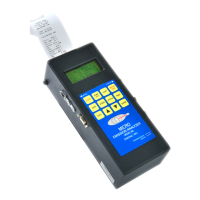
The ENERAC Model 500 Micro Emissions Analyzers are hand held state of the art
analyzers designed for the following tasks:
• To measure the emissions of carbon monoxide, oxides of nitrogen, sulfur
dioxide and oxygen from stationary and mobile combustion sources.
• To assist the operator of a combustion source with the task of optimizing its
performance and saving fuel.
• To be used as a management tool to assist the plant manager with keeping
records and controlling costs.
The ENERAC Model 500s are easy to carry and utilize the latest technology;
reliable flue type electrochemical sensors manufactured by the largest sensor
manufacturer to measure emissions.
The ENERAC use sophisticated electronics and programming designed for
increased accuracy and flexibility. It measures 2 temperatures and 5 different stack
gases. It computes efficiency of combustion, as well as excess air and carbon
dioxide. It communicates with a variety of other computers via its serial ports. It
has a library of 15 fuels, diagnostic/help messages, and can operate either on its
rechargeable batteries, AC power, or from a set of four AA alkaline cells.
ENERAC has years of experience in the manufacture and marketing of portable
combustion and emission analyzers. The Model 500 is based on this experience,
together with the latest innovations in electronic and sensor technology. They also
express our basic conviction that communications and artificial intelligence are the
basic ingredients of the instrument of the future.
The instrument operates basically as follows:
Connect the probe and water trap to the analyzer. Turn the unit on and then insert
the probe in the stack of an operating combustion source such as a boiler, furnace
or combustion engine. A pump located inside the instrument draws a small sample
of the stack gas. The sample is conditioned before entering the analyzer by passing


 To Next Page