Solution 1.8 Insert Installation and Operation Manual 19
4.3.4 Firing Each New Load Hot
Place the new load of wood on and behind the charcoal, and not too close to the glass. Close the
door and open the air control fully. Leave the air control fully open until the firebox is full of flames,
the wood has charred to black and its edges are glowing red. Firing each load of wood hot
accomplishes a few things:
• drives the surface moisture from the wood,
• creates a layer of char on the wood, which slows down its release of smoke,
• heats the firebox components so they reflect heat back to the fire, and
• heats the chimney so it can produce strong, steady draft for the rest of the cycle.
Although it is important to fire each new load hot to prepare for a clean burn, do not allow the fire to
burn at full intensity for more than a few minutes.
DO NOT LEAVE THE INSERT UNATTENDED WHILE A NEW LOAD IS BEING FIRED HOT.
DO NOT OVERFIRE.
When you burn a new load of wood hot to heat up the wood, the insert and the chimney, the result
will be a surge of heat from the insert. This heat surge is welcome when the room temperature is a
little lower than desirable, but not welcome if the space is already warm. Therefore, allow each
load of wood to burn down so that the space begins to cool off a little before loading. Letting the
space cool before loading is one of the secrets to clean burning and effective zone heating.
4.3.5 Turning Down the Air Supply
Once the firewood, firebox and chimney are hot, you can begin to reduce the air supply for a
steady burn.
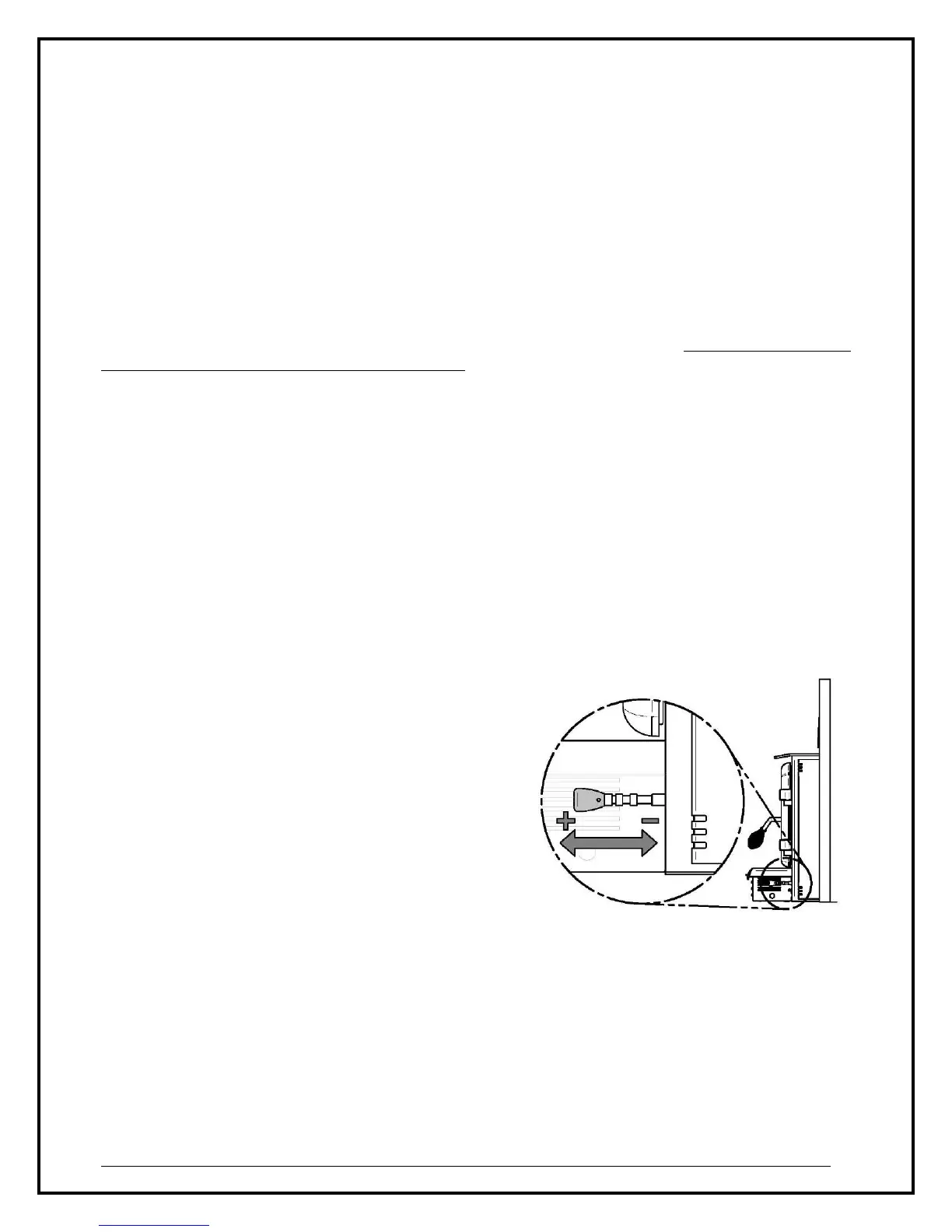
As you reduce the air supply to the fire, two important
things happen. First, the firing rate slows down to
spread the heat energy in the fuel over a longer
period of time. Second, the flow rate of exhaust
through the insert and flue pipe slows down, which
gives more time for the transfer of heat from the
exhaust. You will notice that as you reduce the air
setting, the flames slow down. This is your indication
that the insert is burning at its peak efficiency.
If the flames get small and almost disappear when
you turn down the air, you have turned down the air
too early, or your firewood is wetter than it should be.
With good fuel and correct air control use, the flames
should slow down, but should stay large and steady,
even as the air supply is reduced.


 To Next Page