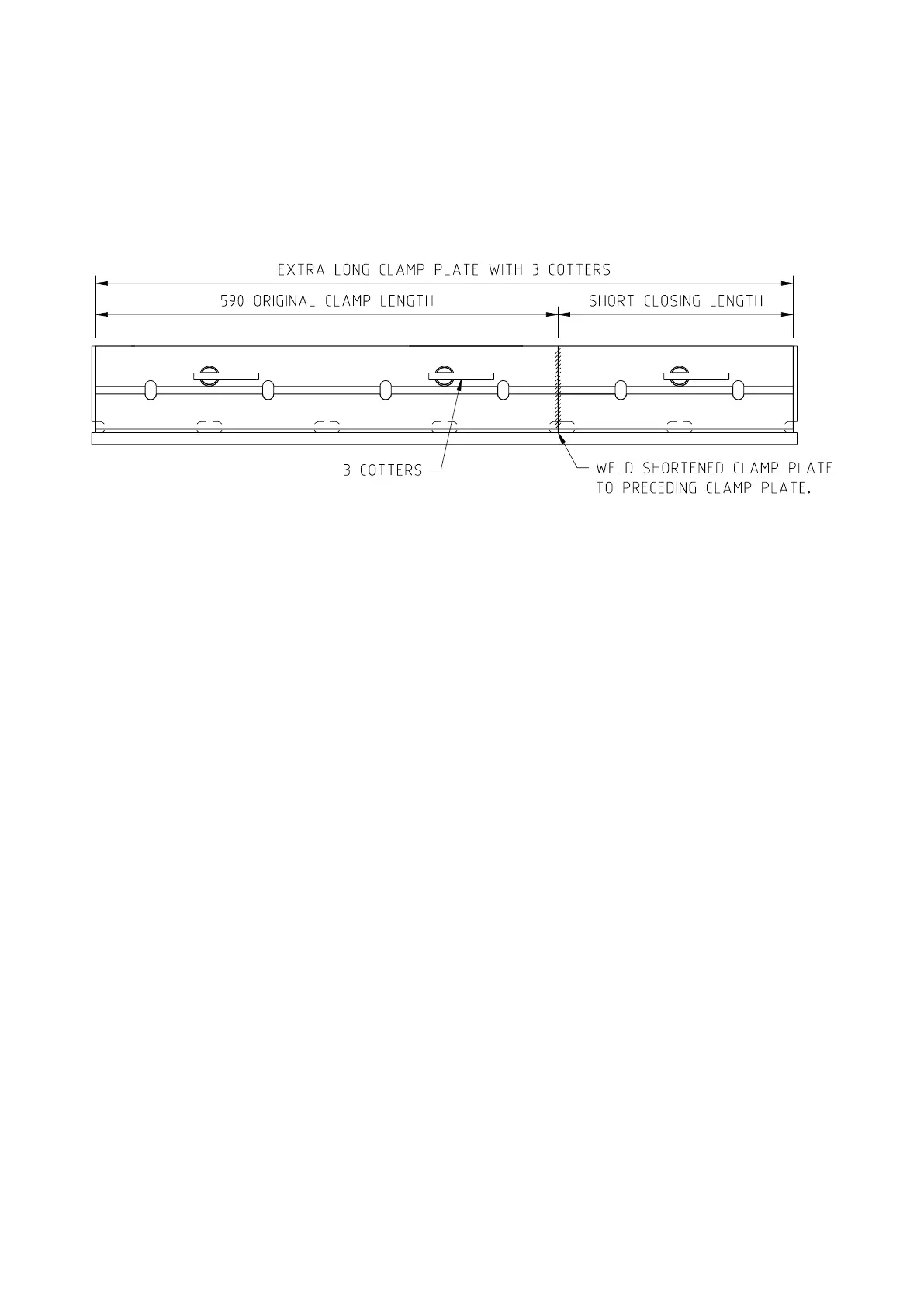
Finally, a Three-Cotter Clamp Plate may be constructed. The Backplate
can be cut to a single cotter and installed as per standard units. The
Clamp Plate is then cut to match the Backplate, and welded to the
adjacent Clamp Plate to form a longer Clamp Plate with three cotters.
Ensure that the fabricated longer Clamp Plate has its holes at the same
centres as the Cotters in the Backplate.
Any of the above methods is acceptable. Again, NEVER install a Clamp Plate with
only a single Captive Wedge or Cotter. A minimum of two Cotters is required
for each Clamp Plate.
4. Grind each plug weld flush with the face of the backing plate if necessary.
5. Measure the required length of skirting rubber required, and cut this length from
the roll supplied. See the cutting procedure following in section 4.2.
6. Insert the skirting rubber from one end, making sure that the correct edge is
downward. Secure the rubber by placing the ESS 2000 clamps plates in
position over the captive wedges, and lightly tapping the wedges to hold the
rubber.
7. Insert a screwdriver in the Clamp plate slot and push down the rubber until it
lightly but uniformly contacts the conveyor belt, loosening the nearest wedge if
necessary. Firmly tap wedges tight and repeat the process for consecutive
clamp plates. Do not overtighten the rubber against the belt, or the wedge.
8. Remove the weld blanket, and any installation debris from the conveyor.
10. Remove danger tags and return conveyor to service, following plant
procedures.
NOTE: IF YOU HAVE ANY PROBLEMS, OR ARE UNCLEAR ON ANY INSTALLATION
STEP, CONTACT ESS ON CUSTOMER SERVICE NUMBER 1800 074 446.



 To Next Page