EasyManua.ls Logo

EST SIGA-UM - User Manual

EST SIGA-UM
8 pages
Print Icon
To Next Page IconTo Next Page
Loading...
© 2016 Walter Kidde Portable Equipment, Inc. 1 / 8 P/N P-047550-1726-EN • REV 08 • ISS 05AUG16
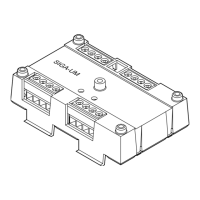
SIGA-UM Universal Class A/B Module
Installation Sheet
Description
The SIGA-UM Universal Class A/B Module is an addressable
module that you can configure to provide one of the following:
Two Class B dry contact initiating device circuits
One Class A dry contact initiating device circuit
One Class A or Class B notification appliance circuit
One Class A or Class B verified two-wire (conventional)
smoke detector circuit without dry contact initiating devices
on the same circuit
One Class A or Class B unverified two-wire (conventional)
smoke detector circuit with or without dry contact initiating
devices on the same circuit
One Form C dry contact relay output
The SIGA-UM requires two device addresses on the signaling
line circuit (SLC). Addresses are assigned electronically. There
are no addressing switches.
Diagnostic LEDs provide visible indication of the status of the
module:
Normal: Green LED flashes
Alarm/active: Red LED flashes
Personality codes
Use the personality codes described below to configure the
SIGA-UM module. See Table 1 on page 2 for listing
information. See Table 2 on page 8 for personality code
electrical characteristics.
Personality code 1: Alarm - NO latching (Class B). Factory
default. Configures input 1 or 2 for Class B, normally open dry
contact initiating devices (e.g., pull stations, heat detectors,
etc.). When the NO input contact of an initiating device is
closed, an alarm signal is sent to the loop controller and the
alarm condition is latched at the module.
Personality code 2: Alarm - NO delayed latching (Class B).
Same as code 1 except that contact closure must be
maintained for approximately 16 seconds before an alarm
signal is sent. This code is only for use with nonretarded
waterflow alarm switches.
Personality code 3: Active - NO nonlatching (Class B).
Contact closure causes an active instead of an alarm status
and does not latch at the module. Code 3 is typically used for
monitoring fans, dampers, and doors.
Personality code 4: Active - NO latching (Class B). Contact
closure causes an active instead of an alarm status, which is
latched at the module. Code 4 is typically used for monitoring
supervisory and tamper switches.
Personality code 8: Signal - dry contact output. Configures
the module as a Form C dry relay contact to control external
appliances (door closers, fans, dampers) or equipment
shutdown. Note: Jumper JP1 must be moved to pins 2 and 3
for dry contact operation.
Personality code 9: Alarm - NO latching (Class A). Configures
the module for connection of Class A, normally open dry
contact initiating devices (e.g., pull stations, heat detectors,
etc.). When the NO input contact of an initiating device is
closed, an alarm signal is sent to the loop controller and the
alarm condition is latched at the module.
Personality Code 10: Alarm - NO delayed latching (Class A).
Same as code 9 except that contact closure must be
maintained for approximately 16 seconds before an alarm
signal is sent. Code 10 is typically used with waterflow alarm
switches.
Personality code 11: Active - NO nonlatching (Class A).
Same as code 9 except that contact closure causes an active
instead of an alarm status, and does not latch at the module.
Personality code 11 is typically used for monitoring fans,
dampers, and doors.

Question and Answer IconNeed help?

Do you have a question about the EST SIGA-UM and is the answer not in the manual?

Summary

Description

Personality codes

Personality code 1: Alarm - NO latching (Class B)

Configures input 1 or 2 for Class B, normally open dry contact initiating devices.

Personality code 2: Alarm - NO delayed latching (Class B)

Similar to code 1, requires contact closure for 16 seconds before alarm.

Personality code 3: Active - NO nonlatching (Class B)

Contact closure causes active status, not alarm; does not latch.

Personality code 4: Active - NO latching (Class B)

Contact closure causes active status, latches at module.

Personality code 8: Signal - dry contact output

Configures module as Form C dry relay contact for external appliances.

Personality code 9: Alarm - NO latching (Class A)

Configures module for Class A, normally open dry contact initiating devices.

Personality code 10: Alarm - NO delayed latching (Class A)

Similar to code 9, requires 16 sec closure for alarm.

Personality code 11: Active - NO nonlatching (Class A)

Similar to code 9, causes active status, does not latch.

Personality code 12: Active - NO latching (Class A)

Similar to code 9, causes active status, latches at module.

Personality code 13: Alarm - two-wire smoke unverified (Class B)

Configures module for two-wire smoke detectors (no verification).

Personality code 14: Alarm - two-wire smoke verified (Class B)

Configures module for two-wire smoke detectors requiring verification.

Personality code 15: Signal - supervised output (Class A)

Configures module for Class A output notification appliance circuit.

Personality code 16: Signal - supervised output (Class B)

Configures module for Class B output notification appliance circuit.

Personality code 18: Alarm - soft short latching, European Style C (Class B)

Alarm status on closure, trouble on short condition.

Installation

WARNINGS

Notes

Protection from transient spikes

Wiring

General wiring notes

Notes on wiring practices, terminal usage, and EOL resistors for circuits.

Riser wiring notes

Notes on maximum line impedance and survivability requirements.

Two-wire smoke detector notes

Notes on module limits for two-wire smoke detectors and compatibility.

Specifications

Regulatory information

Contact information

Summary

Description

Personality codes

Personality code 1: Alarm - NO latching (Class B)

Configures input 1 or 2 for Class B, normally open dry contact initiating devices.

Personality code 2: Alarm - NO delayed latching (Class B)

Similar to code 1, requires contact closure for 16 seconds before alarm.

Personality code 3: Active - NO nonlatching (Class B)

Contact closure causes active status, not alarm; does not latch.

Personality code 4: Active - NO latching (Class B)

Contact closure causes active status, latches at module.

Personality code 8: Signal - dry contact output

Configures module as Form C dry relay contact for external appliances.

Personality code 9: Alarm - NO latching (Class A)

Configures module for Class A, normally open dry contact initiating devices.

Personality code 10: Alarm - NO delayed latching (Class A)

Similar to code 9, requires 16 sec closure for alarm.

Personality code 11: Active - NO nonlatching (Class A)

Similar to code 9, causes active status, does not latch.

Personality code 12: Active - NO latching (Class A)

Similar to code 9, causes active status, latches at module.

Personality code 13: Alarm - two-wire smoke unverified (Class B)

Configures module for two-wire smoke detectors (no verification).

Personality code 14: Alarm - two-wire smoke verified (Class B)

Configures module for two-wire smoke detectors requiring verification.

Personality code 15: Signal - supervised output (Class A)

Configures module for Class A output notification appliance circuit.

Personality code 16: Signal - supervised output (Class B)

Configures module for Class B output notification appliance circuit.

Personality code 18: Alarm - soft short latching, European Style C (Class B)

Alarm status on closure, trouble on short condition.

Installation

WARNINGS

Notes

Protection from transient spikes

Wiring

General wiring notes

Notes on wiring practices, terminal usage, and EOL resistors for circuits.

Riser wiring notes

Notes on maximum line impedance and survivability requirements.

Two-wire smoke detector notes

Notes on module limits for two-wire smoke detectors and compatibility.

Specifications

Regulatory information

Contact information

EST SIGA-UM Specifications

General IconGeneral
BrandEST
ModelSIGA-UM
CategoryControl Unit
LanguageEnglish

Related product manuals