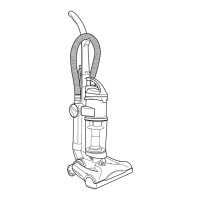
This document provides a service manual for the V18C01A Vacuum Cleaner, offering detailed instructions for repair, maintenance, and troubleshooting. It is specifically designed for experienced repair technicians, emphasizing safety precautions due to the electrical nature of the product. The manual highlights the importance of using manufacturer-specified parts for critical components to prevent hazards like electric shock or fire, and strictly advises against modifying the original design without permission.
The vacuum cleaner is designed for general household cleaning, effectively removing dust and debris from various surfaces. Its primary function is to create suction to draw in dirt, which is then collected in a dust bag or container. The device is equipped with a motor that generates the necessary airflow for suction, and it includes several attachments to enhance its versatility across different cleaning tasks.
Usage Features:
The V18C01A vacuum cleaner is designed for ease of use and maneuverability. It features a hose that connects to the main body, allowing for flexible reach and access to various areas. The hose connector is equipped with a release button, simplifying the process of detaching the hose from the main unit for storage or attachment changes.
The vacuum cleaner comes with a multi-surface floor nozzle, which is suitable for cleaning different types of flooring, from hard surfaces to carpets. Additionally, a combination tool is included, offering versatility for cleaning crevices, upholstery, and other hard-to-reach spots. An extension wand further extends the reach of the vacuum, making it easier to clean high areas or under furniture without excessive bending.
The device incorporates a cord rewind assembly, which allows for convenient storage of the power cord. This feature helps to keep the cord tidy and prevents tangling when not in use. The power switch controls the operation of the motor, enabling users to easily turn the vacuum on and off.
Maintenance Features:
The service manual provides comprehensive instructions for disassembling and reassembling key components, which is crucial for maintenance and repair. This includes detailed steps for accessing the internal parts of the vacuum cleaner, such as the upper and lower body, motor cover, and re-winder assembly.
One of the primary maintenance tasks involves cleaning or replacing the dust bag or container. The manual implies the presence of a "full dust indicator" system, which alerts the user when the dust collection capacity is reached, prompting them to empty or replace the bag. This ensures optimal suction performance and prevents the motor from overworking.
The vacuum cleaner also features air inlet and outlet filters, which are essential for trapping fine dust particles and preventing them from being recirculated into the air. Regular cleaning or replacement of these filters is critical for maintaining air quality and the efficiency of the vacuum. The manual provides guidance on how to access and service these filters.
Motor maintenance is also covered, including instructions for removing and inspecting the motor unit, motor sealing, motor sponge, and motor support components. These parts play a vital role in the motor's performance and longevity, and their proper functioning is essential for the vacuum's overall operation. The manual also references a "Thermal Protector" for the motor, indicating a safety feature designed to prevent overheating.
Troubleshooting information is provided to help diagnose common issues, such as the vacuum not starting or experiencing reduced suction. For instance, if the vacuum cleaner fails to start, potential causes include an unplugged cord, a faulty power switch, loose internal wiring, or a burned-out motor. Corresponding countermeasures are suggested, such as re-plugging the device, pressing the power switch, reconnecting internal wiring, or repairing/replacing the motor.
If suction becomes smaller, the manual lists possible causes like a blocked suction head channel, a poor ventilation dust bag, blocked air inlet/outlet filters, or motor problems. Solutions include cleaning the suction head channel, cleaning the dust bag, cleaning the filters, or repairing/replacing the motor. The "full dust indicator" system is also mentioned in troubleshooting, with issues like a stuck buoy or broken spring potentially affecting its functionality, requiring repair.
The manual includes an exploded view diagram, which visually represents all the components of the vacuum cleaner, making it easier for technicians to identify and locate specific parts during assembly or disassembly. A replacement parts list is also provided, detailing part names, codes, specifications, and quantities, ensuring that technicians can order the correct components for repairs. This comprehensive approach to maintenance and repair ensures the longevity and efficient operation of the V18C01A vacuum cleaner.


 To Next Page
 General