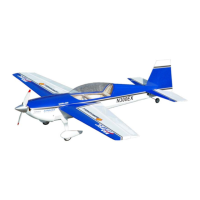
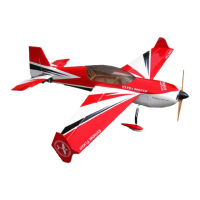
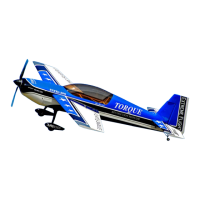
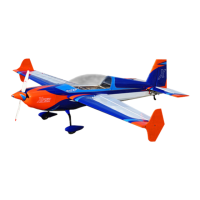
The EXTRA 300EXP v2 Electric ARF is a high-performance, electric-powered aerobatic aircraft designed for extreme flight and precision maneuvers. This model is an advanced version of the Extreme Flight RC Extra 300EXP ARF, incorporating numerous design liberties to create a unique aircraft in both appearance and flight ability. The "EXP" in its name stands for "Experimental Progressive," reflecting its origin as a test bed for new forward-thinking design and aerodynamic concepts. The V2 version further refines the original concept through the increased use of composites, resulting in a stiffer, stronger airframe and a slight reduction in overall weight.
Function Description:
The EXTRA 300EXP v2 is an Electric ARF (Almost Ready-to-Fly) model, meaning it comes largely pre-assembled, requiring the user to complete the final assembly and install the necessary electronic components. It is designed for advanced aerobatic flying, including 3D maneuvers, precision aerobatics, and various aggressive flight styles. The aircraft's design prioritizes lightweight construction, high strength, and aerodynamic efficiency to handle extreme loads and provide exceptional flight characteristics.
Important Technical Specifications & Components (as per manual):
Airframe Construction:
- Composites: Incorporates carbon fiber and G10 composites in the airframe structure. These materials are used in high-stress areas such as motor box support, landing gear mounting structure, and fuselage longerons, providing enormous strength and durability while maintaining a lightweight, twist-free structure.
- Landing Gear: Airfoiled carbon fiber landing gear, designed with a slight "give" to cushion less-than-perfect landings.
- Wing Panels: Removable, mounted on a carbon fiber wing tube and secured to the fuselage with nylon thumbscrews.
- Canopy: Large, moved forward to place the tallest portion of the aircraft at the center of gravity, optimizing knife edge performance. Retained by a spring-loaded hatch latch.
- Control Surfaces: Pushrod driven with short linkages and ball links for slop-free actuation and no binding.
- Cowl and Wheel Pants: Expertly painted fiberglass.
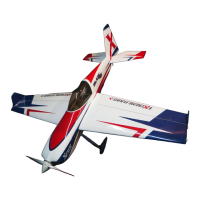
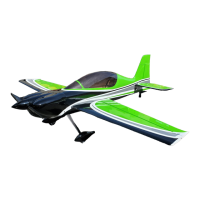
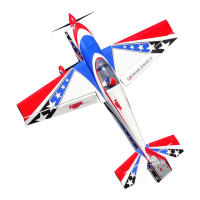
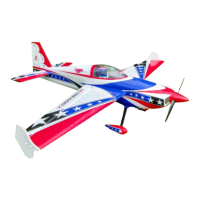
- Covering: Utilizes high-visibility Ultracote color schemes.
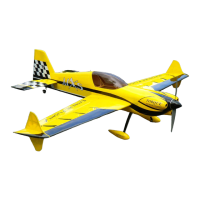
- Yellow/Red/Blue/Silver scheme: Cub Yellow, Midnight Blue, Silver, True Red.
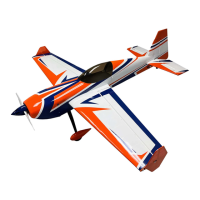
- Orange/White/Blue scheme: Orange, White, Midnight Blue, Sky Blue, Silver.
- Side Force Generators (SFGs): Optional, included components that add to the side area, increasing yaw axis authority and stability in all angles of sideslip. They can also act as "training wheels" for learning harrier maneuvers.
Required Components for Completion (not included in ARF kit):
- Adhesives: Thin and medium CA (Mercury M5T thin and M100XF medium recommended), Blue Loctite.
- Servos: 4 sub-micro metal geared servos (Hitec HS-70MG used in flight testing).
- Motor: Torque 2814T/820 Brushless Outrunner motor.
- ESC (Electronic Speed Controller): Airboss Elite 45 Amp ESC.
- Battery: 4S 2100-2700 mAh LiPo battery.
- Propeller: Falcon or APC 12x6 E prop (NOT the slow fly version!).
- Spinner: 52mm Extreme Flight spinner.
- Servo Extensions:
- 2 x 18" extensions for the 2 rear servos.
- 2 x 6" extensions for receiver to aileron servo leads (Extreme Flight 28 AWG servo extensions recommended for weight saving).
- Battery Retention: Adhesive-backed Velcro and Velcro strap.
Usage Features:
Assembly:
- Pre-assembly Review: Users are advised to read the entire instruction manual before starting assembly.
- Covering Iron Application: Go over all seams with a covering iron on medium heat.
- CA Hinges: Use fresh thin CA with a fine glue tip for proper wicking and bonding.
- Stress Area Reinforcement: Apply CA to high-stress areas like anti-rotation pins, landing gear mounts, servo trays, and motor box support mounts.
- Control Horns: All G10 control horns are identical except for the elevator horn, which has a shortened base to fit the elevator's depth.
- Decal Application: Clean the area with alcohol, mist lightly with Rapid Tac or Windex for positioning, then use a rubber squeegee to remove liquid and air pockets.
- Landing Gear Assembly: Involves securing axles, wheels with collars (using blue thread lock on setscrews), and wheel pants, then mounting the assembly to the fuselage with blue thread lock on bolts.
- Motor and ESC Installation: Secure radial mount and prop adapter to the motor (using blue thread lock), then mount the motor to the motor box. Mount the ESC to the bottom of the motor box with Velcro or a cable tie, with foam for vibration absorption.
- Motor Rotation Verification: Before cowl installation, verify proper motor rotation direction by plugging the ESC into the receiver, attaching a battery (without propeller), and arming the system. Swap motor wires if rotation is reversed.
- Cowl Mounting: A recommended method involves using masking tape to mark mounting tab locations, positioning the cowl with a spinner for reference, then drilling holes and securing with wood screws.
- Stabilizer and Elevator Assembly: Involves fitting and gluing the elevator control horn, centering and securing hinges with thin CA, then inserting and aligning the stab into the fuselage and securing with CA.
- Rudder and Tailwheel Assembly: Scuffing and gluing the rudder horn, securing the rudder to hinges with thin CA, then attaching the tailwheel assembly to the fuselage and tiller arm to the rudder.
- Servo Linkage Assembly: Attaching servo extensions, installing servos, and assembling linkages. The elevator servo arm is a G10 arm for achieving 3D throws (over 50 degrees). Power drill can be used to thread ball links onto pushrods.
- Aileron Linkage: Aileron servo linkage is installed on the bottom side of the servo arm to reduce binding and allow full deflection.
- Battery and Receiver Mounting: Battery secured with Velcro and a strap on the battery tray. Receiver mounted on the portion of the battery tray extending behind the wing tube with Velcro.
- SFG Mounting: If used, SFGs are mounted with 3mm bolts, clear plastic washers, and clear plastic spacers between the wing tip and SFGs.
- Wing Installation: Carbon fiber wing tube inserted, wings slid into position, and secured with nylon wing bolts into pre-installed blind nuts.
Flight Setup and Tuning:
- CG Balancing: Start by balancing on the center of the carbon fiber wing tube. Battery position can be adjusted to achieve desired CG.
- Neutral CG (Aggressive 3D): Aircraft flies inverted straight and level without down elevator.
- 45-degree Line Test (Precision Aerobatics): Fly at 3/4 to full throttle, pull to a 45-degree up line, roll inverted, and release elevator stick. Adjust battery until the aircraft tracks the 45-degree line for several hundred feet before slowly leveling off. Mark battery position for consistency.
- Rates and Exponential Settings: Highly recommended for optimal flying experience.
- Elevator:
- Low rate: 8-10 degrees, 15-20% Exponential (Precision)
- 3D rate: 45-50 degrees, 60-65% Exponential (Aggressive 3D)
- Insane tumble rate: As much as possible, 65-70% Exponential (Crazy tumbles/flips)
- Rudder:
- Low rate: 20 degrees, 45-50% Exponential (Precision)
- 3D rate: As much as possible, 80-90% Exponential (Aggressive 3D)
- Aileron:
- Low rate: 15-20 degrees, 40-45% Exponential (Precision)
- 3D rate: As much as possible, 70-75% Exponential (Aggressive 3D)
- Spoileron Mix (Optional): Mix ailerons to act as spoilerons in conjunction with the elevator (both ailerons raise when elevator raises). Typically 100% mix on a switch. This allows for straight down dropping elevators, insane walls, and tight KE spins. Also a training tool for harrier maneuvers.
Flight Characteristics:
- Capable of performing the full range of 3D and precision maneuvers.
- Excellent knife edge (KE) capability due to forward canopy placement and SFGs.
- SFGs can assist in stabilizing high alpha flight for harriers, reducing pilot workload.
Maintenance Features:
- Repair Information: If repairs are needed, the Ultracote colors used are specified for easy matching.
- Manual Updates: Extreme Flight R/C reserves the right to alter assembly processes, and manuals are updated as best as possible. Users are encouraged to contact Extreme Flight with assembly questions.
- Adhesive Application: Regular application of CA to high-stress areas during assembly contributes to long-term durability.
- Thread Lock: Use of blue thread lock on critical bolts (landing gear, prop adapter) prevents loosening due to vibration.
- Extreme Flight 4-in-1 Airplane Stand: Invaluable for assembling various aircraft sizes, including this model.

 Need help?
 General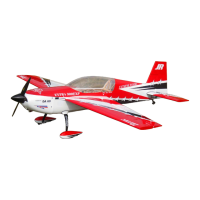

 To Next Page