EasyManua.ls Logo

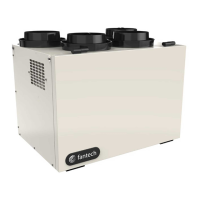
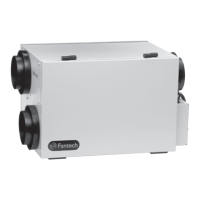
Fantech SHR 1504 - User Manual

Fantech SHR 1504
28 pages
Print Icon
To Next Page IconTo Next Page
Loading...
SHR 1504 SHR 1505 R(D) SHR 2004 SHR 2005 R(D) SHR 3005 R SHR 3205RD
VHR 1404 VHR 1405 R VHR 2004 VHR 2005 R VHR 704
*Leave with Homeowner
Heat Recovery Ventilator Operation Manual
For use with Models

Other manuals for Fantech SHR 1504

Questions and Answers

  • L
    Linda MorganSep 8, 2025
    What to do about condensation or ice build up in insulated duct to the outside of my Fantech SHR 1504 Fan?
    • V
      Vincent ReedSep 8, 2025
      To address condensation or ice buildup in the insulated duct of your Fantech Fan, tape and seal all joints to ensure a complete vapor barrier. Also, tape any holes or tears in the outer duct covering and ensure the vapor barrier is completely sealed.
  • T
    Tony ScottAug 23, 2025
    Why is the air from my Fantech SHR 1504 too dry?
    • R
      ronald08Aug 23, 2025
      The air from your Fantech Fan may be too dry if the dehumidistat control is set too low or the HRV is out of balance. You can increase the desired level of humidity and change the ventilation mode from continuous to standby. It is also recommended to have a contractor balance the HRV airflows.
  • L
    Lauren SwansonAug 25, 2025
    What to do if Fantech SHR 1504 Fan has poor air flows?
    • R
      Robert WrightAug 25, 2025
      If your Fantech Fan has poor air flows, you can try the following: * Clean exterior hoods or vents if the 1/4" (6mm) mesh on the outside hoods is plugged. * Remove and clean the filter if filters are plugged. * Remove and clean the core if it is obstructed. * Check and open indoor grilles if they are closed or blocked. Also, ensure that an electrician checks the supply voltage if there is an inadequate power supply at the site and check duct installation if ductwork is restricting airflow. Increase the speed of the HRV if there is an improper speed control setting. If the HRV airflow is improperly balanced or ducting has fallen down or been disconnected from the HRV, have a contractor address these issues.
  • N
    Nicholas FisherAug 26, 2025
    Why is my Fantech SHR 1504 Fan supply air feels cold?
    • J
      jessicacoxAug 27, 2025
      If the supply air from your Fantech Fan feels cold, it could be due to the following reasons: * The location of supply grilles may be causing airflow to irritate occupants. Relocate the grilles high on the walls or under the baseboards, and install ceiling-mounted diffusers or grilles to avoid directly spilling supply air on occupants. You can also turn down the HRV supply speed. A small duct heater (1kW) could be used to temper the supply air. Ensure that furniture placement or closed doors are not restricting air movement. * If the outdoor temperature is extremely cold, and supply air is ducted into the furnace return, the furnace fan may need to run continuously to distribute ventilation air comfortably.
  • L
    Latasha LynchAug 27, 2025
    What to do if Fantech SHR 1504 Fan has persistent condensation on window?
    • M
      Marcus GallegosAug 27, 2025
      If you notice persistent condensation on windows when using your Fantech Fan, consider the following: * Reduce the desired level of humidity, if there is an improper adjustment of the dehumidistat control, and combine this step with the use of continuous exchange mode. * Have a contractor balance the HRV if the HRV is out of balance. * Open curtains or blinds to improve air circulation near windows.
  • S
    Stephen LopezSep 22, 2025
    What to do if LED is flashing on Fantech Fan?
    • E
      erica36Sep 22, 2025
      If the LED on your Fantech Fan is flashing, it indicates that no power is being transmitted to the control board. First, make sure the unit is plugged in. If it is, the transformer may need replacing.
  • J
    John JacksonSep 16, 2025
    How to fix condensation or ice build up in insulated duct to the outside of Fantech Fan?
    • J
      Joseph JohnsonSep 16, 2025
      If you notice condensation or ice build-up in the insulated duct to the outside of your Fantech Fan, it might be caused by an incomplete vapor barrier around the insulated duct. In this case, tape and seal all joints. Another cause can be a hole or tear in the outer duct covering, tape any holes or tears made in the outer duct covering and ensure that the vapor barrier is completely sealed.
  • R
    Richard CopelandSep 18, 2025
    Why is Fantech SHR 1504 air too dry?
    • T
      Travis ChanSep 18, 2025
      If the air from your Fantech Fan is too dry, it may be because the dehumidistat control is set too low. Increase the desired level of humidity and change the ventilation mode from continuous mode to standby.
  • F
    fballardSep 7, 2025
    Why does supply air feel cold from my Fantech SHR 1504?
    • A
      Aaron DuffySep 7, 2025
      If the supply air from your Fantech Fan feels cold, reposition the supply grilles high on the walls or under the baseboards, and install ceiling-mounted diffusers to avoid direct airflow on occupants. Reduce the HRV supply speed. If supply air is ducted into the furnace return, run the furnace fan continuously. Also, ensure furniture or closed doors aren't restricting air movement.
  • K
    Karen MartinezSep 4, 2025
    How to improve poor air flows in my Fantech SHR 1504 Fan?
    • J
      John ReedSep 4, 2025
      To improve poor air flows with your Fantech Fan, begin by cleaning the exterior hoods or vents and removing and cleaning the filter and core. Ensure indoor grilles are open and not blocked. Have an electrician check the power supply voltage. Check the duct installation and increase the HRV speed. If the issue persists, have a contractor balance HRV airflows or reconnect ducting.

Summary

Understanding Fantech HRVs

What Are HRVs?

Defines HRVs as whole-house ventilation systems.

How Do They Work?

Explains how HRVs exchange air and use a heat recovery core.

Model Numbers & Port Configurations

Explains model number breakdown and different port configurations.

HRV Seasonal Operation

Winter Operation

Humidity control and condensation prevention during winter.

Spring Operation

Adjusting settings for moderate spring temperatures.

Summer Operation

Managing hot and humid air and ventilation in summer.

Fall Operation

Controlling humidity and condensation in fall.

MODES OF OPERATION

Continuous Ventilation Mode

Operates both fans for continuous air exchange.

Intermittent; Standby Mode

System on standby, activates on demand.

Defrost;Recirculation Mode (5 port R models)

Automatic defrost using damper recirculation.

Defrost;Fan shutdown (4 port models)

Automatic defrost using fan shutdown.

Optional Remote Controls

Dehumidistat Controls (MDEH1, MDEH2)

Controls indoor humidity levels, activating high speed when needed.

Timer Controls (RTS2, RTS3)

Provides timed boosts for high-speed ventilation.

Mode Selection Controls (EDF1, EDF5)

Selects operational modes and timers for ventilation.

EDF5 Multi-Function Wall Control Features

Details features like digital display, override, and cycle control.

Routine HRV Maintenance

Filter and Heat Recovery Core Maintenance

Procedures for cleaning and checking filters and the heat recovery core.

Unit, Fan, Drain, and Hood Checks

Maintenance for the unit interior, fans, drain lines, and outside hoods.

Troubleshooting Common HRV Issues

Air Quality Problems (Dry;Humid, Condensation)

Addresses issues related to indoor air dryness, humidity, and window condensation.

Airflow and Temperature Issues

Solutions for poor airflow, cold supply air, and frosting.

Ducting and Control Board Diagnostics

Troubleshooting duct issues, ice build-up, and LED light codes.

HRV Maintenance Schedule and Warranty

Maintenance Schedule

Lists required maintenance tasks and recommended frequencies.

Limited Warranty Information

Details the warranty coverage, limitations, and responsibilities.

Installation Manual Introduction

Important Safety Precautions

Emphasizes reading the manual before installation and cautions about combustion equipment.

Model Overview and Compliance

Lists SHR & VHR models and installation compliance requirements.

Determining Airflow Requirements

Calculating Airflow by Cubic Volume

Method to calculate required airflow based on house volume and air changes.

Calculating Airflow by Room Classification

Method to calculate required airflow based on room type and usage.

SHR Series Technical Data

Dimensions and Airflow Path

Physical dimensions and airflow direction for SHR models.

Fan Performance and Power Data

Performance curves and electrical specifications for SHR models.

VHR Series Technical Data

Dimensions and Airflow Path

Physical dimensions and airflow direction for VHR models.

Fan Performance and Power Data

Performance curves and electrical specifications for VHR models.

HRV Installation Guide

Installation Location and Tips

Guidance on choosing a location and practical installation tips.

Unit Mounting and Drain Line Setup

Procedures for mounting the HRV and installing the condensate drain line.

Exterior Ducting Installation

Weatherhood Placement Guidelines

Advice on locating intake and exhaust weatherhoods.

Ducting Installation to Weatherhoods

Steps and tips for connecting flexible ducts to hoods.

Interior Ducting Installation

General Ducting Tips and HRV Connection

Best practices for duct runs and connecting to the HRV unit.

Grille Placement and 5 th Port Ducting

Guidance on supply/exhaust grille locations and 5th port unit ducting.

Installation Examples

Fully Dedicated System (New Construction)

Illustrates a recommended ducting setup for new builds.

HRV Integration with Furnace

Partially Dedicated System: Supply to Furnace Return

Connects HRV supply air to the furnace cold air return.

Simplified Installation Options

Option 1: Return;Return Method

Connects both HRV supply and exhaust to furnace cold air return.

Simplified Installation Options (cont.)

Option 2: Supply;Return Method

Connects HRV supply to furnace supply and exhaust to return.

Start-Up and Airflow Balancing

Initial Unit Start-Up Procedure

Describes the initial self-diagnostic and mode selection.

Importance of Airflow Balancing

Explains why and how to balance airflow for efficiency and safety.

Airflow Balancing Procedures

Adjusting Airflow with Integrated Damper

Instructions on using the damper collar to adjust airflow.

Measuring Airflow with Station Method

Steps for measuring airflow velocity using a station method.

Low Voltage Control System Options

EDF Series Controls (EDF1, EDF1 R, EDF2, EDF5)

Details on EDF series controls for mode and timer functions.

Dehumidistat Controls (MDEH1, MDEH2)

Explains MDEH controls for humidity management.

Timer Controls (RTS2, RTS3)

Details on RTS series timers for boost functions.

Electrical Connections Overview

Accessory Control Wiring Diagram

Shows wiring diagrams for various accessory controls.

Main Unit Electrical Connections

Internal Wiring Diagram

Detailed wiring diagram of the complete unit inside the access panel.

Furnace Electrical Connections

Standard Accessory Control Wiring

Wiring diagram for connecting to a standard furnace control contact.

Alternative Accessory Control Wiring

Wiring diagram for connecting to an alternative furnace control contact.

Fantech SHR 1504 Specifications

General IconGeneral
BrandFantech
ModelSHR 1504
CategoryFan
LanguageEnglish

Related product manuals