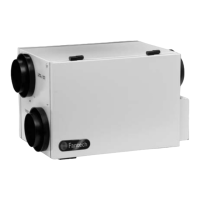
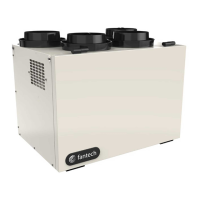
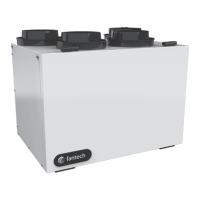
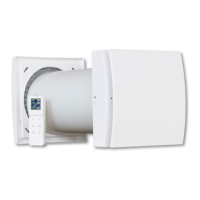
The Fantech SER Series Energy Recovery Ventilators (ERVs) are designed to provide balanced ventilation for residential applications, ensuring a continuous supply of fresh air while exhausting stale indoor air. These units are engineered to recover energy from the exhaust air, transferring it to the incoming fresh air, which helps to reduce heating and cooling costs. The SER Series is suitable for various installation scenarios, including fully dedicated systems, partially dedicated systems, and simplified installations, making them versatile for both new construction and existing homes.
Function Description
The primary function of the SER Series ERV is to provide continuous, balanced ventilation. Stale air is drawn from key areas of the home, such as bathrooms, kitchens, and laundry rooms, where pollutants and excess humidity tend to accumulate. Simultaneously, fresh outdoor air is brought into the home. Before the fresh air is distributed to habitable rooms like bedrooms and living areas, it passes through an energy recovery core. This core facilitates the transfer of heat and moisture between the outgoing stale air and the incoming fresh air, pre-conditioning the fresh air to a temperature closer to the indoor air. This process minimizes the energy required to heat or cool the incoming air, thereby improving overall energy efficiency.
The ERV's operation is crucial for maintaining good indoor air quality by diluting indoor pollutants, odors, and excess humidity. It helps prevent issues such as condensation, mold growth, and the accumulation of volatile organic compounds (VOCs). The system is designed to operate in conjunction with the home's existing HVAC system or as a standalone ventilation solution. In simplified installations, the ERV can be integrated with a forced air furnace, utilizing the furnace blower to distribute fresh air throughout the house.
Usage Features
The SER Series ERVs offer several usage features designed to provide flexible and efficient ventilation. The units are equipped with low voltage control systems, allowing for various operational modes and user adjustments. Central controls, such as the ECO-Touch, EDF7, and EDF1/1R, provide options for continuous ventilation, recirculation, and standby modes. These controls often include features like user-selected fan speeds (low, medium, normal), timed operations (e.g., 20 minutes ON/40 minutes OFF), and dehumidistat functions that automatically adjust ventilation based on indoor humidity levels. The ECO-Touch, for instance, offers a comprehensive touchscreen interface with ECO mode for optimized energy use, maintenance reminders, and error code messages for troubleshooting.
Auxiliary controls, such as the RTS2 and RTS3 timers, and the MDEH1 rotary dial dehumidistat, can be paired with the central controls to enhance functionality. These allow for localized boost ventilation in areas like bathrooms or kitchens, or more precise humidity management. The RTS2, for example, provides a 20-minute timer with an LED light, boosting the system to high speed with a touch. The MDEH1 allows for setting a desired relative humidity, ensuring the ERV operates to maintain comfortable indoor conditions.
The airflow balancing procedure is a critical usage feature, ensuring that the supply and return airflows are equal or within an acceptable difference (up to 10%). This balancing is essential for optimal efficiency and to prevent pressurization or depressurization of the home, which could lead to air leaks or backdrafting of combustion appliances. The units include an integrated damper in the Fresh Air to Building collar, allowing for easy adjustment of airflow.
Maintenance Features
Regular maintenance is essential to ensure the SER Series ERV operates efficiently and effectively. The maintenance schedule includes several key tasks designed to keep the unit in optimal condition.
- Check and Clean Filters: Filters should be checked and cleaned every 3 months, or more frequently if conditions are particularly dirty. This prevents the accumulation of dust and debris, which can restrict airflow and reduce efficiency.
- Check Energy Recovery Core: The energy recovery core should be checked every 6 months. A clean core is vital for efficient heat and moisture transfer.
- Check Drain Pan and Lines: The drain pan and condensate lines should be checked every 3 months. During normal operation and defrost mode, condensation is produced, and these components must be clear to prevent water buildup and potential damage. A "P" trap should be maintained in the drain line to prevent odors from entering the unit.
- Vacuum the Inside of the Unit: Annually, the interior of the ERV unit should be vacuumed to remove any accumulated dust and lint, which can affect performance.
- Clean and Un-block Outside Hoods: The exterior weatherhoods should be cleaned and unblocked annually to ensure unrestricted airflow into and out of the system. Plugged hoods can significantly reduce the unit's effectiveness.
- Clean and Inspect Duct Work: Annually, the ductwork should be inspected and cleaned to ensure there are no obstructions, leaks, or disconnections that could impair airflow.
- General Servicing by a Qualified Contractor: An annual general servicing by a qualified HVAC contractor is recommended to ensure all components are functioning correctly and to address any potential issues.
The unit's design also incorporates features that simplify maintenance, such as accessible filters and cores. The installation manual provides detailed instructions for these tasks, emphasizing the importance of proper maintenance for the unit's longevity and performance. The warranty information highlights that inappropriate installation or maintenance may result in the cancellation of the warranty, underscoring the importance of following the recommended procedures.


 To Next Page
 General