EasyManua.ls Logo

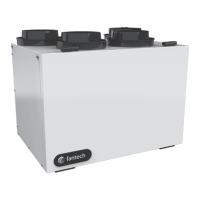
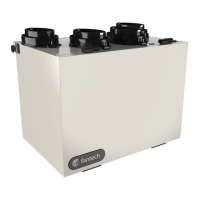
Fantech VHR 704 - User Manual

Fantech VHR 704
28 pages
Print Icon
To Next Page IconTo Next Page
Loading...
SHR 1504 SHR 1505 R(D) SHR 2004 SHR 2005 R(D) SHR 3005 R SHR 3205RD
VHR 1404 VHR 1405 R VHR 2004 VHR 2005 R VHR 704
*Leave with Homeowner
Heat Recovery Ventilator Operation Manual
For use with Models

Other manuals for Fantech VHR 704

Questions and Answers

  • L
    Lori KleinSep 9, 2025
    Why are my Fantech VHR 704 HRV and/or ducts frosting up?
    • C
      catherine41Sep 9, 2025
      If your Fantech Fan HRV and/or ducts are frosting up, have an HVAC contractor balance the HRV airflows. Note that minimal frost build-up is expected on cores before the unit initiates defrost cycle functions.
  • R
    Robert ChangSep 7, 2025
    What to do if condensation or ice build up in insulated duct to the outside of my Fantech VHR 704?
    • L
      Laura FowlerSep 7, 2025
      If you observe condensation or ice buildup in the insulated duct leading outside from your Fantech Fan, ensure that there is a complete vapor barrier around the insulated duct by taping and sealing all joints. Also, tape any holes or tears in the outer duct covering and ensure the vapor barrier is completely sealed.
  • J
    Justin SpencerAug 22, 2025
    What to do if Fantech VHR 704 Fan air is too humid?
    • C
      Cody HaleAug 22, 2025
      If the air from your Fantech Fan is too humid, it might be due to several reasons, including the dehumidistat control being set too high, a sudden change in temperature, storing too much wood inside, a dryer vent exhausting inside, poor air circulation near windows, an out-of-balance HRV, or a closed well-sealed basement door. To address this, reduce the desired level of humidity and use continuous exchange mode. Wait for the outside temperature to stabilize, and consider heating to improve the situation. Store most of your wood outside, arrange an outside vent for the dryer, open curtains or blinds, balance HRV airflows, and open the basement door or install a grill.
  • W
    William BarberSep 5, 2025
    How to stop condensation on window with Fantech VHR 704?
    • D
      david58Sep 5, 2025
      If you notice persistent condensation on the window when using your Fantech Fan, try reducing the desired humidity level and use continuous exchange mode. If the problem continues, have a contractor balance the HRV. Additionally, ensure good air circulation near the windows by opening curtains or blinds.
  • E
    Erin MartinezSep 4, 2025
    Why is my Fantech VHR 704 making the air too humid?
    • B
      Bobby CoxSep 4, 2025
      If the air feels too humid when using your Fantech Fan, try reducing the desired level of humidity and combine this with the use of continuous exchange mode. If the issue persists, wait until the outside temperature stabilizes (especially in winter), as heating can also improve the situation. Ensure you're not storing too much wood inside, as even dried wood contains a significant amount of water. Check that your dryer vent is exhausting outside and that there is good air circulation near windows by opening curtains or blinds. If you have a well-sealed basement door, open it or install a grill. Finally, check the defrost damper; if it's blocking incoming fresh air, have a contractor verify the damper system.
  • A
    Andrew BowmanSep 2, 2025
    What to do if Fantech VHR 704 has poor air flows?
    • C
      Corey WhiteSep 3, 2025
      If you're experiencing poor air flows with your Fantech Fan, start by checking and cleaning the exterior hoods or vents if they're plugged with debris. Also, remove and clean the filter, inspect and clean the core, and make sure that indoor grilles are open and unblocked. If these steps don't resolve the issue, have an electrician check the power supply voltage, check the duct installation, increase the speed of the HRV, or have a contractor balance the HRV airflows or reconnect any ducting that has fallen down or been disconnected from the HRV.
  • D
    dharrisSep 1, 2025
    How to fix air that is too dry with my Fantech VHR 704 Fan?
    • D
      Dr. Matthew HarrisSep 1, 2025
      To resolve air that is too dry with your Fantech Fan, increase the desired humidity level and change the ventilation mode from continuous to standby. If the issue remains, have a contractor balance the HRV airflows.
  • D
    devinnealAug 31, 2025
    Why are my Fantech VHR 704's HRV and/or ducts frosting up?
    • M
      Michael RiosAug 31, 2025
      If your Fantech Fan's HRV and/or ducts are frosting up, have an HVAC contractor balance the HRV airflows. Note that minimal frost build-up is expected on cores before the unit initiates defrost cycle functions.
  • J
    Janet SuarezAug 30, 2025
    What to do about condensation or ice build up in insulated duct to the outside of my Fantech Fan?
    • R
      Robert ArnoldAug 30, 2025
      To address condensation or ice buildup in the insulated duct of your Fantech Fan, tape and seal all joints to ensure a complete vapor barrier. Also, tape any holes or tears in the outer duct covering and ensure the vapor barrier is completely sealed.
  • R
    Rachel StricklandAug 28, 2025
    Why does supply air feel cold from my Fantech VHR 704?
    • B
      bgriffinAug 28, 2025
      If the supply air from your Fantech Fan feels cold, reposition the supply grilles high on the walls or under the baseboards, and install ceiling-mounted diffusers to avoid direct airflow on occupants. Reduce the HRV supply speed. If supply air is ducted into the furnace return, run the furnace fan continuously. Also, ensure furniture or closed doors aren't restricting air movement.

Summary

Heat Recovery Ventilators (HRVs)

How Do They Work?

Explains the working principle of HRVs, focusing on heat transfer and air exchange.

Understanding Fantech Model Numbers

Explains how to interpret the alphanumeric codes used in Fantech HRV model numbers.

Port Configurations

Describes the differences between 4-port and 5-port HRV models.

Seasonal Operation of HRVs

Winter Operation

Discusses humidity control and condensation issues during the winter months.

Spring Operation

Discusses temperature and humidity adjustments suitable for spring conditions.

Summer Operation

Discusses humidity control and ventilation strategies for the summer months.

Fall Operation

Discusses humidity control and condensation in fall due to temperature changes.

Modes of Operation

Continuous Ventilation Mode

Describes continuous airflow operation for consistent air exchange.

Intermittent; Standby Mode

Describes standby and intermittent operation modes, often activated by remote controls.

Defrost;Recirculation Mode (5 Port)

Describes defrost and recirculation for 5-port models using a damper system.

Defrost;Fan Shutdown (4 Port)

Describes the defrost mechanism for 4-port models using fan shutdown.

Optional Remote Controls Overview

Remote Control Units (MDEH1, MDEH2, RTS3, EDF1, RTS2)

Descriptions of various remote control units for humidity and timer functions.

EDF5 Multi-Function Wall Control Features

Details of the EDF5 control panel functions including digital display and cycle control.

Maintenance Procedures

Filter and Heat Recovery Core Maintenance

Detailed cleaning and replacement procedures for filters and the heat recovery core.

Unit and Component Checks

Notes on fan, unit interior, drain lines, and outside hoods requiring periodic checks.

Troubleshooting Common Issues

Air Quality Problems (Dry;Humid)

Solutions for common air dryness and humidity issues experienced with HRVs.

Condensation and Airflow Issues

Solutions for window condensation and poor airflow problems.

Frosting and Duct Condensation

Solutions for HRV/duct frosting and ice build-up in insulated ducts.

Control Board LED Status Codes

Explains the meaning of LED indicator lights on the control board.

HRV Maintenance Schedule

Maintenance Schedule and Records

Lists required maintenance tasks and provides space for recording maintenance dates.

Limited Warranty Overview

Summarizes the best limited warranty terms for the HRV's core and components.

Installation Manual Introduction

Important Safety and Preparation Information

Crucial safety and preparatory information before installing the HRV unit.

Supported Model Identification

Lists the specific SHR and VHR models covered in this installation manual.

Determining Airflow Requirements

Standard Airflow Calculation Method

Demonstrates airflow calculation based on house volume and air changes per hour.

Alternate Room-by-Room Calculation

Provides an alternative method for calculating airflow requirements room by room.

Technical Data for SHR Models

Dimensions and Airflow Path

Physical measurements and airflow illustration for various SHR HRV models.

Fan Performance and Power Consumption

Performance curves, apparent sensible effectiveness, and power usage for SHR models.

Technical Data for VHR Models

Dimensions and Airflow Path

Physical measurements and airflow illustration for various VHR HRV models.

Fan Performance and Power Consumption

Performance curves, apparent sensible effectiveness, and power usage for VHR models.

HRV Installation Guide

Recommended Installation Location

Guidance on choosing the optimal installation space for the HRV unit.

Unit Mounting Procedures

Steps for physically mounting the HRV unit securely and ensuring it is level.

Condensate Drain Line Installation

Instructions for setting up the condensate drain system, including a P-trap.

Exterior Ducting Installation

Weatherhood Location Guidance

Criteria for placing intake and exhaust exterior hoods for optimal performance.

Ducting to Weatherhoods and Hood Installation Steps

Procedures for connecting flexible ducts to weatherhoods and installing hoods.

Interior Ducting Installation

General Ducting Tips and HRV Connection

Best practices for duct layout and connecting interior ducts to the HRV unit.

Supply and Exhaust Grille Placement

Guidance on positioning interior air supply and exhaust grilles for effective air distribution.

Fifth Port Unit Ducting Considerations

Specifics for ducting units equipped with a fifth port for defrost or recirculation modes.

Installation Examples

Fully Dedicated System (New Construction)

Illustrates a complete dedicated installation setup for new construction.

Partially Dedicated System (Supply to Furnace Return)

Shows connecting the HRV supply air to the furnace cold air return.

Simplified Installation - Option 1 (Return;Return Method)

Diagram for a simplified installation using dual return connections to the furnace.

Simplified Installation - Option 2 (Supply;Return Method)

Diagram for a simplified installation using supply and return connections to the furnace.

Start Up and Airflow Balancing

Initial Unit Start-Up Procedure

Explains the self-diagnostic process and speed selection on unit start-up.

Airflow Balancing Overview

Explains the importance and purpose of balancing airflow for optimal HRV performance.

Airflow Balancing Procedures

Adjusting Airflow Dampers

How to adjust the integrated damper for precise airflow control and balancing.

Measuring Airflow Using Station (Grid) Method

Details the method for measuring airflow velocity using a station or grid.

Low Voltage Control Systems

EDF Series Controls (EDF1, EDF1 R, EDF2, EDF5)

Details on various EDF control units and their functions for operation and monitoring.

Dehumidistat and Timer Controls (MDEH1, MDEH2, RTS2, RTS3)

Details on MDEH and RTS timer controls and their capabilities for humidity and timed operation.

Electrical Connections - Main Unit

Main Unit Wiring Diagram

Diagram showing internal wiring and connections to accessory controls within the HRV.

Accessory Control Wiring Notes

Mentions specific controls and polarity considerations for proper wiring.

Electrical Connections - Detailed Schematics

Internal Component Wiring Schematics

Detailed diagram of internal wiring and component connections within the HRV unit.

Electrical Connections - Furnace Interfacing

Connecting to Furnace Blower Control

Guidance on linking the HRV to furnace systems for integrated operation.

Furnace Control Contact Wiring Diagrams

Wiring diagrams for standard and alternative furnace control connections.

HRV Maintenance and Warranty Details

Maintenance Schedule and Records

Lists required maintenance tasks and provides space for recording maintenance dates.

Limited Warranty Terms and Conditions

Outlines the warranty coverage, limitations, and conditions for the HRV system.

Fantech VHR 704 Specifications

General IconGeneral
BrandFantech
ModelVHR 704
CategoryFan
LanguageEnglish

Related product manuals