13 Purevision Freestanding Issue 02 01/14
7.4 Air Controls
Keep air controls and inlets/outlets clean and free from ash or debris at all times. Keep direct
outside air inlet grille (if fitted) clean and clear at all times.
Do not leave air control fully open unless monitoring the fire as over firing damage can result
which is not covered by any warranty.
7.4.1 Single Air Control Operation
Primary (under grate), secondary (air wash) and tertiary air is automatically controlled by the
single control lever at the bottom, underneath the stove door. The centre position is the OFF
position and closes off combustion air to the firebox. The off position should only be used if
absolutely necessary for very slow burning and if burning wood will cause the glass to become
blackened, the chimney to gradually become tarred and smoke to be emitted from the stove.
Wood burning: Move the lever fully to the left for maximum air to start or revive a wood fire.
Returning the lever towards the centre position will reduce the air supply progressively to
reduce the burn rate. The nominal burn rate is usually achieved when the stove is fully warmed
up (2-3 loads of logs) and burning dry hardwood logs by having the lever very approximately 18-
20mm from the centre position. This is only a rough guide as flue and fuel conditions will vary
the required position. The fire will automatically be supplied with the correct mix of secondary
and tertiary air for complete combustion. The maximum position conveniently provides a boost
of primary air as well to get new fuel burning quickly in order to minimise smoke. Do not leave
on maximum setting unless monitoring the fire to ensure over firing damage does not occur.
Smokeless/Coal fuel burning: Move the air control lever fully to the right side for starting or
reviving a coal fire. Returning the lever towards the centre position will reduce the air supply
progressively to reduce the burn rate. The fire will be supplied with the correct amount of
primary air for combustion of smokeless briquetted fuels and a small amount of
secondary/tertiary air for completing combustion. Do not leave on maximum setting unless
monitoring the fire to ensure over firing damage does not occur
7.4.2 Air Wash
All Fireline stoves are provided with a sophisticated “air wash” system to assist in keeping the
fire as visible as possible and reducing cleaning intervals. This secondary air supply to the stove
is controlled through the main single air control. The Clean Air Act air restrictor bracket will
deliberately prevent full closure of this control on the Wood side of operation.
On the Coal side of the lever’s operation the amount of air wash air is greatly minimised to
ensure good efficiency and so the glass will not remain fully clear indefinitely and will require
cleaning with stove glass cleaner or ceramic hob cleaner from time to time.
7.4.3 Tertiary Air
This appliance is also fitted with a patented tertiary air combustion system that burns otherwise
uncombusted gasses in the products of combustion thereby improving efficiency, increasing
heat output and decreasing unwanted atmospheric emissions. The Tertiary air supply to the
stove is controlled automatically by the draught in the flue and firebox and the single air
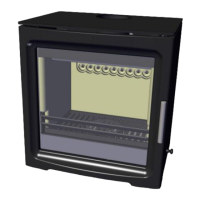
control. At certain stages of burning you will notice “jets” of swirling flame emerging near the
air holes to the rear of the firebox. For maximum efficiency on coal fuels the amount of tertiary
air is greatly reduced.
7.4.4 Multifuel Grate
Your stove is fitted with a multifuel grate, which can be shaken from the right side of the stove
by pulling and pushing the knob as required. The slot in the operating multi tool can be used to
operate the knob or use the gloves supplied. The grate is a strong set of cast iron bars with


 To Next Page