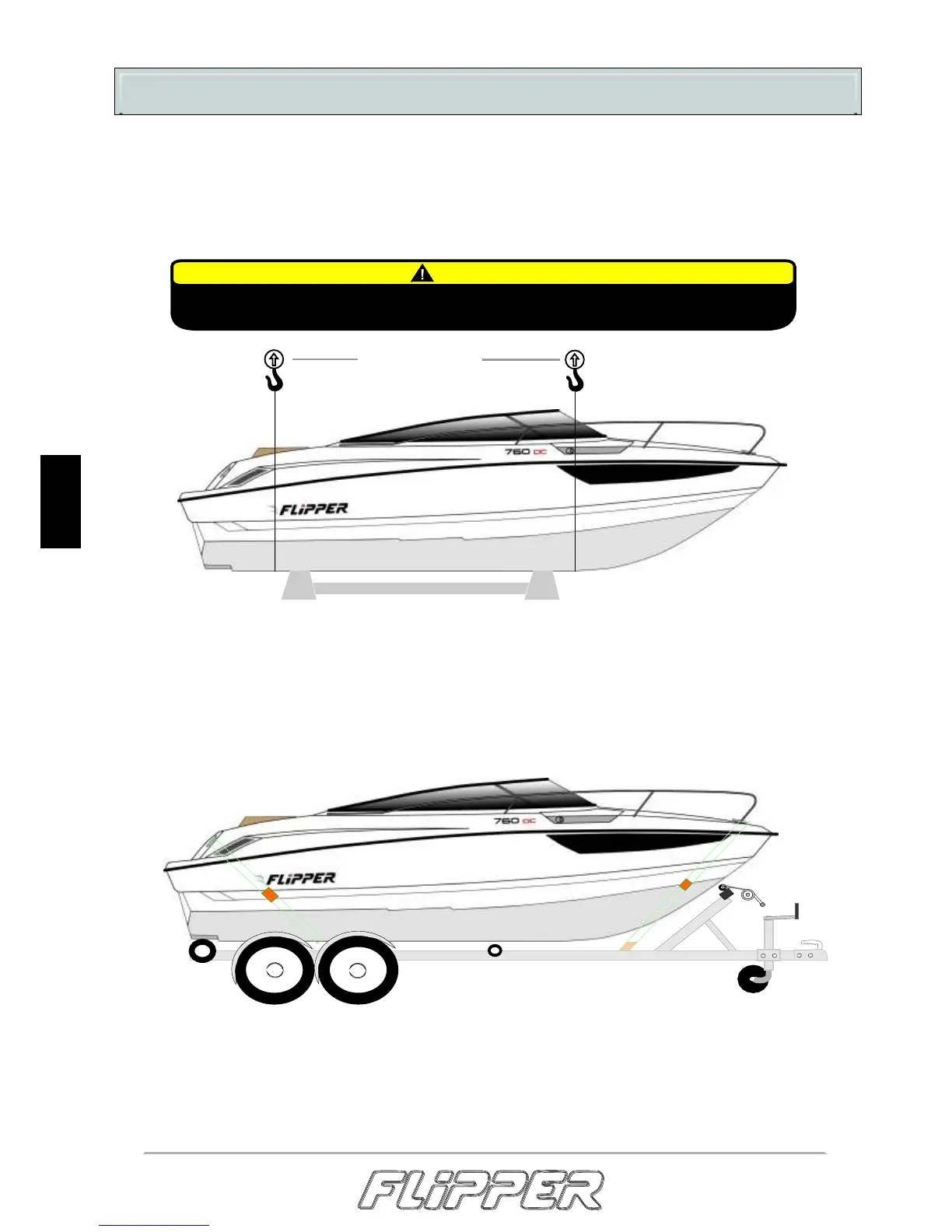
When lifting the boat we recommend to use a proper frame. Lifting without frame will cause
considerable large compressive force to the hull of the boat and may cause damage to it. If not
using a frame, make sure that the hoisting belts are long enough. Hoists are long enough when the
angle between them is about 20 degrees. During the lift, be carefull with the rails and other equipment.
Make sure that the boat is well balanced.
Cover the hoists with soft material to prevent scratches. Do not stand under the boat as it is lifted.
4.1 the boat
4.2 Transportation
4.3 Before launching the boat
Lifting
If you transport the boat by trailer, check with the dealer that it is suitable for the model in question.
Ensure that the keel is positioned straight on the middle rolls and that the side supports prevent the
boat from moving back and forth. It is meant that the keel takes all the weight and the side supports
keeps the boat in correct position. Attach the transportation ropes. Do not leave any loose objects on
board during transportation. The boat should be transported unloaded.
Check the following items with the naked eye before launching the boat:
- fastenings (make sure they are tight)
- hoses, tanks, valves, outlets/inlets and rainwater drainage
- electrical wiring
- any damage
4. Transporting the boat
CAUTION!
Never attach hoists to bollards, railings or other detachable parts of the boat.
4
Lifting area
ENG
When lifting the boat we recommend to use a proper frame. Lifting without frame will cause
considerable large compressive force to the hull of the boat and may cause damage to it. If not
using a frame, make sure that the hoisting belts are long enough. Hoists are long enough when the
angle between them is about 20 degrees. During the lift, be carefull with the rails and other equipment.
Make sure that the boat is well balanced.
Cover the hoists with soft material to prevent scratches. Do not stand under the boat as it is lifted.
4.1 the boat
4.2 Transportation
4.3 Before launching the boat
Lifting
If you transport the boat by trailer, check with the dealer that it is suitable for the model in question.
Ensure that the keel is positioned straight on the middle rolls and that the side supports prevent the
boat from moving back and forth. It is meant that the keel takes all the weight and the side supports
keeps the boat in correct position. Attach the transportation ropes. Do not leave any loose objects on
board during transportation. The boat should be transported unloaded.
Check the following items with the naked eye before launching the boat:
- fastenings (make sure they are tight)
- hoses, tanks, valves, outlets/inlets and rainwater drainage
- electrical wiring
- any damage
When lifting the boat we recommend to use a proper frame. Lifting without frame will cause
considerable large compressive force to the hull of the boat and may cause damage to it. If not
using a frame, make sure that the hoisting belts are long enough. Hoists are long enough when the
angle between them is about 20 degrees. During the lift, be carefull with the rails and other equipment.
Make sure that the boat is well balanced.
Cover the hoists with soft material to prevent scratches. Do not stand under the boat as it is lifted.
4.1 the boat
4.2 Transportation
4.3 Before launching the boat
Lifting
If you transport the boat by trailer, check with the dealer that it is suitable for the model in question.
Ensure that the keel is positioned straight on the middle rolls and that the side supports prevent the
boat from moving back and forth. It is meant that the keel takes all the weight and the side supports
keeps the boat in correct position. Attach the transportation ropes. Do not leave any loose objects on
board during transportation. The boat should be transported unloaded.
Check the following items with the naked eye before launching the boat:
- fastenings (make sure they are tight)
- hoses, tanks, valves, outlets/inlets and rainwater drainage
- electrical wiring
- any damage


 To Next Page