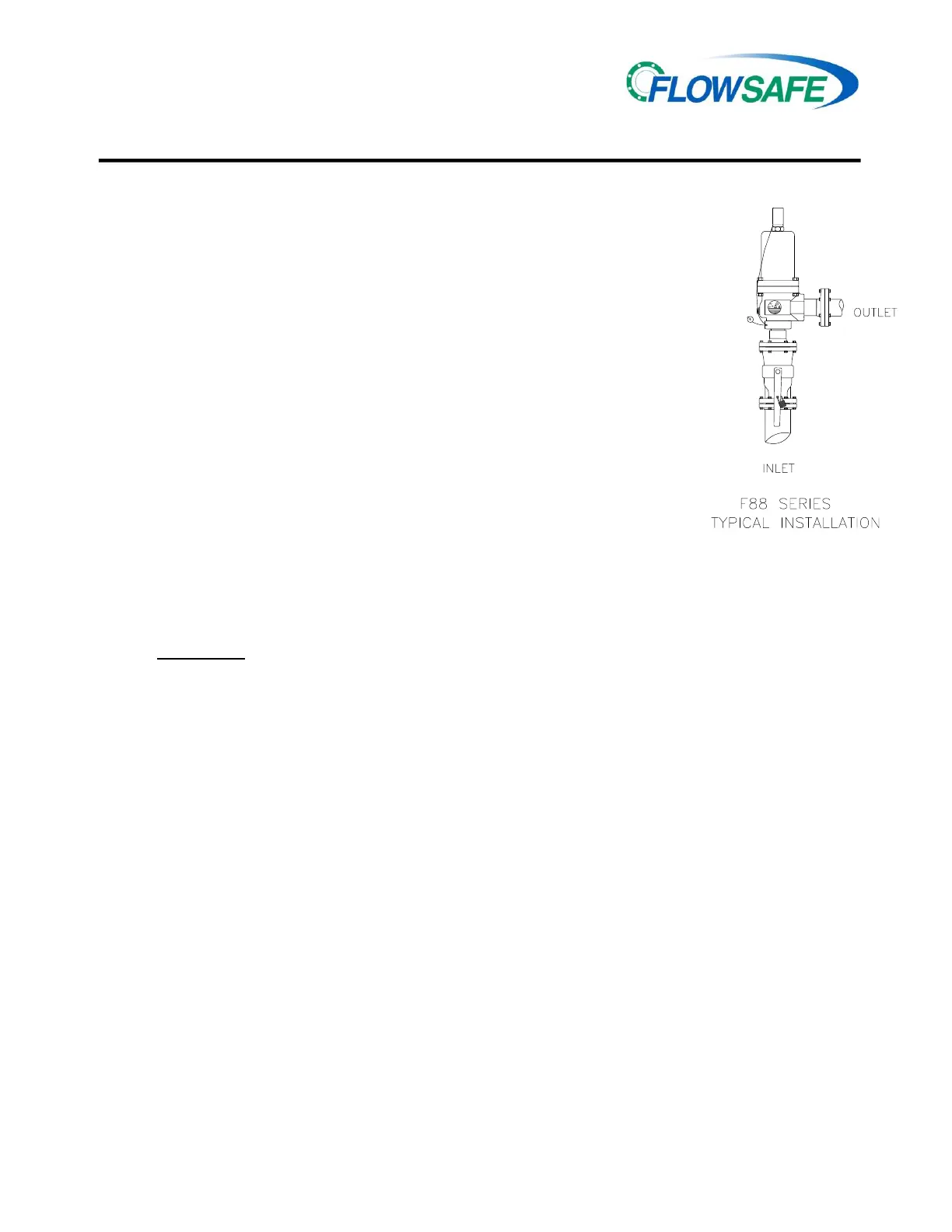
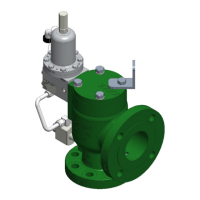
F88 Series valves are balanced against superimposed backpressure,
so that the set pressure will not change with backpressure.
Make sure that the inlet piping/flanges have an opening equal
to or greater than the valve's inlet diameter. Make sure that there
are no obstructions like gaskets, fittings, etc., in the flow path
to restrict the flow or cause chatter. Also, misaligned piping connections
may result in leaks or induce stresses in the valve assembly that interfere
with good operation. Discharge stacks exposed to the elements should
be configured so as to avoid the accumulation of snow and ice.
If a block valve is used below the relief valve, it should be opened before
pressurizing the system. This block valve should be locked open during
normal system operation.
Use only the wrench flats on the valve inlet bushing, taking care not to
make any wrench marks, for tightening and installation. Do not wrench
on the cast body or bonnet.
2.4 STARTUP
Foreign particles or dirt can damage the valve and make it inoperative. Prior to installation, clean out the
piping thoroughly. If the valve is not installed immediately, inlet and outlet connections should be
protected and covered.
Pressure can be applied to the valve as system pressure increases, or by opening the block valve (if
there is one) after the system has attained operating pressure. Verify the valve seat is leak-tight, in
accordance with Section 4.4.
The valve is now ready for service. Inspection and maintenance should be performed on a regular basis,
typically once a year, depending on the service conditions.


 To Next Page