10. If equipped with a primer pump, prime the
fuel/water separator as follows.
10.1 Loosen the vent plug. Then operate the
primer pump until the fuel purges at the
vent plug.
10.2 Close the vent plug.
11. Start the engine and check for fuel leaks.
12. Shut down the engine and correct any fuel leaks.
47–03 Fuel Filter Replacement
For engine-mounted fuel filter replacement, refer to
the engine manufacturer’s service manual for re-
moval and installation procedures.
47–04 LNG Fuel System
Inspection
WARNING
Natural gas is highly flammable. See the safety
precautions listed in Chapter 21 of the 108SD and
114SD Driver’s Manual or Group 47 of the 108SD
and 114SD Workshop Manual. Failure to observe
these precautions could lead to the ignition of the
natural gas, which could cause severe bodily in-
jury, death, or property damage.
NOTICE
Do not use a high-pressure washer or steam
cleaner on natural gas fuel system plumbing com-
ponents, as this can introduce moisture and con-
taminants into the threads of the fittings and dam-
age the sealants.
Gas detection sensors are located on the cab
overhead console and in the engine compartment
on the frontwall. The sensors are located in high
areas, where rising gas vapors will pass by or ac-
cumulate. Do not use a high-pressure washer,
steam cleaner, or silicone-based chemicals on the
gas detection sensors, as this may permanently
disable the sensors. When cleaning the vehicle,
cover the sensors with a plastic covering. Keep
the sensors covered until the area has been
cleared of any cleaning fumes. Harsh chemicals
and extremely high temperatures may damage the
sensor.
The following inspections must be performed by a
qualified technician, in accordance with the manufac-
turer’s established inspection criteria.
All tank components should be allowed to defrost
before conducting the following inspections.
Fuel Tank and Shroud Inspecting
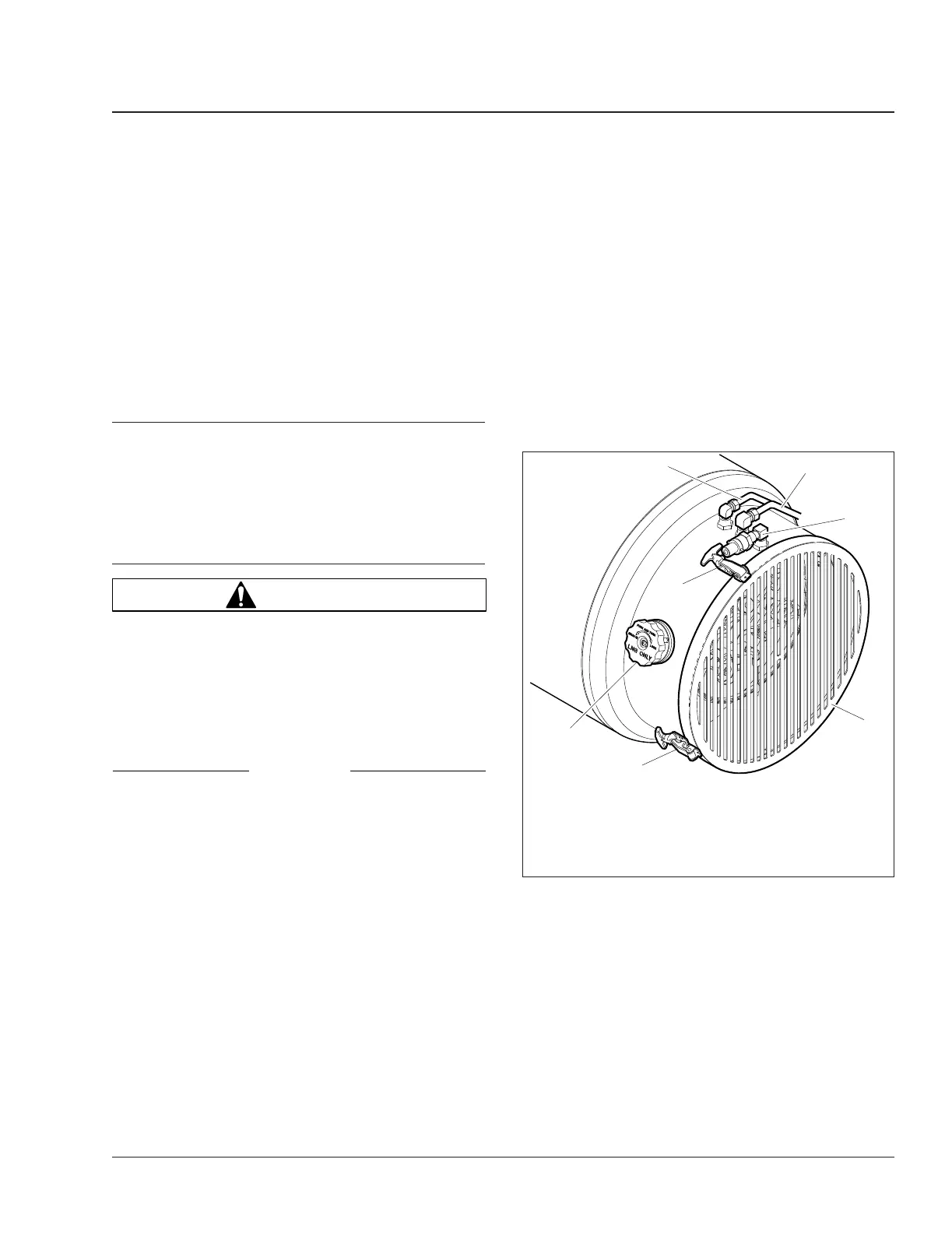
See Fig. 8 for fuel tank and shroud component
locations.
1. Inspect the fuel tank outer shell for dents or
other signs of damage. Inspect the bottom of the
tank for deep scratches, flat spots, or gouges.
Replace a leaking fuel tank.
2. Ensure that the fuel tank is secured to its mount-
ing brackets and that the mounting brackets are
secured to the frame. Inspect for any signs of
looseness.
05/29/2009 f470534
1
2
3
4
6
5
6
1. Fuel Fill Fitting
2. Fuel Outlet Line
(liquid)
3. Primary Relief Vent
Line (relief valve)
4. Fill Vent Fitting (vent)
5. Shroud Cover
6. Shroud Cover Latches
Fig. 8, Fuel Tank Outer Shell
Fuel 47
108SD and 114SD Maintenance Manual, May 2018 47/7






 To Next Page