on the frontwall. The sensors are located in high
areas, where rising gas vapors will pass by or ac-
cumulate. Do not use a high-pressure washer,
steam cleaner, or silicone-based chemicals on the
gas detection sensors, as this may permanently
disable the sensors. When cleaning the vehicle,
cover the sensors with a plastic covering. Keep
the sensors covered until the area has been
cleared of any cleaning fumes. Harsh chemicals
and extremely high temperatures may damage the
sensor.
Use a bubble solution to check for leaks while per-
forming the following inspection.
1. Inspect the fuel cylinders for dents or other signs
of damage.
Replace any leaking fuel cylinders.
2. Ensure that the fuel cylinders are secured within
the fuel cylinder storage box.
3. Ensure that the fuel cylinder storage box is se-
cured to the frame. Inspect for any signs of
looseness. If necessary, tighten the storage box
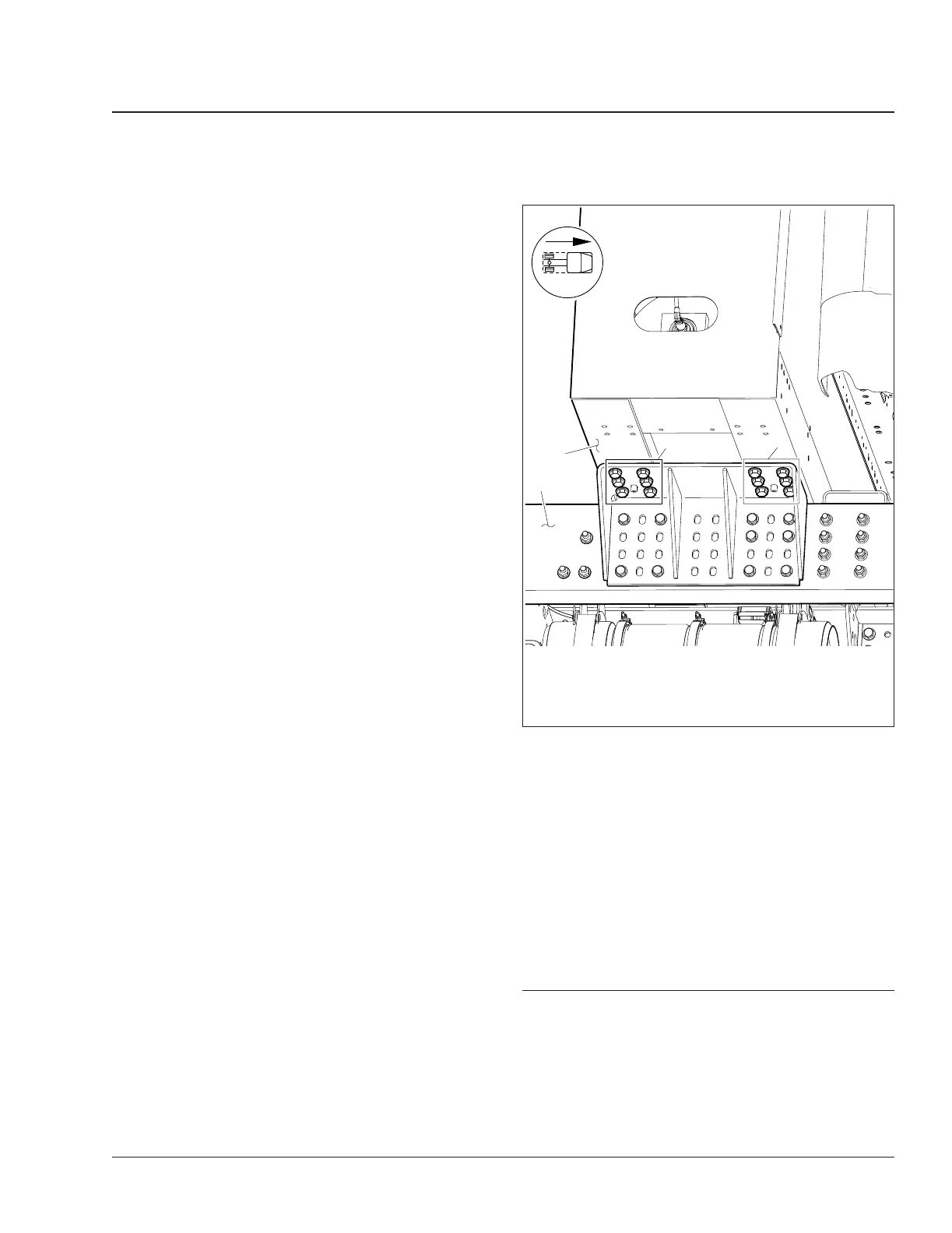
mounting bolts 160 lbf·ft (217 N·m). See
Fig. 11.
NOTE: During initial pre-delivery inspection
(PDI), tighten the storage box mounting bolts
(shown in
Fig. 11) 180 lbf·ft (244 N·m).
4. Inspect the fuel fill port for signs of damage or
leaks. Ensure the port dust cover and the O-ring
inside the port are both present and in good con-
dition. See
Fig. 12.
5. Inspect the pressure gauges on the fuel box for
cracks. Ensure the indicator needles are present
and in working condition. Inspect the gauge
faces for accuracy and legibility.
6. Ensure blue caps are present on all pressure
relief devices. Each fuel cylinder is equipped with
two caps (one on each end), which are visible on
the back of the CNG fuel cylinder storage box.
One cap is located on the pressure relief valve
on the inboard side of the CNG fuel box, next to
the fuel outlet line. Check the primary relief valve
on the inboard side of the CNG fuel box for signs
of damage or leaks.
7. Check the following components for signs of
damage or leaks:
• manual fuel shutoff valve
• fuel cylinder shutoff valves (see
Fig. 13)
• coolant hoses and fittings
• fuel lines and fittings
• all fittings, connections, and joints
8. Replace leaking or damaged fuel lines. Repair or
replace leaking or damaged fittings.
47–07 CNG High-Pressure Fuel
Filter Element
Replacement
CNG filter element replacement cycles are an impor-
tant factor in maintaining the CNG fuel system integ-
rity and ensuring maximum operating performance.
Actual frequency of the filter element replacement
05/04/2010 f470555
1
2
33
1. Frame Rail
2. CNG Fuel Cylinder Storage Box
3. Mounting Bolts (qty 12 per side)
Fig. 11, Fuel Cylinder Storage Box Mounting Bracket
(passenger side shown)
Fuel 47
108SD and 114SD Maintenance Manual, May 2018 47/11


 To Next Page