7. Inspect the pulleys for excessive play or wobble.
Excessive play or wobble indicates a failure of
the pulley bearing. Check for belt squealing or
squeaking. Replace bearings as needed.
NOTE: If it is difficult to distinguish the location
of a supposed bearing noise, place a stetho-
scope on the component being checked, not the
pulley, to isolate the area from outside interfer-
ence.
8. Inspect all pulleys for foreign objects, oil, or
grease in the grooves.
Belt Tension Inspection
Threaded-Adjustment Type
1. Apply the parking brakes, and chock the tires to
prevent the vehicle from moving.
2. Install a belt tension gauge at the center of the
belt’s longest free-span. Check belt tension. See
Table 1 for belt tension specifications.
3. If belt tension is not correct, see Group 01 of the
Century Class Trucks Workshop Manual.
Spring-Tension Type
On belts equipped with a spring tensioner, the belt
tension is automatically adjusted. Check that the ten-
sioner is holding tension on the belt by inserting the
end of a breaker bar in the 1/2-inch square hole on
the forward face of the tensioner, and rotating the
tensioner down, away from the belt. When the
breaker bar is slowly released, the tensioner should
return to its original position. If not, see Group 01 of
the Century Class Trucks Workshop Manual for re-
placement instructions.
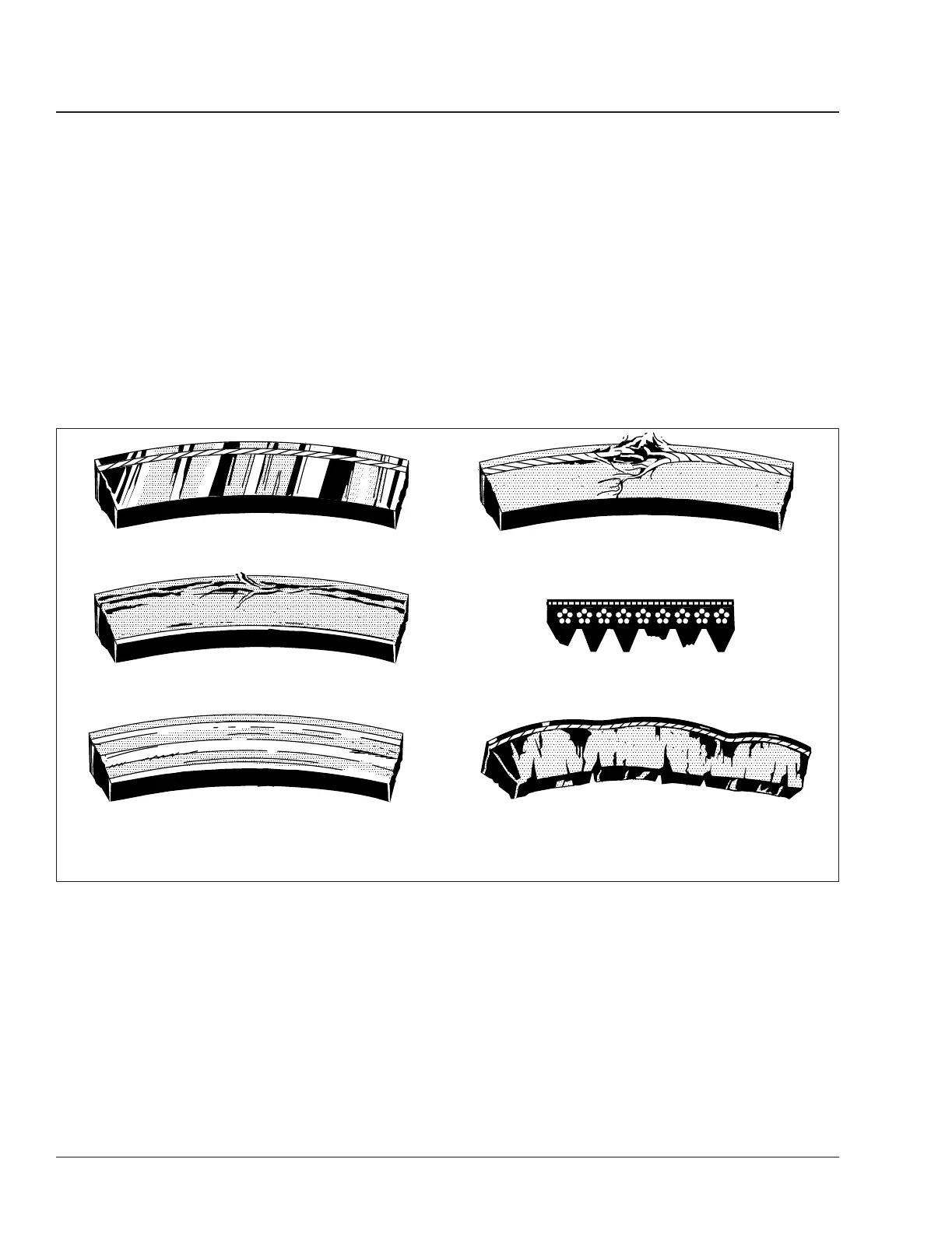
f150010a
A
B
C
D
E
F
11/21/94
A. Glazing
B. Separating Layers
C. Streaked Sidewalls
D. Tensile Break
E. Uneven Ribs
F. Cracks
Fig. 2, Drive Belt Replacement Conditions
Engine01
Century Class Trucks Maintenance Manual, January 201601/2






 To Next Page