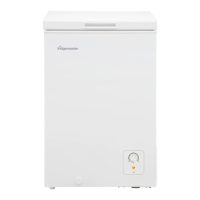
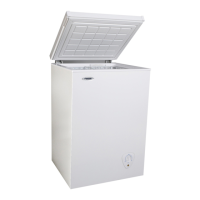
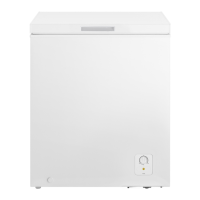
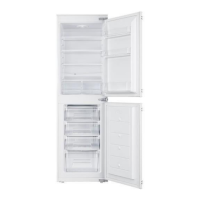
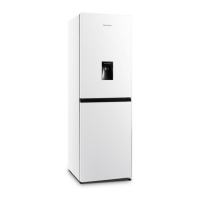
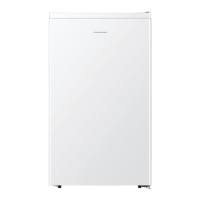
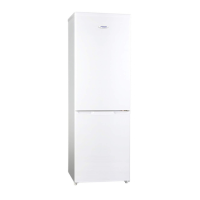
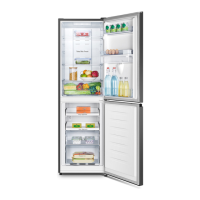
This document serves as a comprehensive guide for using your new Fridgemaster Fridge Freezer, covering models MS91521FFB and MS91521FFS. It emphasizes safety, proper installation, operational features, maintenance, and troubleshooting to ensure optimal performance and longevity of the appliance.
Function Description
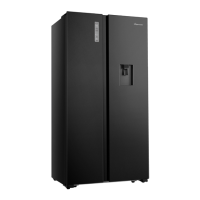
The Fridgemaster Fridge Freezer is designed for household use and similar applications, such as staff kitchen areas, farm houses, hotels, motels, bed and breakfast environments, and catering. Its primary function is to keep food and beverages fresh and frozen, respectively. The appliance features separate compartments for refrigeration and freezing, each with adjustable temperature settings to suit different food storage needs. It utilizes isobutene (R600a) as a refrigerant, a natural gas with high environmental compatibility.
The refrigerator compartment is ideal for storing vegetables, fruits, cooked food, packaged food, dairy products, cakes, and drinks. Food should be packed to prevent moisture loss or flavor permeation. The freezer compartment is designed for freezing food that requires long-term preservation, such as meat, fish, and ice cream. It also includes an ice box for making and storing ice cubes.
Usage Features
The appliance offers several features to enhance user convenience and food preservation:
- Temperature Control: For optimal food preservation, it is recommended to set the refrigerator to 5°C and the freezer to -18°C upon initial use. Users can adjust these temperatures using the display controls. The temperature settings are average for the entire cabinet, and actual temperatures may vary based on food placement and ambient conditions.
- Mode Selection: The display panel allows selection of different operating modes:
- Super Freeze: This mode rapidly lowers the freezer temperature to -24°C, allowing food to freeze faster and lock in vitamins and nutrients. It automatically switches off after 52 hours, reverting to the previous setting. It's recommended to activate this mode about 24 hours before freezing a maximum amount of food.
- Artificial Intelligence (AI): When activated, this function automatically adjusts the appliance's temperature, typically setting the fridge to 5°C and the freezer to -18°C.
- Holiday Mode: Designed for extended periods of absence, this mode sets the fridge to 15°C and the freezer to -18°C. It is important not to store any food in the fridge during this time.
- Door Alarm: An audible alarm sounds if the fridge or freezer door remains open for more than 2 minutes, automatically stopping after 10 minutes. This feature helps conserve energy by reminding users to close the door promptly.
- Adjustable Shelves and Racks: Both the fridge and freezer compartments are equipped with glass shelves and door racks that can be adjusted to different heights to accommodate various food items. Door racks are suitable for eggs, canned liquids, bottled drinks, and packed food.
- Drawers: Special drawers are provided for storing fruits and vegetables, helping to maintain their freshness.
- Ice Box (for models with ice box): An independent ice box allows for easy ice cube making and storage. Water should be poured into the ice box up to the maximum line, and twisting the knobs releases the ice cubes into the storage tray below.
- Water Dispenser (for models with water dispenser): Located in the fridge door, the water dispenser provides chilled drinking water without needing to open the main door. The water tank can be filled up to 3L. Proper assembly and filling procedures are outlined to prevent leaks.
Maintenance Features
Regular maintenance is crucial for the appliance's hygiene and efficiency:
- Cleaning: The appliance, including its exterior and interior accessories, should be cleaned at least every two months.
- Exterior Cleaning: Use a mild detergent and a soft cloth to clean doors, handles, and cabinet surfaces. Avoid spraying water directly on the surface; instead, spray it onto the cleaning cloth for even moisture distribution.
- Interior Cleaning: The interior should be cleaned regularly, especially when food stocks are low. Use a weak solution of bicarbonate of soda, rinse with warm water, and wipe completely dry before replacing shelves and baskets.
- Defrosting: Although the appliance defrosts automatically, frost may accumulate on freezer walls if the door is opened frequently or left open too long. If frost becomes too thick, remove all food, unplug the appliance, leave doors open to defrost, and then clean the freezer as described. A pressure sprayer can be used for hard-to-reach areas like the freezer wind channel.
- Door Seals Cleaning: Keep door seals clean to prevent stickiness and tearing. Wash with a mild detergent and warm water, then rinse and dry thoroughly before powering on the appliance.
- Water Dispenser Cleaning (for models with water dispenser): Water tanks should be cleaned if unused for 48 hours, and the water system flushed if water hasn't been drawn for 5 days. Liquids should be packed in bottles or capped containers to prevent spills that can make cleaning difficult.
- LED Light Replacement: If the LED light is damaged, it must be replaced by a qualified electrician or customer helpline, not by the user. The manual provides steps for removing and replacing the light cover and LED light.
- Troubleshooting: The manual includes a troubleshooting section to help users identify and resolve common issues before contacting service. This covers problems like the appliance not working, odors, unusual noises, frost accumulation, warm or cold temperatures, doors not closing, water drips, and non-functioning lights.
General Safety and Installation
The manual emphasizes several safety precautions:
- Child Safety: Keep packaging away from children. When discarding the appliance, remove the plug, cut the cable, and remove the door to prevent entrapment.
- Flammable Materials: Do not store explosive substances or aerosol cans with flammable propellants. The refrigerant (R600a) and insulation blowing gas are flammable, so disposal must be done at an authorized waste disposal center, away from flames.
- Electrical Safety: Ensure the power cord is not damaged or crushed, and the main plug is accessible. Do not pull the main cable. The appliance requires a single-phase alternating current of 220~240V/50Hz, with a dedicated power socket.
- Ventilation: Maintain good ventilation around the appliance (50-70mm from the back, 100mm from the top, and 100mm from the sides) to dissipate heat and ensure efficient cooling.
- Leveling: Adjust the bottom feet to ensure the appliance is level and slightly tilted backward (10mm or 0.5°) for self-closing doors.
- Placement: Avoid direct sunlight, rain, frost, and heat sources. Do not place hot items near plastic components or food directly against the rear wall's air outlet.
- Service: Any electrical work or servicing must be carried out by a qualified electrician or authorized service center using genuine spare parts.
By following these guidelines, users can ensure safe, efficient, and long-lasting operation of their Fridgemaster Fridge Freezer.


 To Next Page
 General