EasyManua.ls Logo

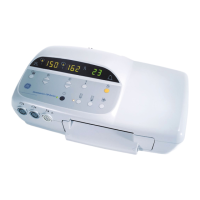
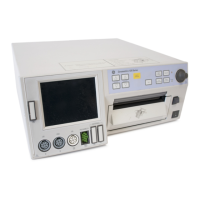
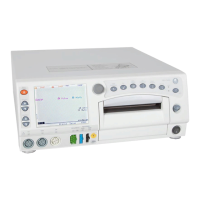
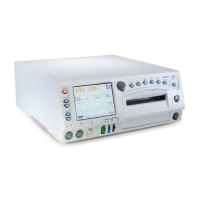
GE Corometrics 171 - User Manual

GE Corometrics 171
112 pages
Print Icon
To Next Page IconTo Next Page
Loading...
Corometrics
®
170 Series
OPERATOR’S MANUAL MANUAL P/N 2003023-001 REV. D

Table of Contents

Other manuals for GE Corometrics 171

Questions and Answers

  • C
    Courtney LopezAug 18, 2025
    Why is internal pressure not measuring correctly on GE Measuring Instruments?
    • M
      michelleroseAug 18, 2025
      If the internal pressure isn't measuring correctly on your GE Measuring Instruments, be sure the transducer is securely attached to the monitor. Check for air bubbles or blockages in the dome or catheter and flush if necessary; replace the dome if it's cracked. Adjust the strain gauge height and replace the catheter if needed. Calibrate the catheter or strain gauge. The problem could be due to a poorly connected transducer, air bubbles, a cracked dome, incorrect strain gauge height, a displaced catheter, or a need for calibration.
  • E
    Emily WrightAug 20, 2025
    What to do if tocotransducer is not recording contractions on GE Measuring Instruments?
    • A
      ashley77Aug 20, 2025
      If the tocotransducer isn't recording contractions on your GE Measuring Instruments, first ensure the transducer is firmly attached to the monitor. If it is, try repositioning the transducer or re-applying it securely to the patient. A defective transducer/cable assembly could also be the cause, so consider replacing it. Also, ensure that the UA Reference range has not been exceeded. If it has, loosen the belts or remove the transducer, press the UA Reference pushbutton, and then re-apply the transducer, avoiding overtightening the belt. Press the UA Reference pushbutton again between contractions.
  • T
    Thomas WheelerAug 23, 2025
    Why is there static noise on ultrasound on GE Measuring Instruments?
    • T
      ttaylorAug 23, 2025
      If you're experiencing static noise on the ultrasound with your GE Measuring Instruments, try repositioning the transducer. Ensure sheets and gowns are not in direct contact with the transducer, and avoid holding the transducer with your hand. You might also consider using an alternate monitoring mode or replacing the transducer if the problem persists, as the issue could be due to an active fetus, environmental noise, maternal movement, or a defective transducer.
  • M
    Margaret HoltAug 26, 2025
    Why is internal FECG erratic or not recording properly on GE Measuring Instruments?
    • T
      Travis HarringtonAug 26, 2025
      If the internal FECG is erratic or not recording properly on your GE Measuring Instruments, first, ensure the transducer is firmly attached to the monitor. Check that the legplate is securely fastened to the legplate post and that the electrode wire is secure in the legplate post. Inspect the ECG paste and re-apply if necessary. If the issue continues, try replacing the electrode, legplate, or attachment pad. The issue could stem from a poorly connected transducer, loose legplate, dried paste, improper electrode attachment, or a defective component.
  • D
    David BriggsAug 28, 2025
    Why is there no heartbeat or pulse sounds on GE Measuring Instruments?
    • E
      Emily DavisAug 28, 2025
      If you're not hearing any heartbeat or pulse sounds on your GE Measuring Instruments, start by increasing the volume. Also, make sure that each transducer is firmly attached to the monitor. The issue might be due to the volume being set too low or a transducer that is not properly connected or is loose.
  • M
    Michael OdonnellAug 30, 2025
    What to do if ultrasound is not functioning properly on GE Measuring Instruments?
    • M
      michaeltranAug 30, 2025
      If the ultrasound on your GE Measuring Instruments is not functioning properly, first ensure that the transducer is firmly attached to the monitor. Wait a moment before moving the transducer, as the FHR often returns. Try repositioning the transducer and apply more gel. If problems persist, replace the transducer. The issue could be due to a poorly connected transducer, incorrect transducer placement, insufficient gel, a defective transducer, or other factors such as fetal arrhythmia or maternal obesity.
  • N
    Nicholas HamptonSep 2, 2025
    Why flashing dashes appear on uterine activity display on GE Measuring Instruments?
    • S
      Samuel KnoxSep 2, 2025
      If you see flashing dashes “– –” instead of numbers in the uterine activity display of your GE Measuring Instruments, wait ten seconds after powering on the monitor or connecting to the UA connector. If the issue continues, loosen the belts or remove the transducer, press the UA Reference pushbutton while no pressure is applied, re-apply the transducer without overtightening the belt, and press the UA Reference pushbutton again between contractions. The issue could be due to pressing the UA Reference pushbutton too soon, over-tightening the belt, or a defective transducer.
  • P
    pjohnsonSep 4, 2025
    What does flashing “+” sign mean on GE Measuring Instruments?
    • D
      Deanna GonzalezSep 4, 2025
      If you see a flashing “+” sign on your GE Measuring Instruments, press the UA Reference pushbutton between contractions. This issue arises when the relative pressure exceeds 100.
  • E
    Emily WilkersonSep 7, 2025
    Why do edges of paper curl on GE Measuring Instruments?
    • C
      Christine YoungSep 7, 2025
      If the edges of the paper curl as it advances out of the recorder on your GE Measuring Instruments, open the paper drawer and ensure the paper lays flat at the bottom of the tray. Then, close the drawer, making sure that the vertical lines on the paper are parallel to the printhead. The issue is likely due to the paper being loaded askew.
  • M
    Michelle SandersSep 9, 2025
    What to do if recorder does not function on GE Measuring Instruments?
    • B
      bennettsusanSep 10, 2025
      If the recorder isn't functioning and the Record indicator is flashing on your GE Measuring Instruments, first, install paper if it's out. If paper is installed, refer to page 4-2 in the manual. If the paper is already installed, check if it's loaded backward and, if so, reinstall it correctly, referring to page 7-12. The problem could be due to a lack of paper or incorrect paper loading.

Summary

Safety

Monitor Safety Information

Details crucial safety warnings and precautions for monitor operation.

Controls, Indicators, and Connectors

Front Panel Controls

Describes the buttons and switches on the front of the monitor.

Setup Procedures

Monitor Self-Test Routines

Information on automatic system checks performed upon startup.

Customizing the Monitor

How to configure alarm settings, time, date, and other parameters.

Preparing the Monitor for Patient Use

Essential steps before starting patient monitoring sessions.

Fetal Heart Rate Monitoring

Ultrasound (External Method)

Explains FHR monitoring using Doppler ultrasound technology.

FECG (Internal Method)

Details FHR monitoring via direct fetal electrocardiogram (FECG).

Fetal Heart Rate Alarms

Covers the configuration and behavior of FHR threshold and quality alarms.

Uterine Activity Monitoring

Tocotransducer (External Method)

How to monitor uterine activity using an external tocotransducer.

Strip Chart Recorder

Troubleshooting

General Troubleshooting

Common problems and their solutions for basic monitor operation.

Ultrasound Troubleshooting

Diagnosing and resolving issues specific to ultrasound monitoring.

FECG Troubleshooting

Troubleshooting problems related to FECG signal acquisition and recording.

Technical Specifications

GE Corometrics 171 Specifications

General IconGeneral
BrandGE
ModelCorometrics 171
CategoryMedical Equipment
LanguageEnglish

Related product manuals