lroiling is cooking
food
by intense radiant heat from the
upper broil element in the oven. Most fish and tender
cuts
of meat can be broiled. Follow these directions to
keep spattering and smoking to a minimum.
1.
If the meat
has
fat
or gristle around the edge, cut
vertical slashes through both about 2 inches apart.
If desired, the fat may be trimmed, leaving a layer
about 1/8 inch thick.
2. Place the meat on the broiler rack in the broiler pan.
Always use the rack so the fat drips into the broiler
pan; otherwise the juices may become hot enough
to catch on fire.
3. Position a flat shelf on recommended shelf position as
suggested in the Broiling Guide. Most broiling is
done on C position,
but if your oven is connected to
208 volts, you may wish to use a higher position.
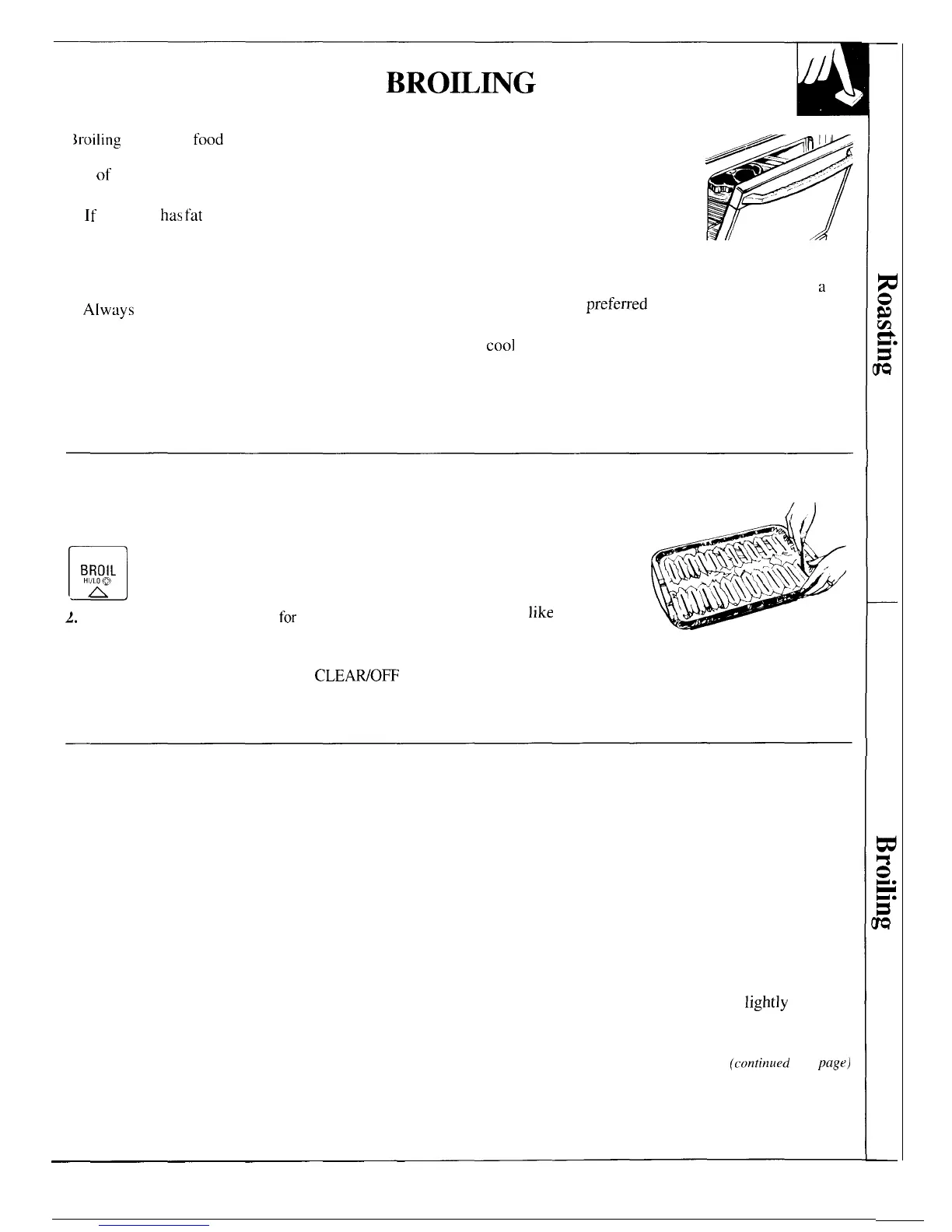
4. Leave the door open to
the broil stop position.
The door stays open by itself,
yet the proper temperature is
maintained in the oven.
5. Turn the food only once
during broiling. Time the foods for the first side
according to the Broiling Guide. Turn the food,
then use the times given for the second side as
a
guide to the
prefemed
doneness.
NOTE: A fan may automatically turn on and off to
cool
internal parts. This is normal, and the fan may
continue to run after the oven is turned off.
Upper Oven
Use of Aluminum Foil
For lower oven broiling instructions see the
You can use aluminum
Baking section.
foil to line your broiler
n
1.
Press the BROIL pad.
pan and broiler rack.
However, you must
~;~~L
A
mold the foil tightly to
the rack and cut slits in
2.
Press the INCREASE pad once
for
LO Broil or twice
it just
like
the rack.
for HI Broil. To change from HI Broil to LO Broil, press
Without the slits, the
the BROIL pad then press the DECREASE pad once.
foil will prevent fat and meat juices from draining to
3. When broiling is finished, press the CLEAWOFF pad.
the broiler pan. The juices could become hot enough
Serve the food immediately, and leave the pan outside
to catch on fire.. If you do not cut the slits, you are
the oven to cool during the meal for easiest cleaning.
frying, not broiling.
Questions and Answers
Q. Why are my meats not turning out as brown as
they should?
A.
In some areas, the power (voltage) to the oven
may be low. In these cases, preheat the broil
element for 10 minutes before placing broiler pan
with food in oven. Check to see if you are using the
recommended shelf position. Broil for the longest
period of time indicated in the Broiling Guide. Turn
the food only once during broiling. You may need
to move the food to a higher shelf position.
Q.
When broiling, is it necessary to always use a
rack in the pan?
A. Yes.
Using the rack suspends the meat over the
pan. As the meat cooks, the juices fall into the pan,
thus keeping the meat drier. Juices are protected by
the rack and stay cooler, thus preventing excessive
spatter and smoking.
Q. Should I salt the meat before broiling?
A. No.
Salt draws out the juices and allows them to
evaporate. Always salt after cooking. Turn the
meat with tongs; piercing the meat with a fork also
allows the juices to escape. When broiling poultry
or fish, brush each side often with butter.
Q.
Do I need to grease my broiler rack to prevent
meat from sticking?
A. No.
The broiler rack is designed to reflect broiler
heat, thus keeping the surface cool enough to
prevent meat from sticking to the surface.
However, spraying the broiler rack
Iightly
with a
vegetable cooking spray before cooking will make
clean-up easier.
(cc]ntinued
next
page)
17



 To Next Page