14
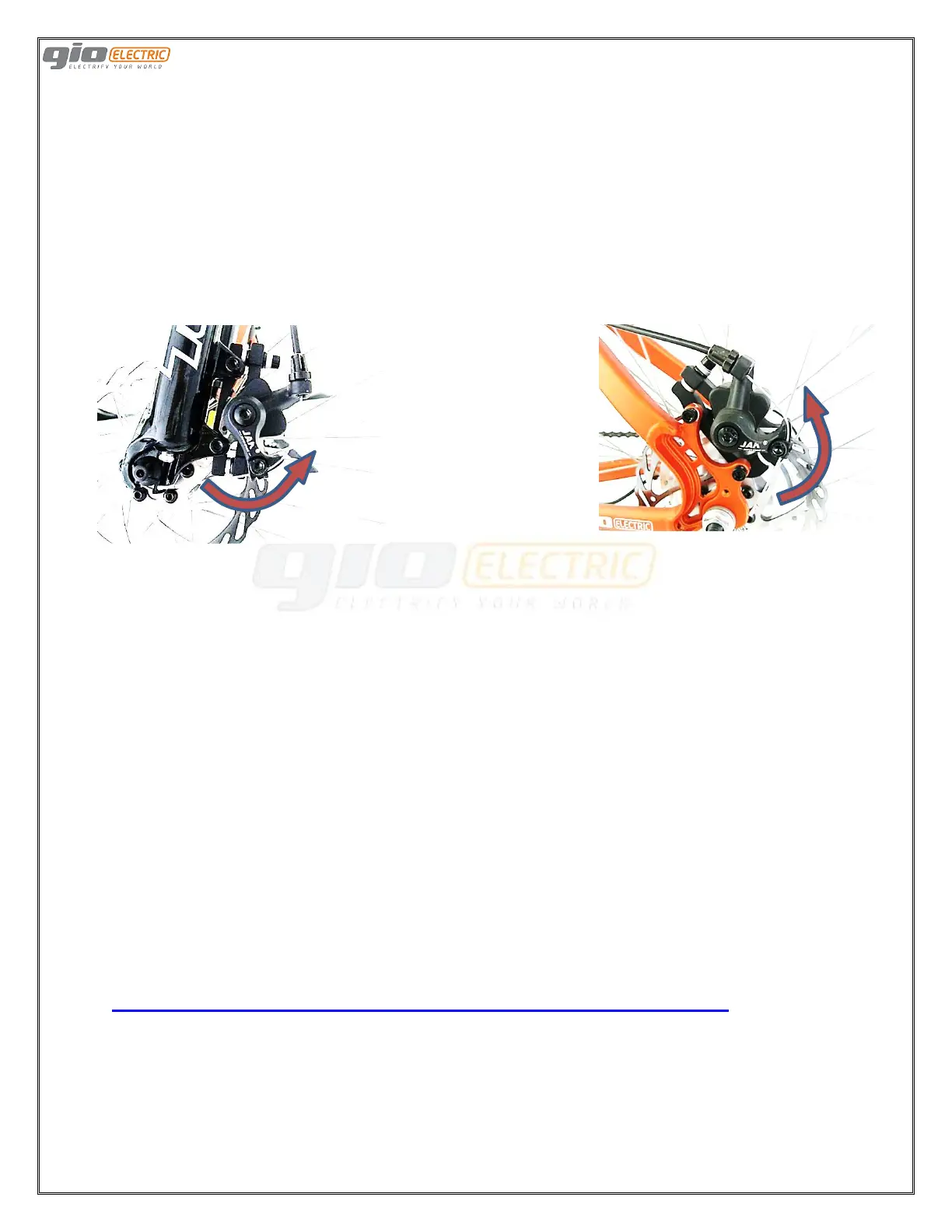
e. With the cable loose, push the brake arm upward a bit until it stops moving. (At this point, it has
pushed the pads against the rotor.) Now back off about 1/2 to 3/4 inch of cable length.
Tighten the cable down. Grasp the brake lever to see if the brake engages at a comfortable spot.
Usually, you should have at least one inch between the handlebar and the brake lever when the
brake is "full on." If necessary, readjust the position of the brake arm on the cable, until the
brake engages at a reasonable point in the lever-pull. (It doesn't need to be exact -- you can fine-
tune with the barrel adjuster on the brake lever or on the caliper.)
3.6 Rear Derailleur (gear shifter) Adjustment
Properly adjusted derailleur will benefit enjoyable ride and prevent rider from over-shifting hints
• On the rear cog set (cassette), the largest gear offers the lowest gear ratio and the most torque.
• The best gear combination for steep uphill is the largest rear cog.
• On downhill use the smallest cog.
• In general, find the right combination of gears to allow you to maintain a steady pedal stroke.
• Always pedal forward while shifting, reducing pedaling pressure slightly to avoid jamming or straining
the chain.
• If you hear any rubbing or grinding noise after shifting, refer to this manual or see your local dealer.
Drivetrain misalignment may result in a broken chain, derailleur moving into spokes, or chain jamming,
potentially causing serious injury. If you are at all unsure of your abilities to properly adjust the
derailleurs on your bicycle take it to your dealer to have your bike's drivetrain inspected and adjusted as
necessary.
Generic adjustment instructions can be found at:
http://www.giomotors.com/gioelectric/tech-link


 To Next Page