TX3100 INSTRUCTION MANUAL PAGE 3
IMPORTANT INFORMATION CONCERNING
UHF CB RADIO
The use of the Citizen Band radio service is licensed in Australia by the
ACMA Radio communications (Citizens Band Radio Stations) Class
Licence and in New Zealand by the Ministry of Economic Development
New Zealand (MED). A General User Radio Licence for Citizens Band
radio and operation is subject to conditions contained in those licences.
The class licence for users and equipment operating in the CB/PRS 477
MHz band has been amended. This radio meets the new 80 channel
standard.
In simple terms the same amount of spectrum is available; however,
radio transceivers can now operate in a narrower bandwidth and hence
use less spectrum. These radios are generally referred to as narrowband
or 12.5 kHz radios.
By using 12.5 kHz channel spacing instead of 25 kHz, the 40 channels
originally allocated can now be expanded to 80 channels thereby
doubling the channel capacity and relieving congestion in the UHF CB/
PRS band.
Original 40 channel wideband Radios will continue to operate on the
original 40 channels, however they will not be able to converse on the
newer channels 41 – 80. The newer narrowband radios will be able to
converse with all older 40 channel wideband radios on all channels 1 to
40 as well as the newer channels allocated from 41 to 80.
The mixing of narrowband and wideband radios in the same spectrum
can cause some possible operating issues of interference and varying
levels of received volume.
POSSIBLE ISSUES
When a new narrowband radio receives a transmission from an
older wideband radio the speech may sound loud and distorted –
simply adjust your radio volume for best performance.
When an older wideband radio receives a signal from a new
narrowband radio, the speech may sound quiet - simply adjust
your radio volume for best performance.
Depending on how close your receiving radio is to another
transmitting radio, there can be interference from the transmitting
radio if it is using a channel adjacent to the channel you are
listening to. Simply try going up or down a few channels from the
currently selected channel.
The above situations are not a fault of the radio but a symptom
of operating wideband and narrowband radios in the same
bandwidth. This possible interference will decrease over time as
the population of wideband radios ages and decreases.
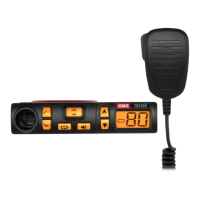
ACCESSORIES SUPPLIED
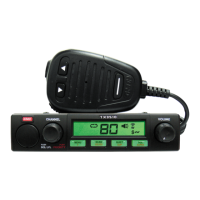
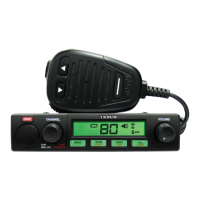
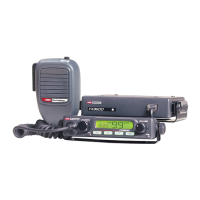
Main Radio Unit
Mounting Bracket
Instruction Manual
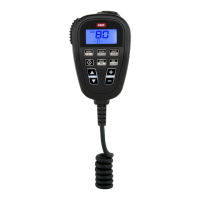
Microphone
Microphone Clip
DC Lead
Screw Pack
Supplementary GME
model label
If any items are missing or
damaged, please contact your
retailer or place of purchase
.


 To Next Page