6.2 HANDLING THE PRESS
1. PREPARE THE PRESS FOR OPERATION,
2. FILL THE BASKET OF THE PRESS WITH A CRUSHED PRODUCT (APPLES, GRAPES …),
3. PLACE THE LID ON THE BASKET AND SCREW IT DOWN WITH THE NUT,
4. ATTACH THE PRESS TO THE WATER SUPPLY SYSTEM USING A GARDEN HOSE,
5. OPEN THE SUPPLY VALVE; THE PRESS BEGINS TO OPERATE,
6. … SUPERVISE THE PRESS OPERATION …,
7. WHEN FINISHED, OPEN THE WASTE VALVE SO THAT ALL WATER POURS OUT OF THE
PRESS,
8. REMOVE THE NUT HOLDING THE LID AND THE LID ITSELF
9. CLEAN THE PRESS WITH WATER.
6.3 INSTRUCTIONS FOR USE - PRESSING
Fruit presses utilizing water pressure are the most modern type for pressing grapes, fruit, juice
containing peels etc., lees, currants, blueberries, red beet and all kinds of fresh or boiled vegetables and
fruits from which juice can be extracted. Each kind of fruit or vegetable requires a different pressing
method. The volume of a water press is 55 to 250 l (14.5 to 66 US gallons).
The water press is made up of three complexes: base, pressing chamber and water supply system.
The base can be fixed or mobile – tilting.
The fixed base (VS-A) has three fixed legs on wheels for an easier transfer of the press.
The mobile (VSP-A, VSP-C, VSPX) - tilting undercarriage is made up of a trolley with two or four wheels.
If there are four wheels, two come with brakes and two are swivel wheels enabling easier transport in the
basement, wine cellar and in the yard. The composition also includes a tilting system to facilitate
emptying the pressed-out material. The base comes in painted or stainless steel variety.
The pressing chamber is composed of a lid with a fitting nut, a perforated basket and a container with
an outlet. The container and the water supply system are fixed to the base of the press. The container is
especially braced and so is the lid which is attached with a fixing nut to the basket itself, to withstand the
strong pressure generated during pressing. The construction is such that the draining basket is well
placed. All materials are made of high quality stainless steel, electrically polished before installation that
is suitable for use in food production.
The water supply system creates pressure in the basket, enabling the operation of the pressing
chamber. The water inlet is regulated and fed into a vertical column with a vent valve at the top and high
quality bellows made of rubber which expands as the water starts flowing into the bellows.
The pressing procedure is as follows: Before charging the chamber, wash the entire press using warm
water and detergent (the use of detergent is optional). However do not use detergent or water pressure
when washing the bellows. The rubber can be washed only with warm or cold water.
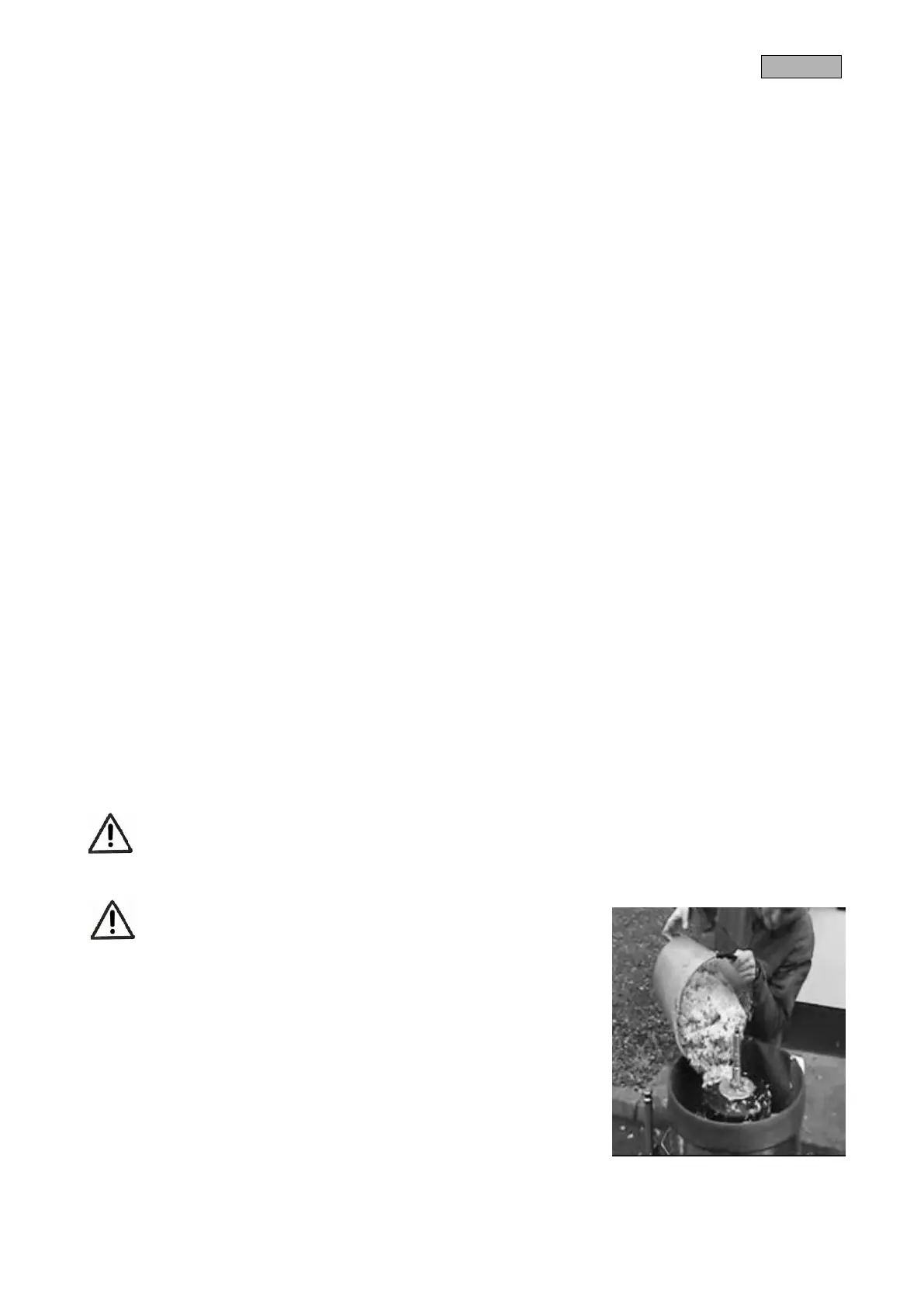
When charging the chamber do not compress the crushed fruit, since the result is
going to be worse. When charging, the toggle valve of the collecting container should be open.
If it is not the capacity of the press may be smaller. It is necessary to enable venting of the
press. Always fill the press to the top (the outermost edge of the peripheral plate).
Always press only when it is filled up to the upper edge.
Failure to do so may cause damage, to the bellows,
which is not covered by the warranty.
Despite the fact that at the end there is not a lot of crushed fruit left,
there are many ways to fill up the basket (add the already pressed-out
fruit or reduce the basket volume by increasing the volume of the
bellows). Close the toggle valve on the top of the threaded spindle and
place the lid as shown on the picture. Fix the lid by screwing down the
threaded nut on the threaded spindle. Never tighten the threaded nut
using devices like various levers, but use only your hands.


 To Next Page