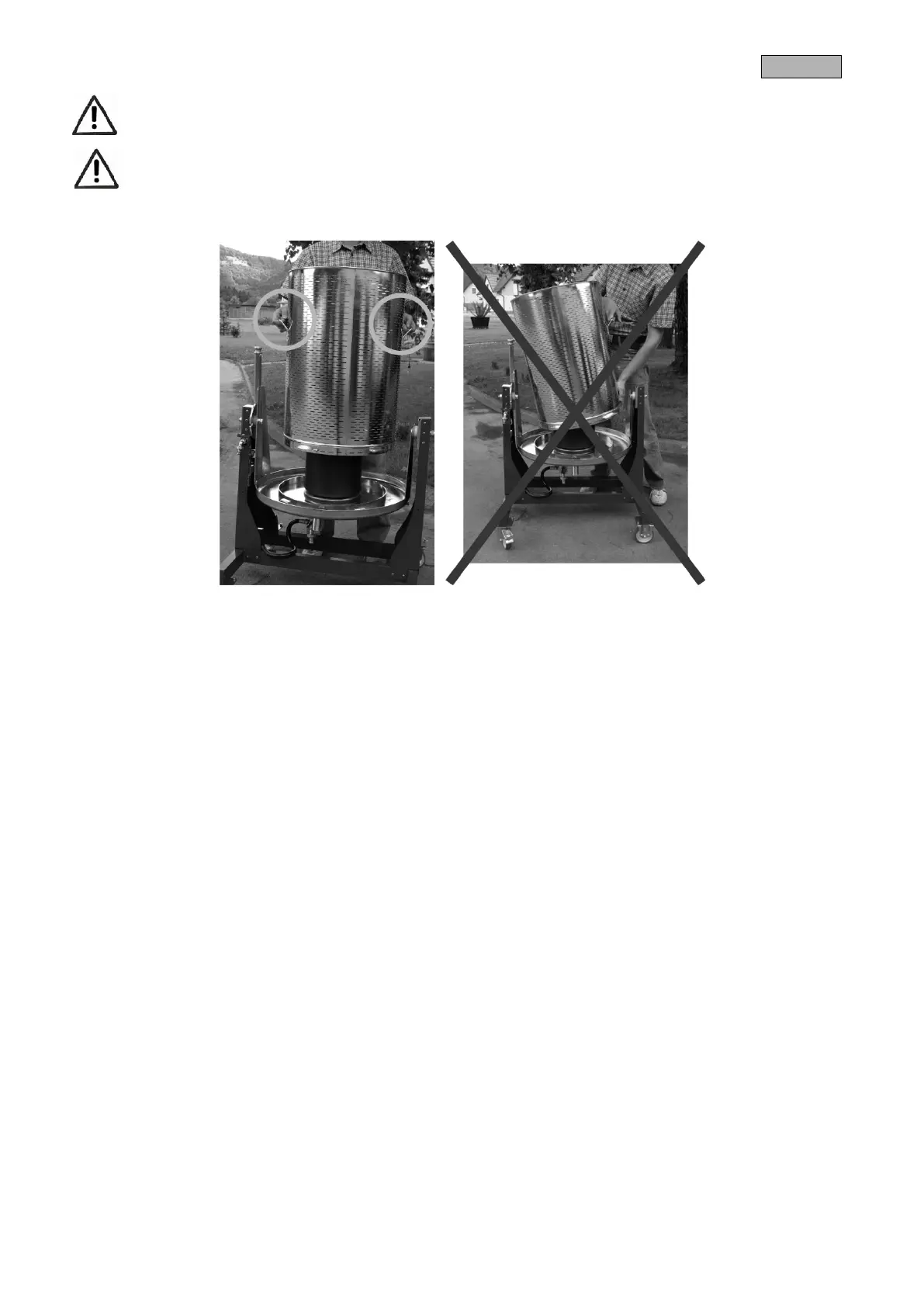
Use protective gloves when charging and discharging the press, since wet skin is
susceptible to cuts.
When discharging the basket never lift the full basket. Always discharge it with an
additional grid. However, if you lift the basket, always grasp it by the basket handles.
7. TECHNOLOGY OF PRESSING
HARD FRUIT
When pressing hard fruit (apples, pears …) you should crush the fruit beforehand in a mill
(drum mill, mixer). Place the crushed fruit in the basket but do not compress it. Use the
accompanying grid for more efficient pressing and easier discharge of the basket. Pressing
crushed fruit takes approx. 30 minutes (depending on the desired result). Place a green
protective bag on the basket to avoid gushing of the crushed fruit.
GRAPES
It is advisory to crush the grapes before pressing them (grape mill). It is not necessary to
remove the stalks since the bellows pressing system using pressure up to 3 bar, does not
damage the stalks. The stalks enable a good drainage, a quicker run-off and a more efficient
pressing.
For dark grapes it is recommended that they are left to rest for at least three days so that the
grapes clarify. The mentioned procedure increases the pressing efficiency.
For white grapes the use of enzymes is recommended, to make the pressing easier. The
enzymes enable faster purification and prevent oxidation of the grapes. Please gather more
information from an expert, a specialized shop or from the dealer where you purchased the
press.
Place a green protective bag on the basket to avoid gushing of the crushed fruit.
LEES, WINE SEDIMENT
When pressing lees or sediment the procedure is slightly different. Purchase a bag specially for
pressing wine sediment. It is the best that it is original (of a suitable size) and from the same
manufacturer. The bag should be at least 7 cm higher than the basket. It should not be
narrower than the circumference of the basket in order to avoid damage or even ripping of the
bellows. The bag should be properly inserted into the basket. Through the opening for filling
pour the wine sediment or lees up to the top taking into consideration advice from an expert or
a person dealing with oenological supplies. As the bag is full, fold the prolonged charging part
several times and tie the bag as you would a bag of flour. Turn the folded part towards the


 To Next Page