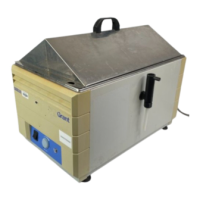
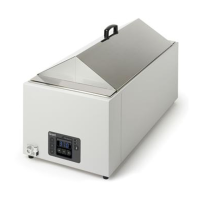
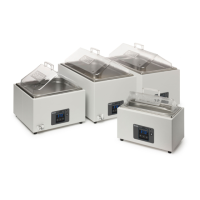
The Grant R series low-temperature bath/circulator, also referred to as an R unit, is designed for indoor laboratory use by professional users. It functions as a source of cooling when used in conjunction with a Grant Optima™ heating circulator (Optima unit). This combination provides precise temperature control for sensitive analytical procedures, including spectrophotometry, viscometry, refractometry, and electrophoresis. The R series chillers are also suitable for applications requiring the removal of mechanical or electrical heat produced in apparatus or machinery, offering higher pressure flow for faster heat removal within restricted systems.
Usage Features:
The R unit is designed for ease of setup and operation. The Optima unit, which acts as the controller, can be fitted onto the R unit in two orientations: facing over the tank opening or outwards. Installation involves removing the bridge plate from the R unit tank, fitting the Optima unit through the hole in the bridge plate, securing it with retaining nuts, and then re-attaching the bridge plate.
For operation, the tank should be filled to an appropriate level with a liquid suitable for the desired working temperature. It's crucial to allow for thermal expansion and contraction of the liquid, as well as for any liquid in external circulation paths. If using evaporative liquids, periodic checking and refilling are necessary. A low-level float switch will trigger an alarm and halt temperature control if the liquid level drops below the minimum required.
When operating above 60°C, a lid or polypropylene spheres must be used to maintain temperature control, ensure the bath fluid reaches the set point, conserve energy by preventing excessive evaporation, and reduce the frequency of refilling. Users should exercise caution when lifting and removing the lid at high temperatures, as steam and hot vapors can cause scalding.
The Optima unit's pump allows liquid circulation through a closed external system, but not an external open tank. The pump comes with a blanking plate as standard, which needs to be replaced with a pump connector plate for external circulation. O-rings should be correctly seated and held in place with silicone grease to prevent leaks. It's important to align the locating hole on the blanking/connector plate with the corresponding locating pin on the pump molding. Always use pump connectors and hoses suitable for the operating temperature and liquid, ensuring secure pipe connections. Never disconnect pipes or hoses containing very hot or very cold liquids or while the Optima unit is pumping. Silicone oil should not be used with silicone tubing.
Before moving the R unit, the tank should be emptied to a safe level. R2, R3, R4, and R5 units include a drain tap for convenient emptying. The liquid temperature should be allowed to fall below 50°C before draining.
For power supply, R1, R2, and R3 units receive power for the Optima unit from a mains socket on the rear of the cooler unit via an interconnecting power cable. The mains cable for the refrigeration unit plugs into a fused power inlet socket on the rear. R4 and R5 units, as well as 120V models, have separate fixed mains cords for both the Optima and refrigeration units, which connect directly to the mains supply.
The R unit features a power switch, an over-temperature protection reset, and a freezing protection switch. The over-temperature protection activates if the working fluid exceeds 110-120°C and can be reset by allowing the liquid to cool below 100°C, then pushing a button under a black cap. The freezing protection switch, when in the depressed/in position, prevents the fluid from dropping below 5°C, thus preventing water from freezing. In the out/off position, this thermostat is bypassed, allowing operation below 5°C.
A drain port and insert facilitate convenient emptying. To drain, remove the drain insert, connect a suitable length of hosing (12.7mm bore) to it, and direct the other end into a receptacle. Push the drain insert into the drain port to allow liquid to flow. To release, push down the grey button on the drain body and extract the insert. Liquid to be drained should be between 10°C and 50°C.
Maintenance Features:
Regular maintenance is crucial for the R unit to perform to specification and to maintain warranty validity. The removable grille provides easy access to the condenser for cleaning. Cooling power can be reduced if the condenser fins become clogged with dust. These fins should be inspected monthly, and dust removed using a vacuum cleaner nozzle and a soft brush.
The exterior of the equipment should be cleaned with a damp cloth using only water; chemical cleaning agents should be avoided. Before using any alternative cleaning or decontamination methods, users should consult Grant Instruments or a local representative to ensure no damage to the equipment. Scale on immersed parts can be removed using chemical de-scaling products designed for metal parts, always following the manufacturer's instructions as these products may be toxic.
Fuse replacement should only be performed by a competent person. The refrigeration unit has externally accessible fuses. To replace them, disconnect the unit from the power supply, remove the IEC power plug, press down the fuse drawer catch, pull it out, check and replace fuses as needed, then push the drawer back in and replace the IEC plug. Replacement fuses must be 1.25” x 0.25” anti-surge ceramic type with specific ratings depending on the R unit model.
Any replacement mains cords for the control unit or refrigeration unit must meet the same specifications as the original to maintain safety. All 230V mains cables must be marked , HO5VV-F 3Gx1mm2 70°C, rated to carry 10A, and have plugs and IEC connectors approved by a European certification body. 120V refrigeration units have fixed mains cords that should not be replaced.
For routine safety tests, it is recommended to test the integrity of the protective earth conductor and perform an insulation test at 500V DC. Repeated high voltage flash tests are not recommended as they can degrade insulation materials.
In terms of liquid quality, using oxygenated water free from ions and minerals is important for the long-term reliability of the stainless steel tank, as these can cause corrosion. Distilled water and de-ionised water from modern ion exchange systems (that do not use salt back flushing for regeneration) are recommended. If the chromium oxide layer protecting stainless steel is damaged, oxygen in fresh water can help reform it. Therefore, water should always be fresh and well oxygenated. Baths not in use for extended periods should be emptied and wiped dry. Brown layers that may appear are usually mineral deposits or ferrous particles, not rust, and can be removed with household metal polish.
To prevent algae and bacteria growth, which can lead to biofouling, reduced performance, and bio-corrosion, biocides available on the market should be used.
For service or any technical issues not addressed in the manual, users should contact Grant Instruments or their local distributor. All returned units must be accompanied by a Return Materials Authorisation (RMA) number.


 To Next Page
 General