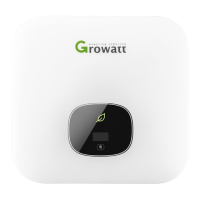
The Growatt MIC TL-X series inverter is a single-phase, grid-tied device designed to convert direct current (DC) generated by photovoltaic (PV) modules into grid-compliant alternating current (AC) for feed-in into the electricity grid. It is built to meet international safety requirements, including IEC62109-1, CE, VDE0126-1-1, and AS4777.
Function Description
The primary function of the MIC TL-X inverter is to facilitate the conversion of solar energy into usable electricity for the public power grid. It operates by taking DC current from PV modules and transforming it into AC, which is then fed into the electricity grid. The inverter is designed for permanent connection to the public power grid and is not intended for mobile use.
Key operational features include:
- Power Conversion: Converts DC from PV modules to AC for grid feed-in.
- Grid Compliance: Ensures the output AC meets the standards required by the electricity grid.
- Safety Mechanisms: Incorporates various safety features such as protection against overvoltage, short circuits, and ground faults. It also includes an Arc-Fault Circuit Interrupter (AFCI) for detecting and interrupting electric arcs, enhancing system safety.
- Demand Response Modes (DRMS): Supports demand response modes (DRM0, DRM5, DRM6, DRM7, DRM8) via an RJ45 terminal, allowing the inverter to adjust its power generation based on grid signals. This functionality is applicable to AS/NZS4777.2:2015 or Commission Regulation (EU) 2016/631.
- Active Power Control: Can be controlled for active power regulation using a smart meter, CT, or a radio ripple control signal receiver, enabling export limitation functionality.
- Communication: Equipped with RS485 ports for monitoring one or more inverters and for smart meter communication. A USB-A port is also available for connecting external monitors (e.g., Shine WIFI-X, Shine 4G-X, Shine LAN-X) and for firmware updates using a U disk.
Usage Features
The MIC TL-X inverter offers several user-friendly features for installation, commissioning, and monitoring:
- Installation Flexibility: Can be installed both outdoors and indoors, with an Ingress Protection rate of IP65, indicating protection against dust and water jets. It requires vertical installation with connections pointing downwards. Specific clearance spaces around the inverter are necessary to ensure adequate cooling and prevent overheating.
- Touch Control: Features a touch button on the OLED display for easy interaction. Users can switch displays, adjust numbers, enter or confirm settings, and navigate through menus with single, double, or triple touches. Holding the button for 5 seconds allows for country setting confirmation or recovery of default values.
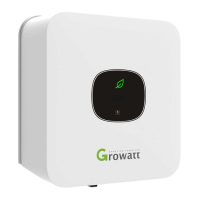
- OLED Display: Provides clear visual feedback on the inverter's operation status, including fault indicators (red), normal operation (green), warnings or DSP programming (red leaf flash), and M3 programming (green leaf flash). Error messages are displayed on the OLED screen to assist in troubleshooting.
- Multi-language Support: Offers multiple language options for the display, which can be selected during the initial setup.
- Country Setting: Allows users to select the appropriate country setting during startup, ensuring compliance with local grid standards. If no country is selected, it defaults to AS/NZS4777.2 for Australia or VDE0126-1-1 for other regions after 30 seconds.
- Date and Time Setting: Users can set the inverter's date and time, with options to adjust values and confirm settings.
- COM Address Setting: The default COM address is 1, which can be changed by the user.
- Export Limitation: Integrated functionality to limit power export, configurable via a smart meter or CT.
- Firmware Updates: Software can be quickly updated using a U disk via the USB-A port.
Maintenance Features
To ensure optimal performance and longevity, the MIC TL-X inverter incorporates features that facilitate maintenance:
- Heat Dissipation Monitoring: Users are advised to check heat dissipation conditions if the inverter regularly reduces its output power due to high temperatures. Cleaning the heat sink may be necessary.
- Cleaning: The inverter's enclosure lid, display, and LEDs can be cleaned with a wet cloth after shutting down the AC breaker and DC switch. Abrasive or solvent-based cleaning agents should not be used.
- DC Disconnect Check: Regular inspection of the DC Disconnect and cables for visible damage or discoloration is recommended. In case of damage, the installer should be contacted.
- DC Disconnect Contact Cleaning: Annually, the rotary switch of the DC Disconnect should be turned from the On to Off position 5 times in succession to clean the contacts and prolong its electrical endurance.
- Troubleshooting Guidance: The manual provides detailed information on error messages displayed on the OLED, offering suggestions for resolving system faults and inverter warnings/faults. This includes checks for PV panel polarity, wiring, grounding, and component status.
- Qualified Personnel Requirement: All electrical installation, repairs, and conversions must be carried out by electrically qualified personnel to ensure safety and proper operation.
- Storage Guidelines: For long-term storage, the inverter should be kept in its original packaging with desiccant in a dry place, within a specified temperature range. A comprehensive test by a local installer or service department is recommended after extended storage.

 Need help?
 General
 Weight and Dimensions

 To Next Page